From the work order on the office screen to the photo the customer gets that evening — one record the whole way, never retyped. Every screen below is the real app. Pick a chapter, or read it straight through.
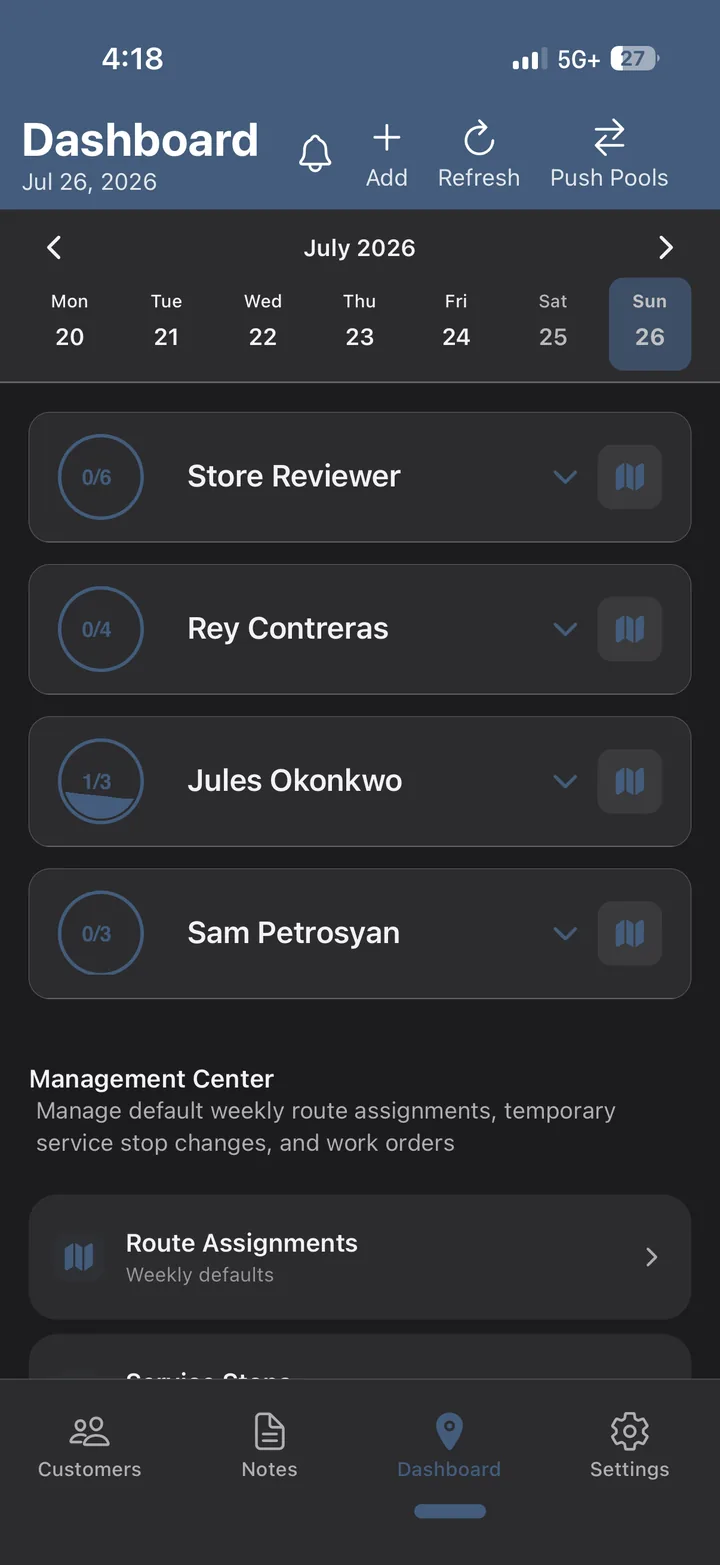
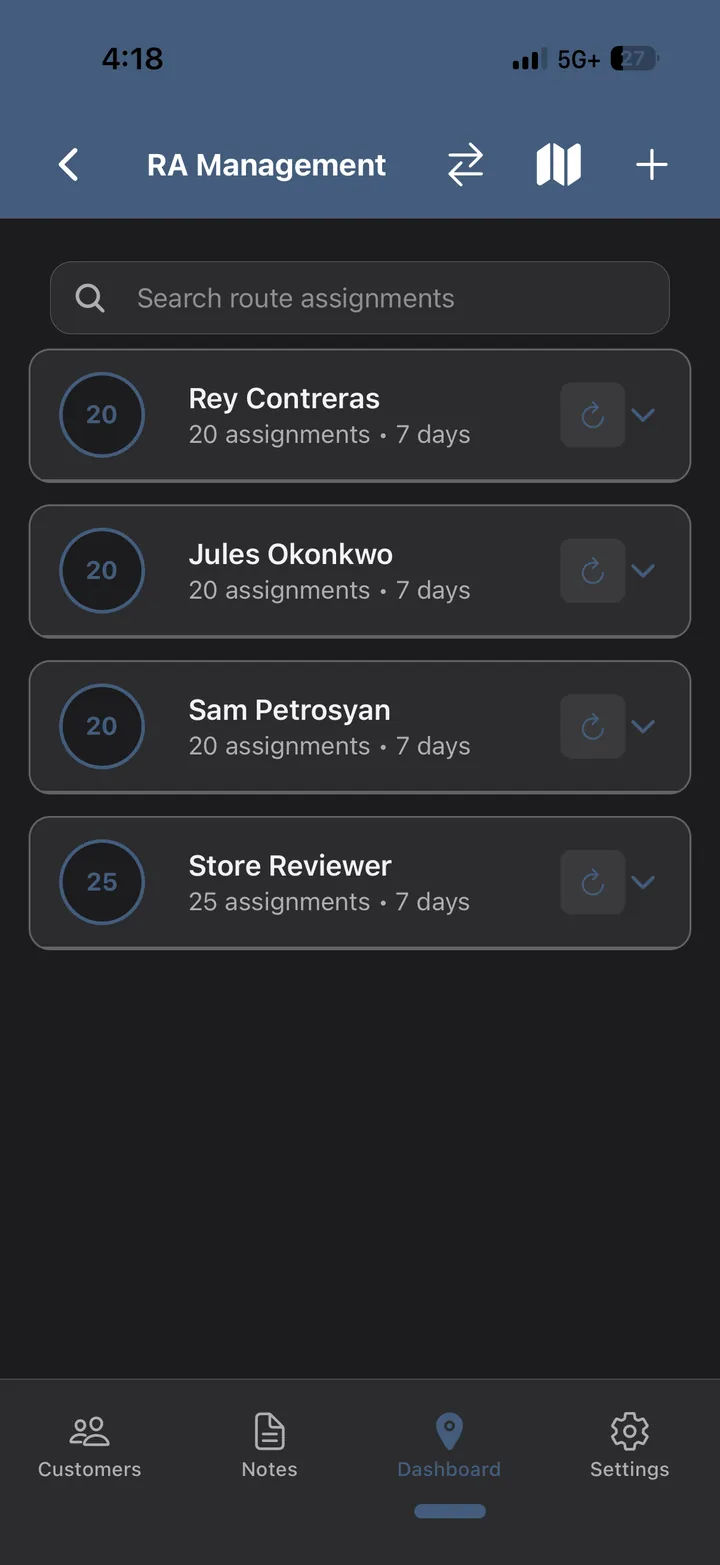
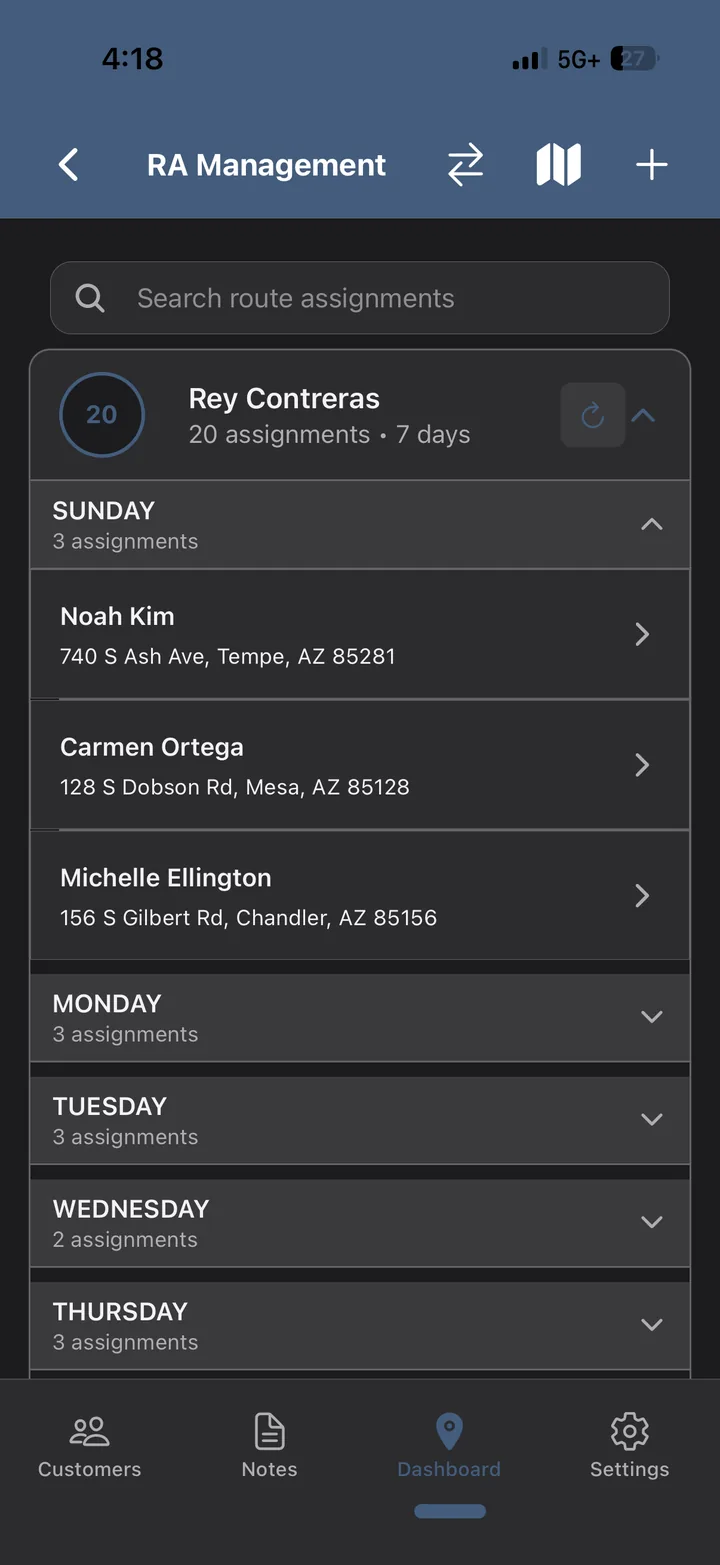
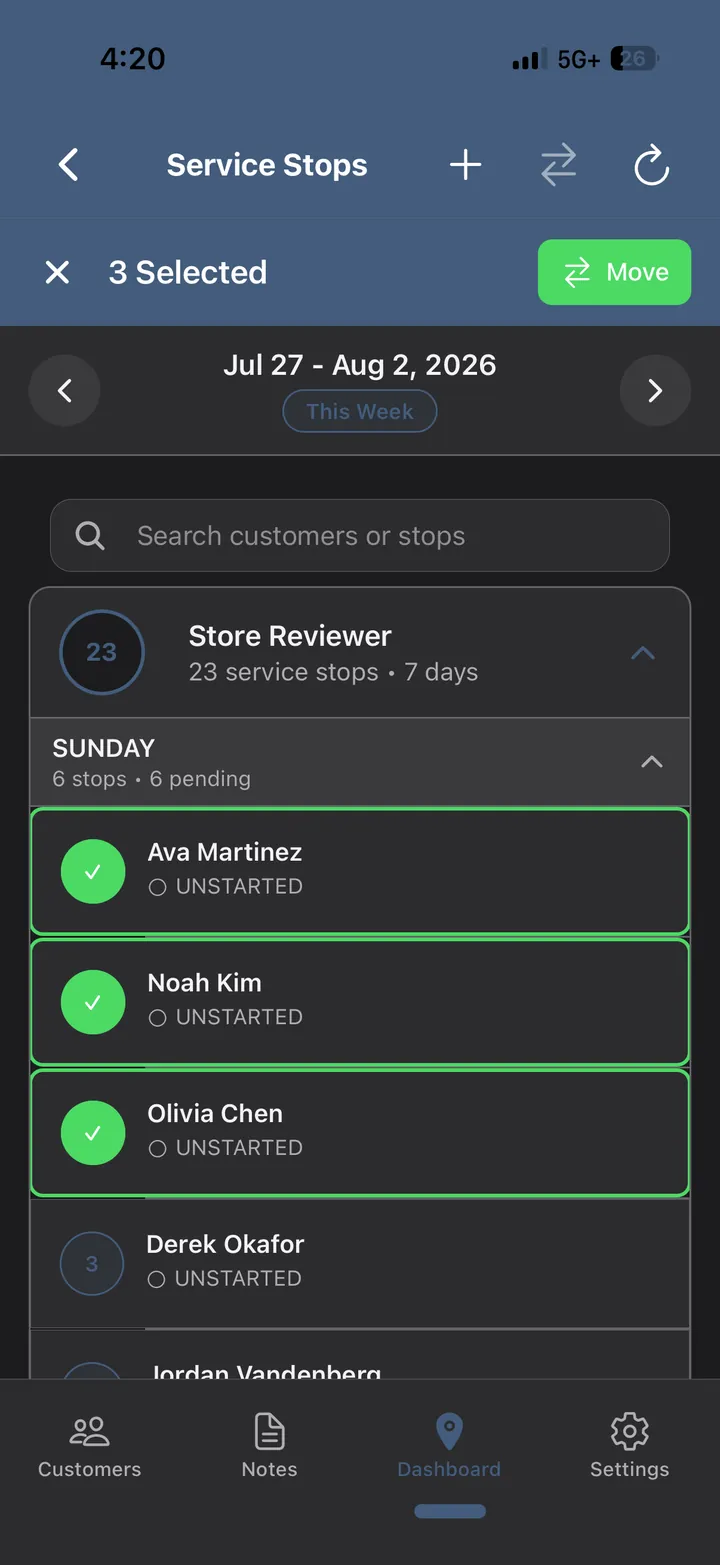
Every technician, every route, every day — with the weekly defaults underneath so the pattern holds without anyone rebuilding it each Monday. Progress rings show what is actually done, not what was planned.
For the office: you stop asking who went where. For the business: the schedule is a thing that exists, not a thing in someone's head.
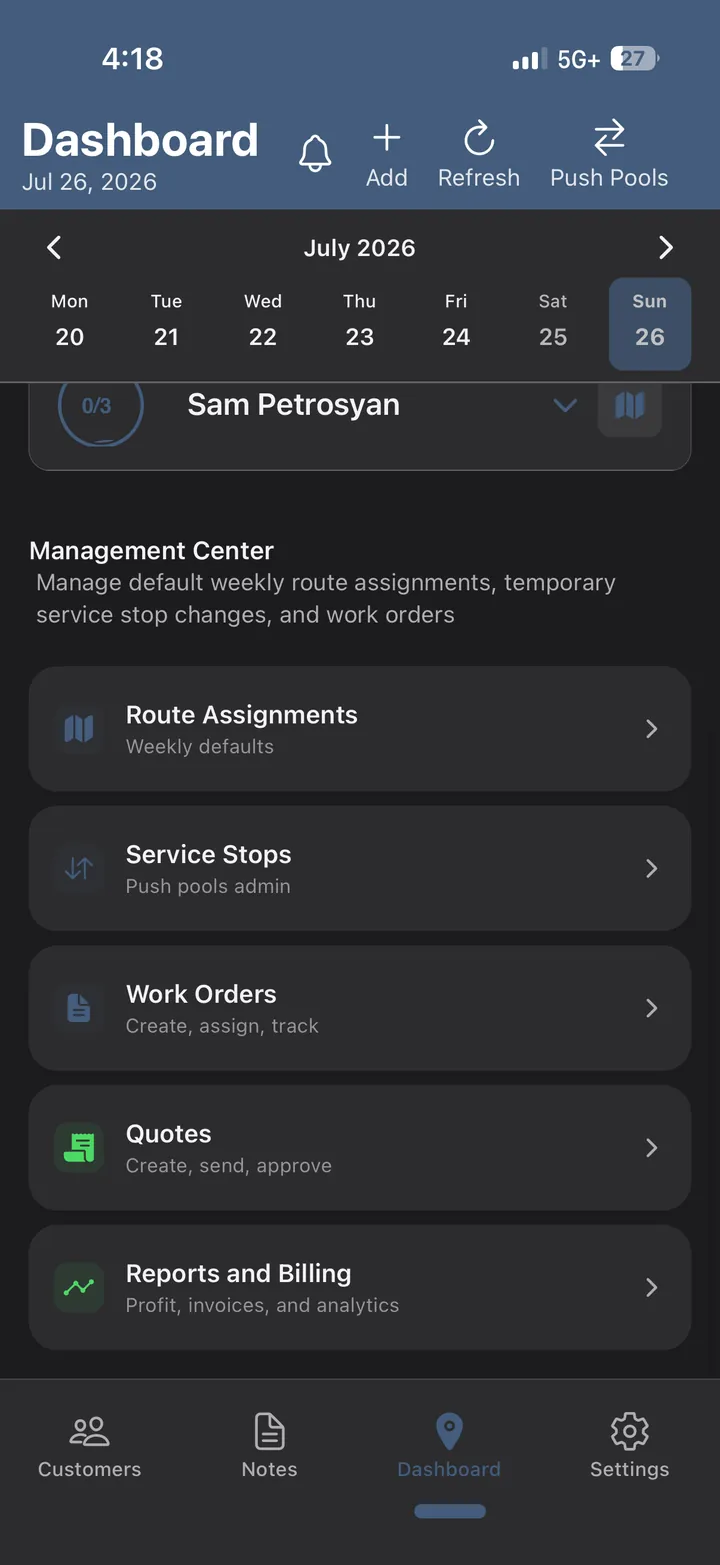
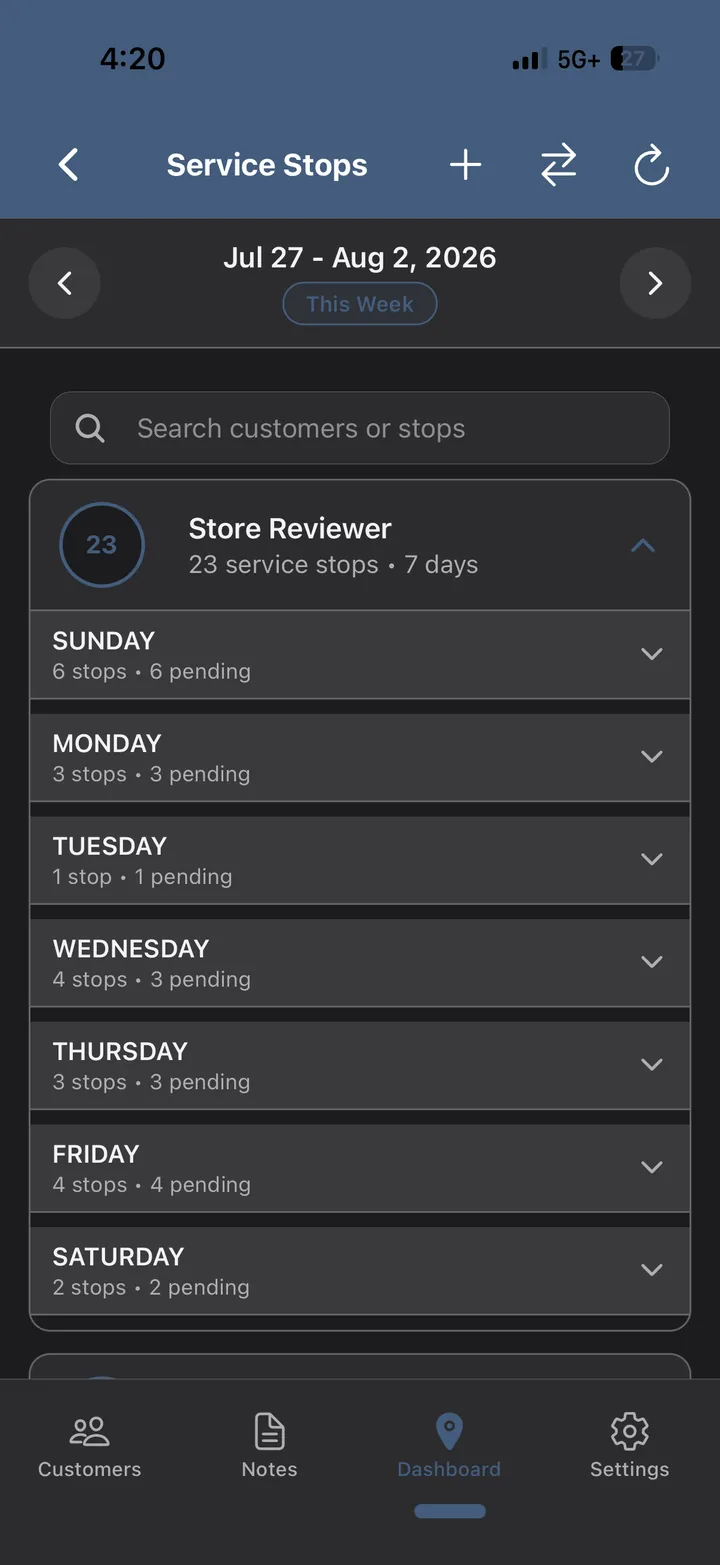
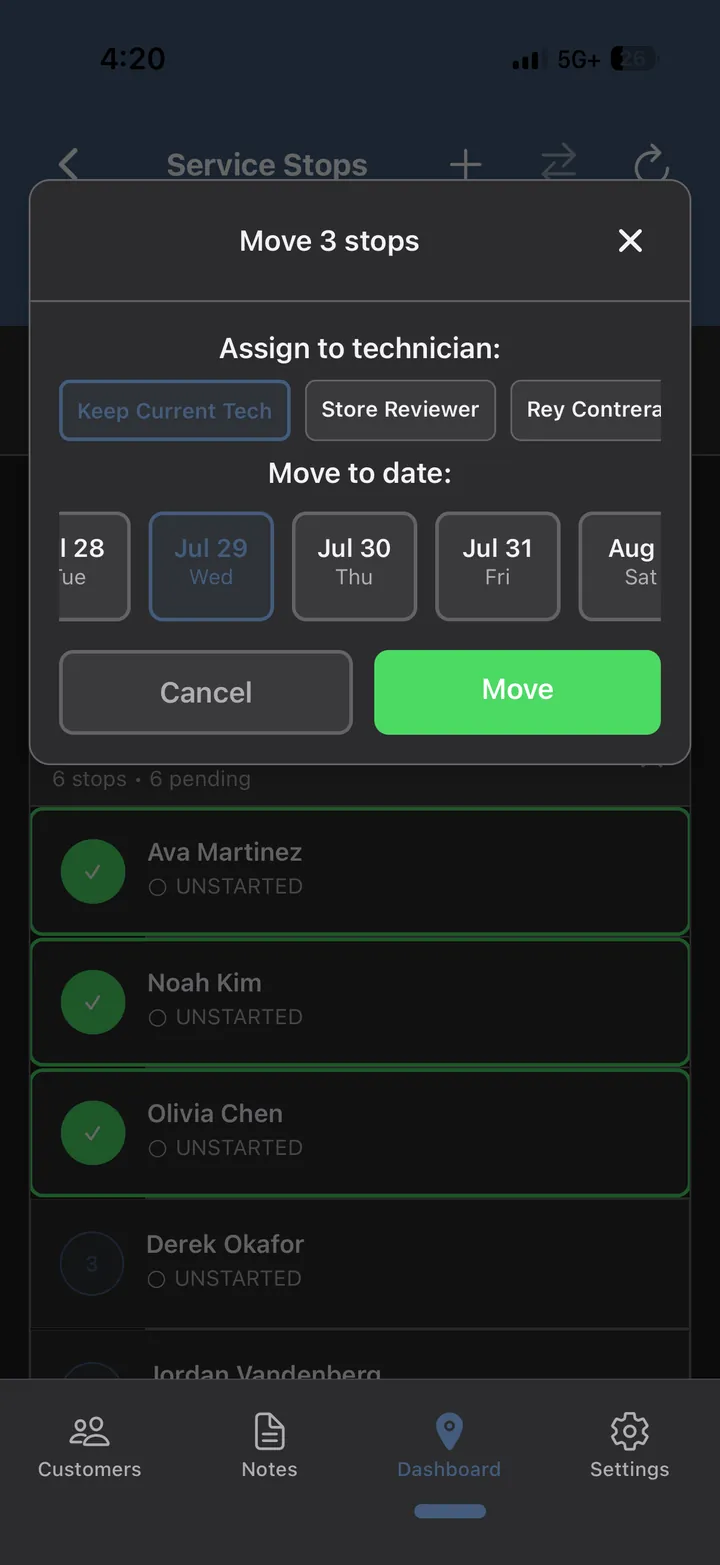
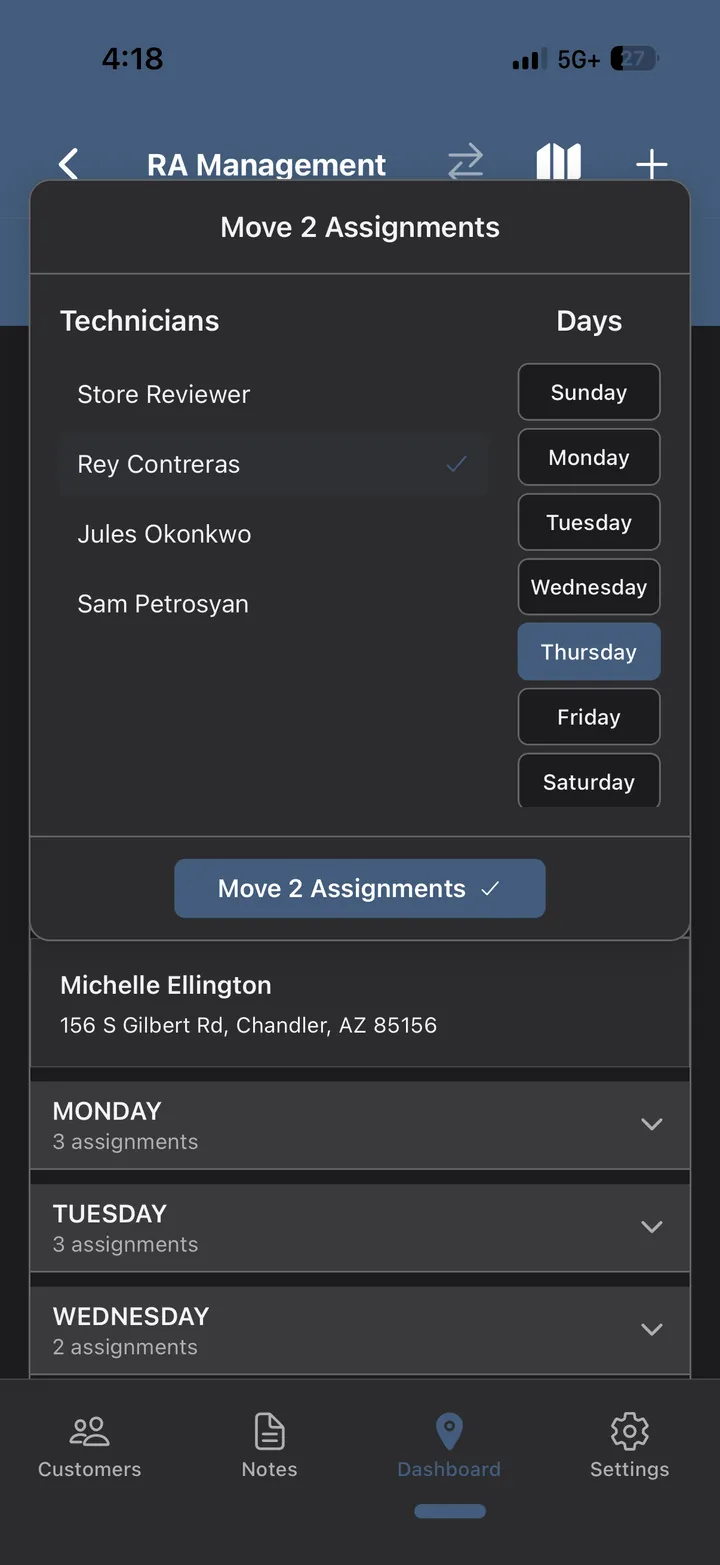
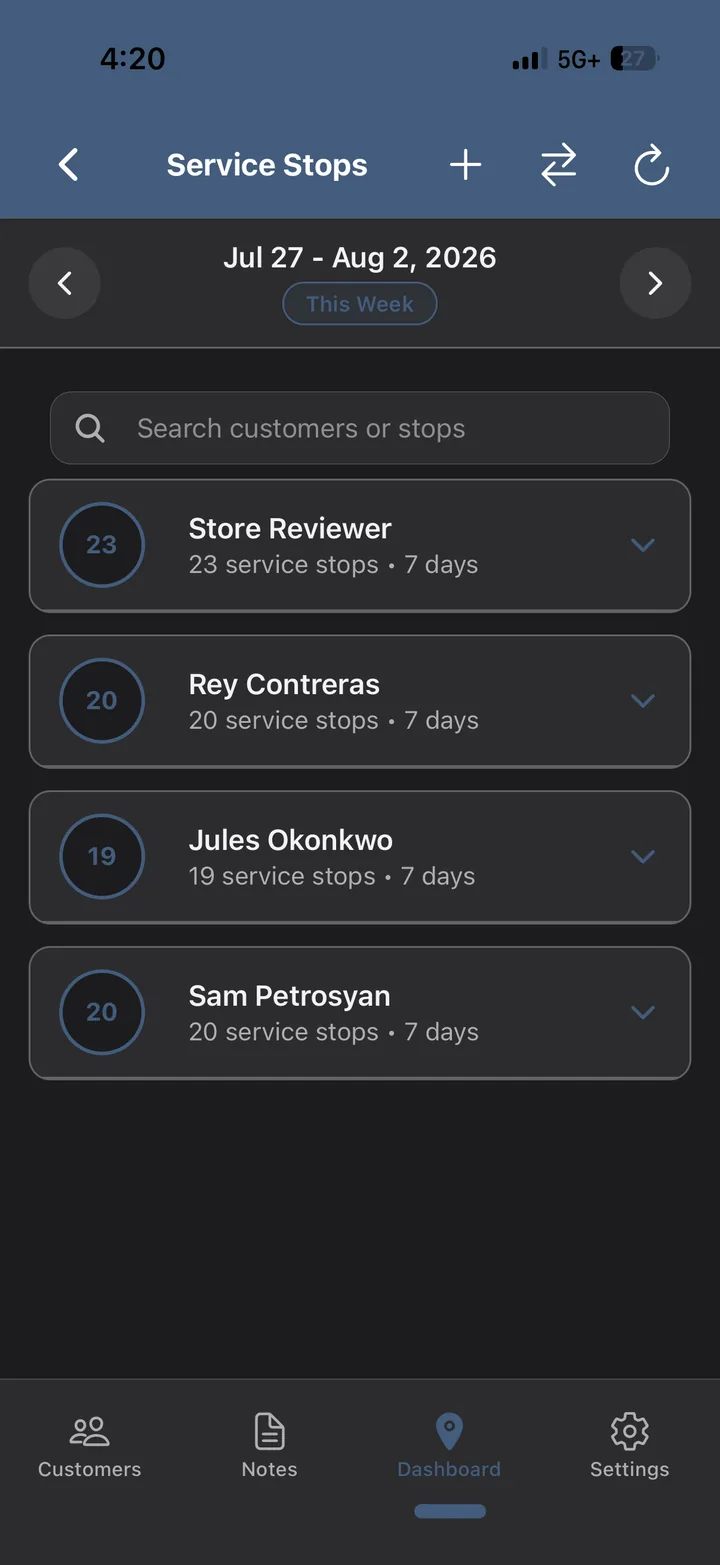
Someone calls in sick, a gate is locked, a customer asks for Thursday. Select the stops, pick a tech and a date, move them. The weekly defaults stay intact underneath — a temporary change stays temporary.
For the tech: the change is on their phone before they get back in the truck. For the business: covering an absence takes a minute, not an evening.
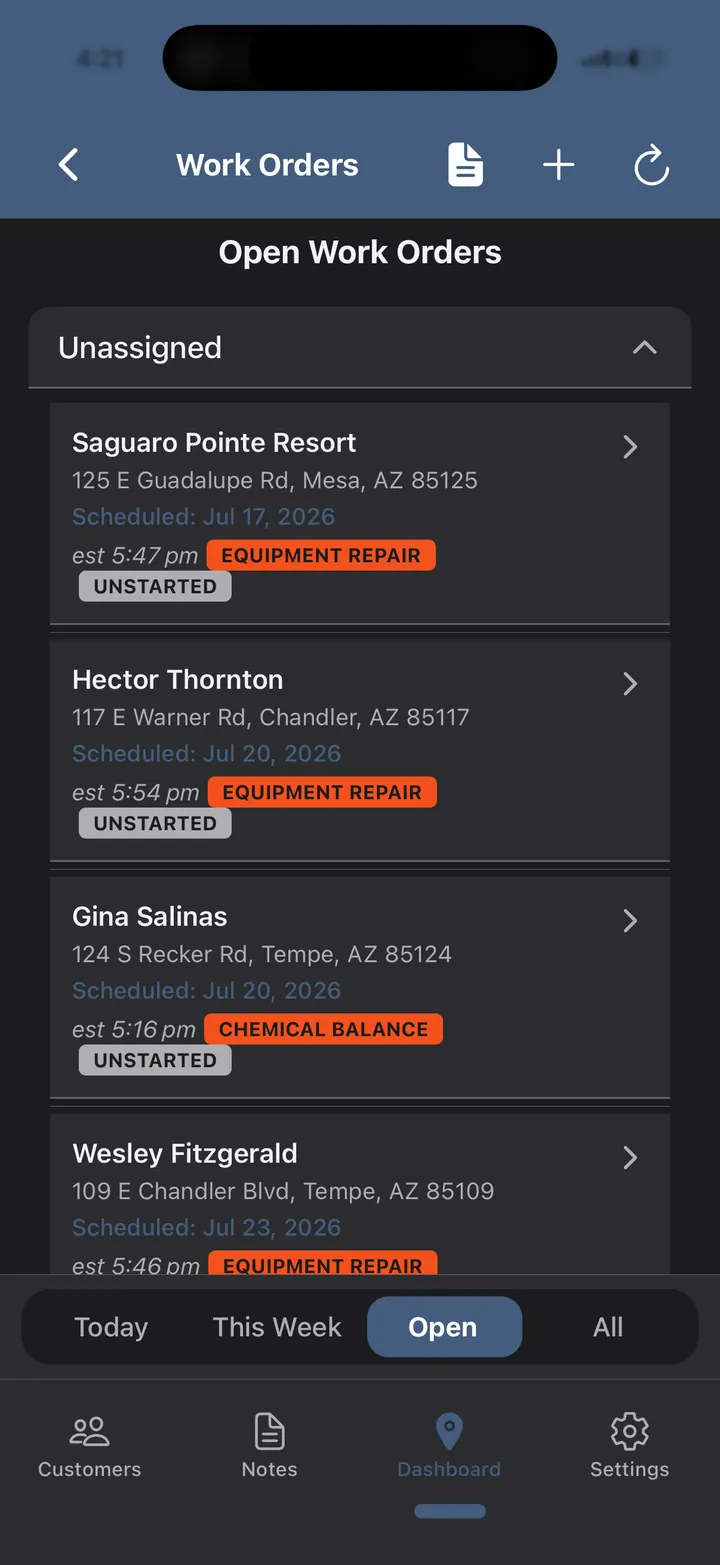
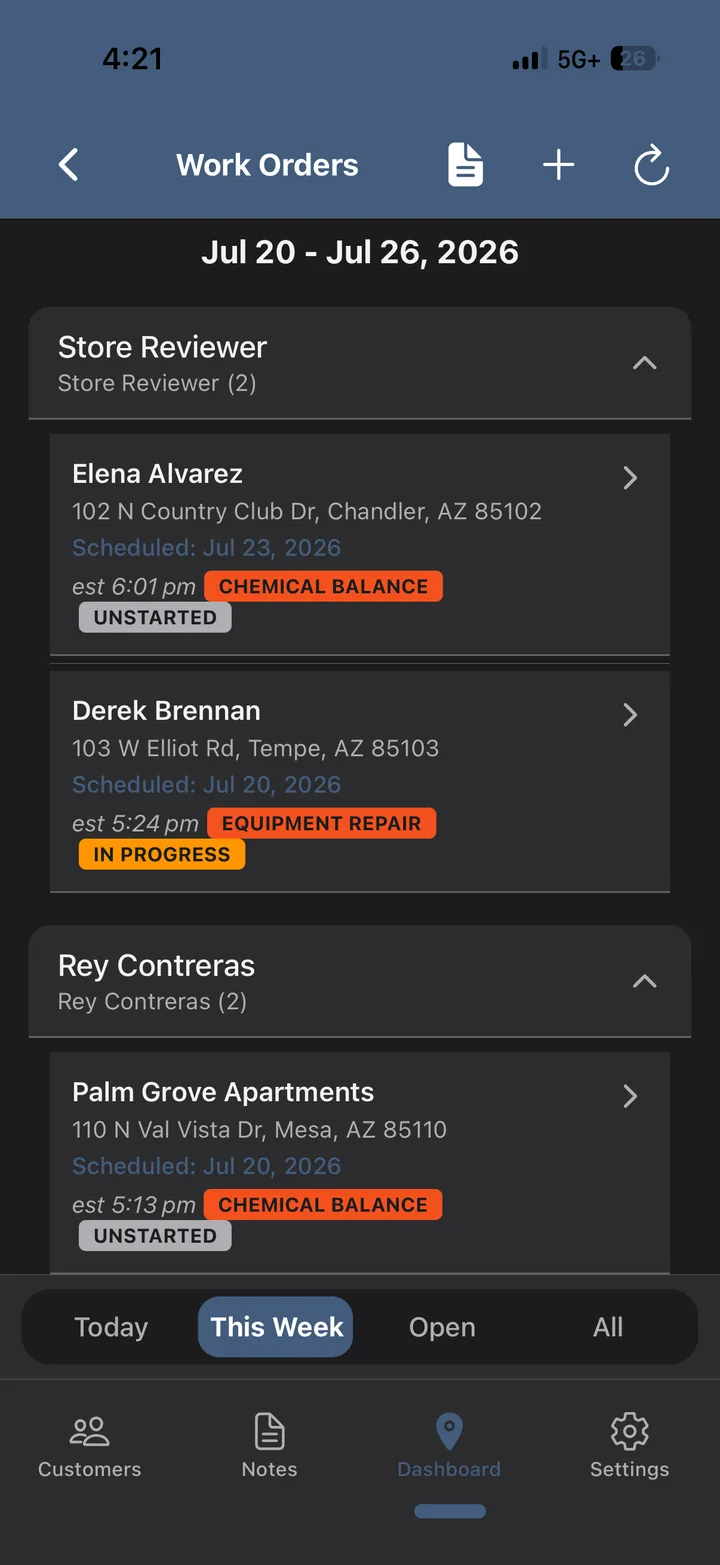
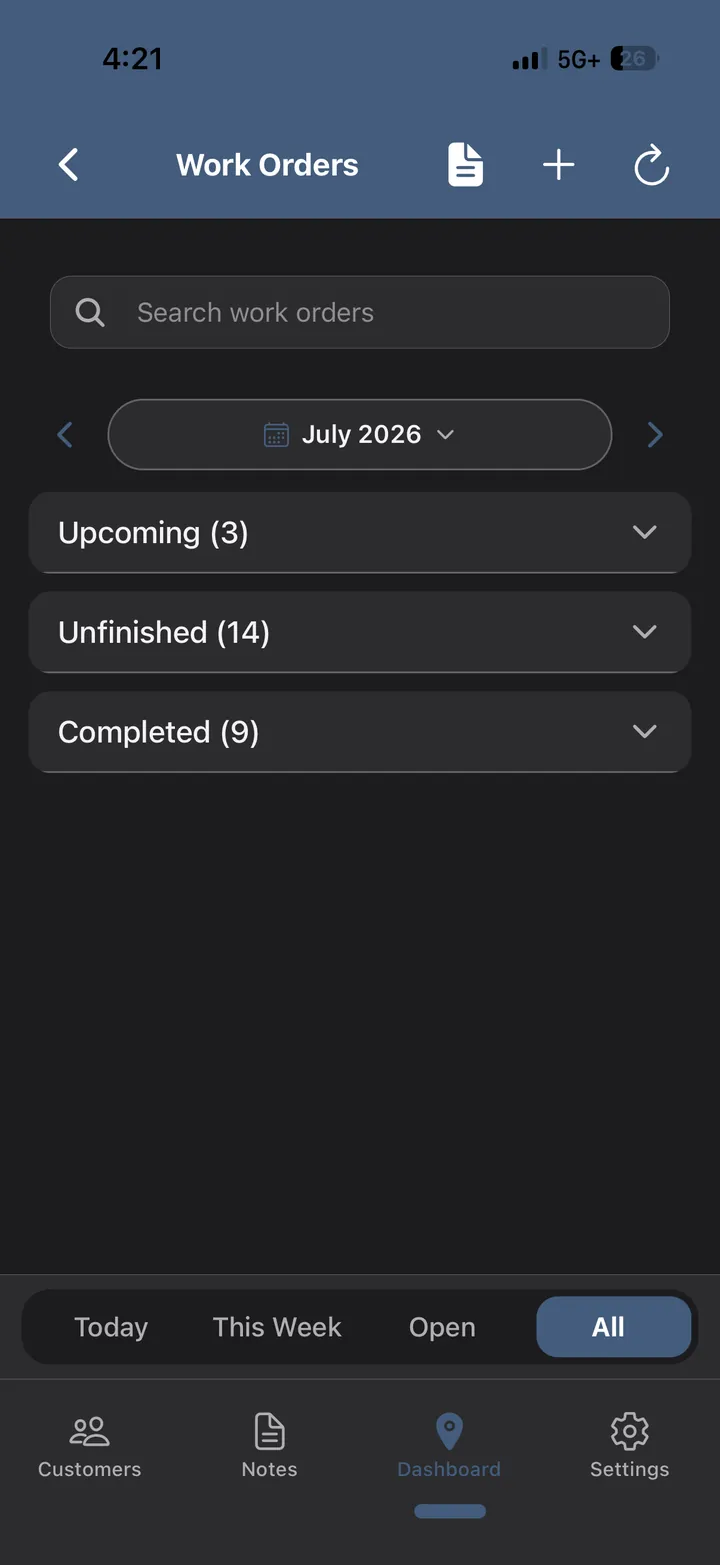
Filter cleans, equipment repairs, green-to-clean recoveries. Assigned, scheduled, estimated and tracked from unstarted to complete — with the parts and the labour attached so it bills without a second conversation.
For the tech: the repair they flagged in June doesn't come back as a complaint in August. For the business: extra work you already did actually gets billed, which is usually the fastest revenue in the business.
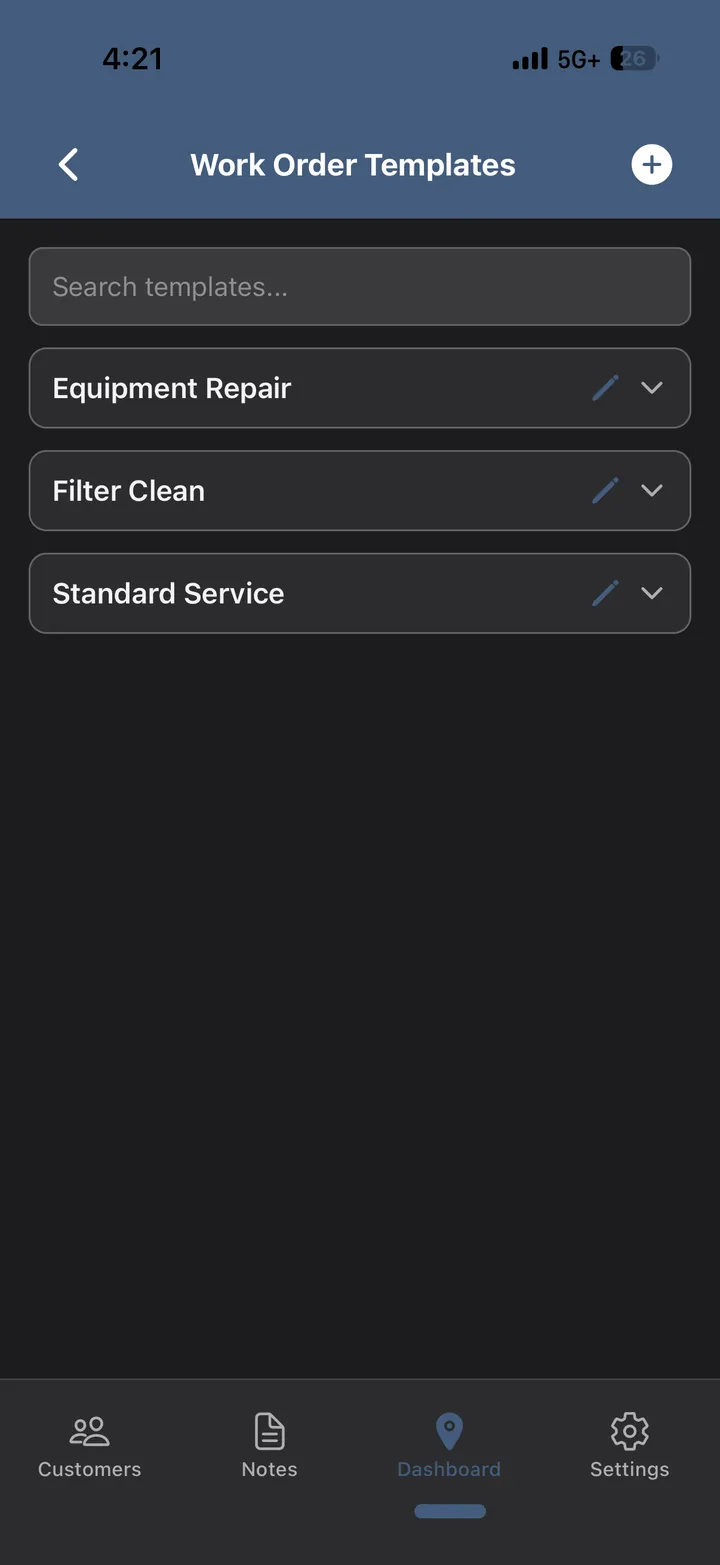
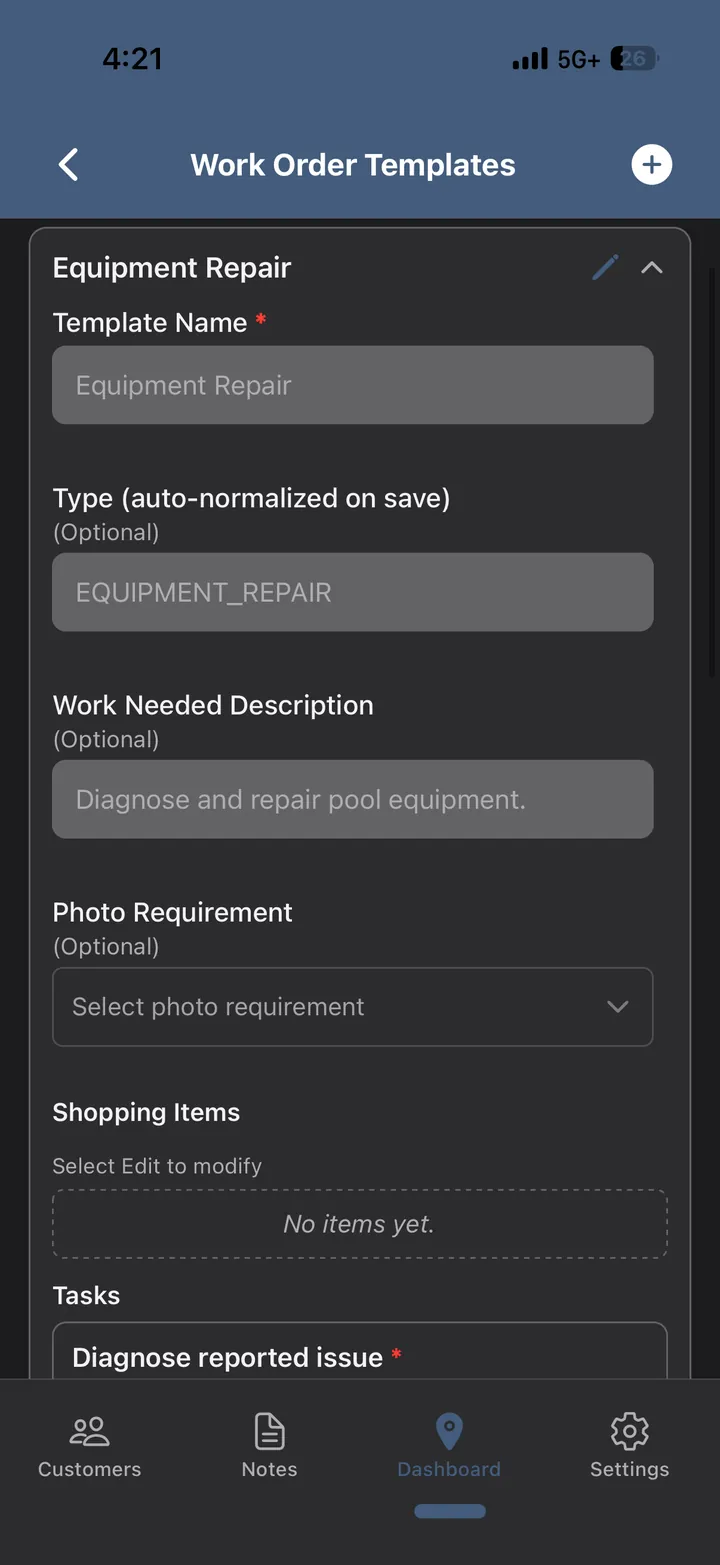
The same five jobs make up most of the extra work in any pool business. Build each one once — tasks, parts, photo rules, description — and every future work order starts complete instead of blank.
For the tech: nothing to remember and nothing to type. For the business: two technicians doing the same job produce the same record.
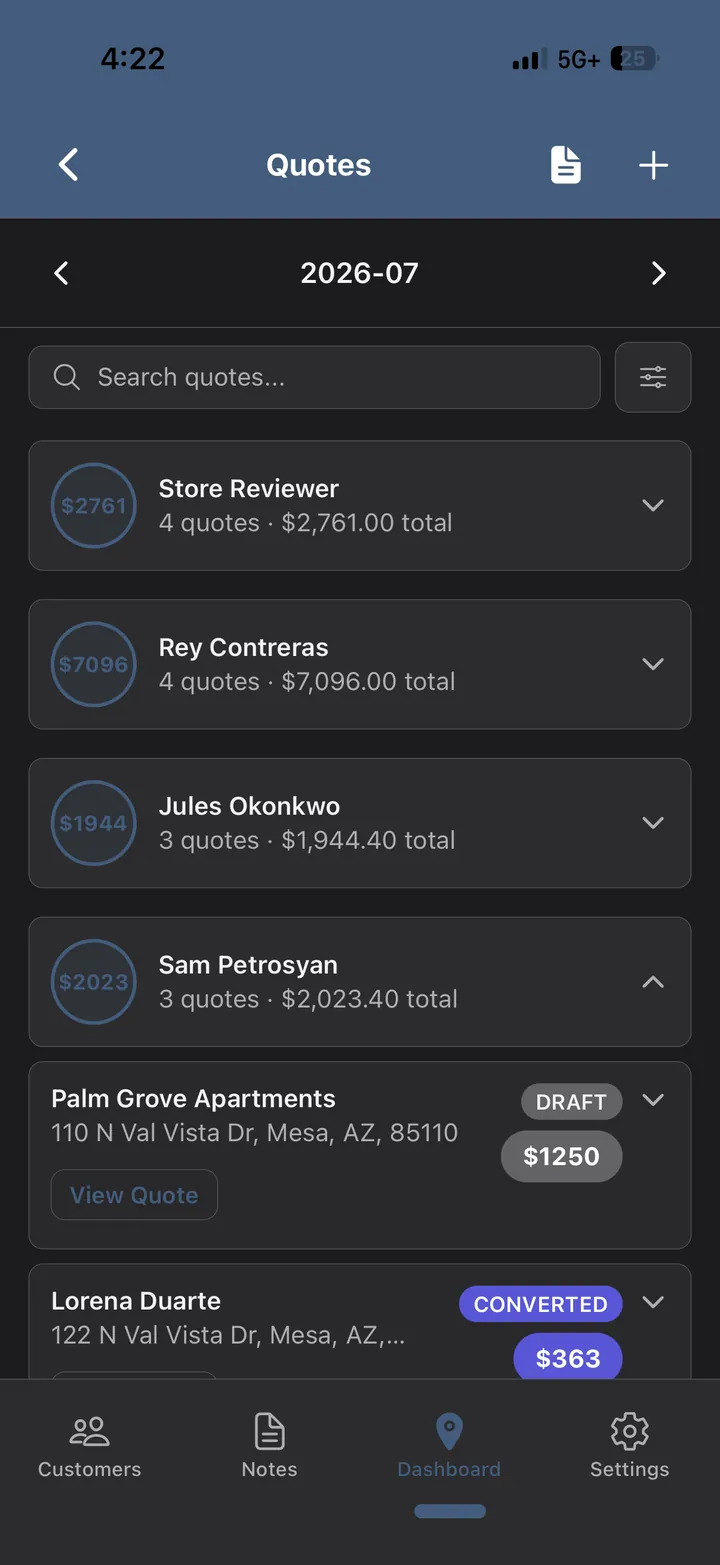
Price it, send it, and when it is approved it becomes a scheduled work order carrying its own line items. Nothing is re-entered between the quote and the invoice, because it is the same record moving forward.
For the office: the approved quote is already the job. For the business: a quote that converts does not create a second round of data entry.
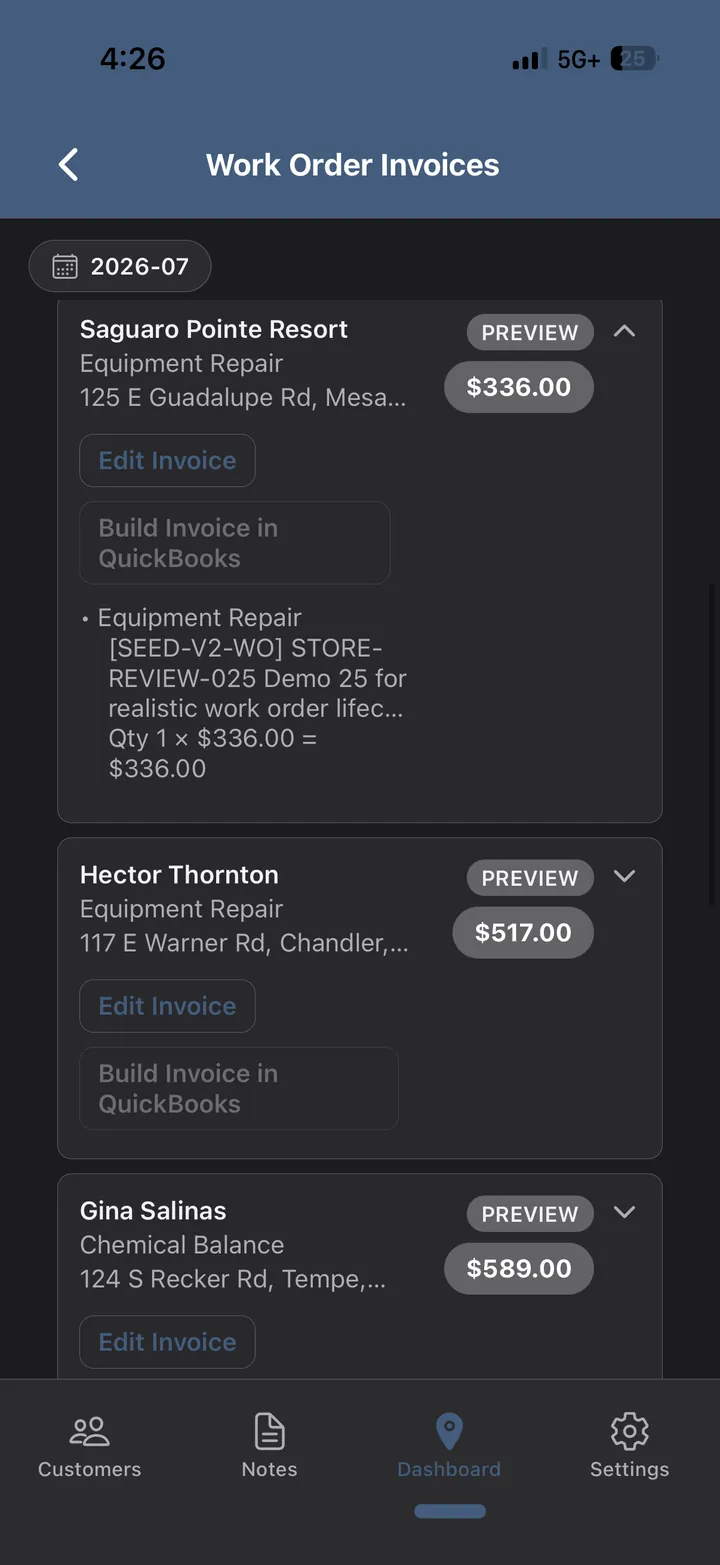
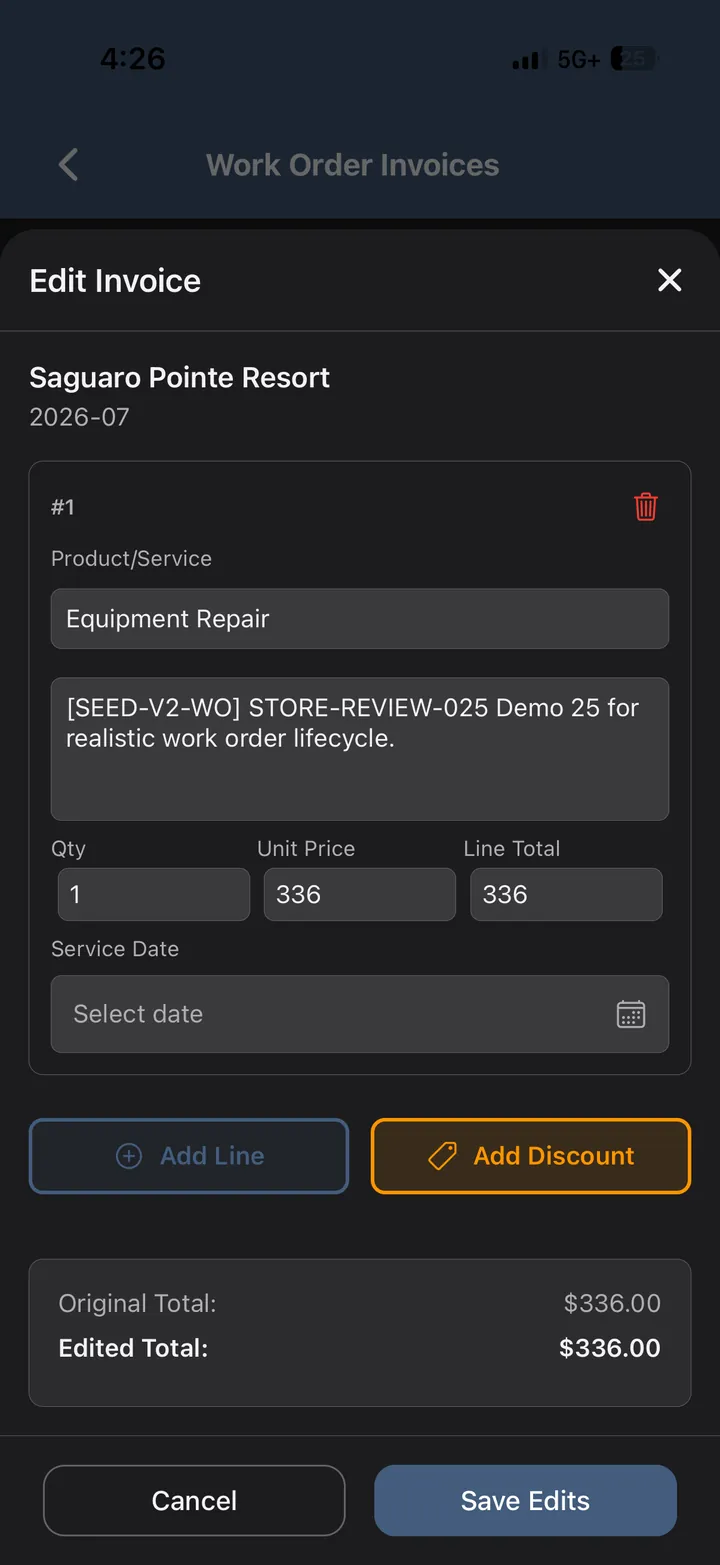
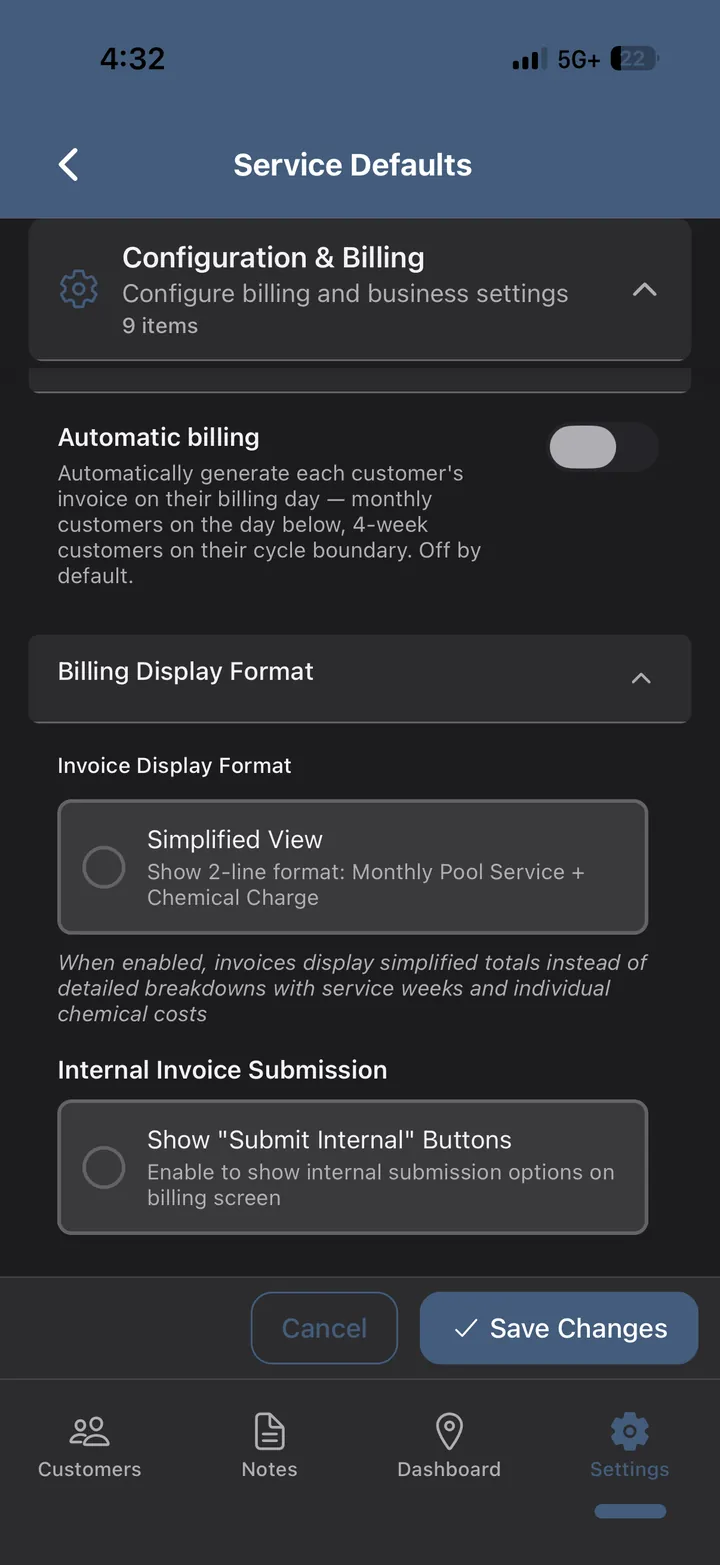
The service happened, so the invoice already exists — line items, quantities, service dates, the work order it came from. Review it, adjust it if you need to, then push it to QuickBooks Online.
For the office: billing day stops being a day. For the business: nothing is invoiced from memory, so nothing is invoiced wrong.
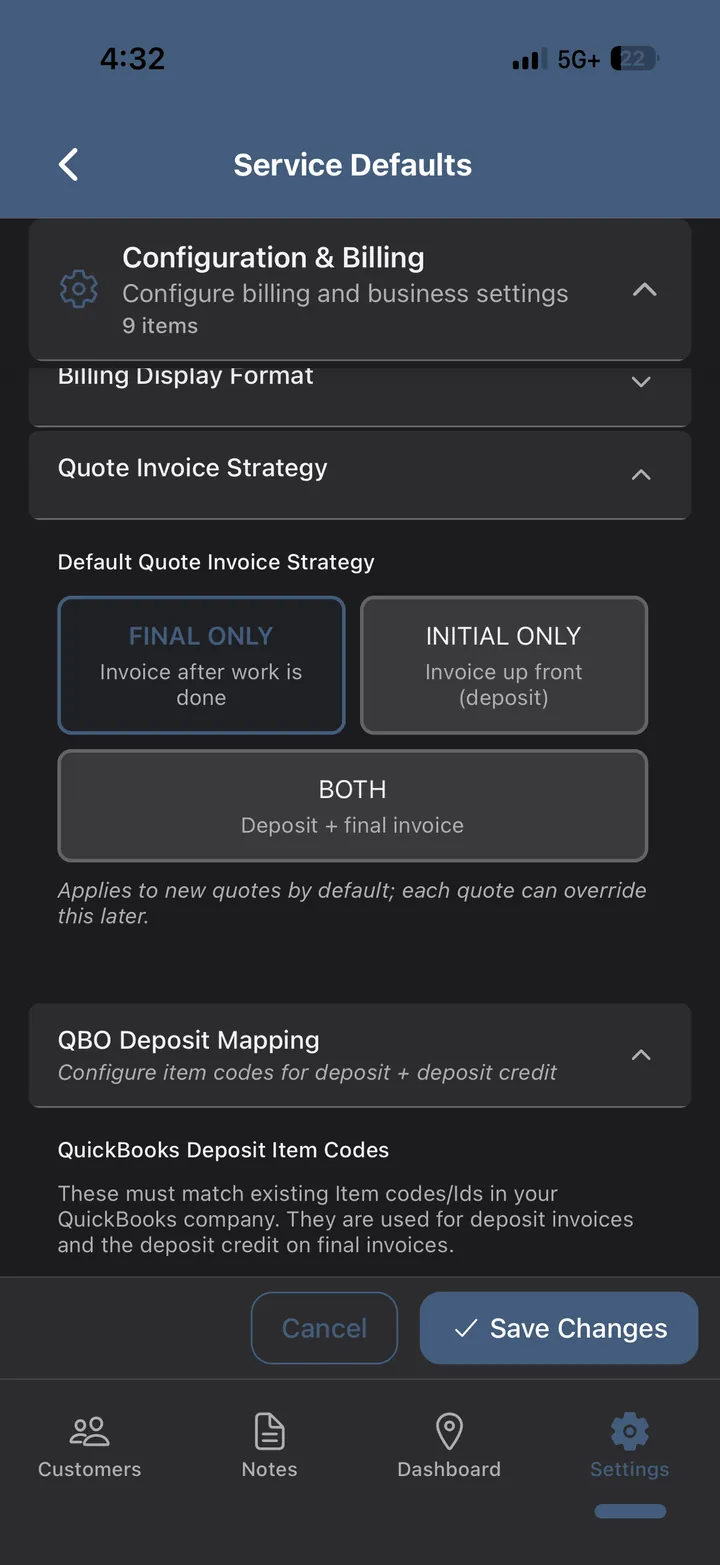
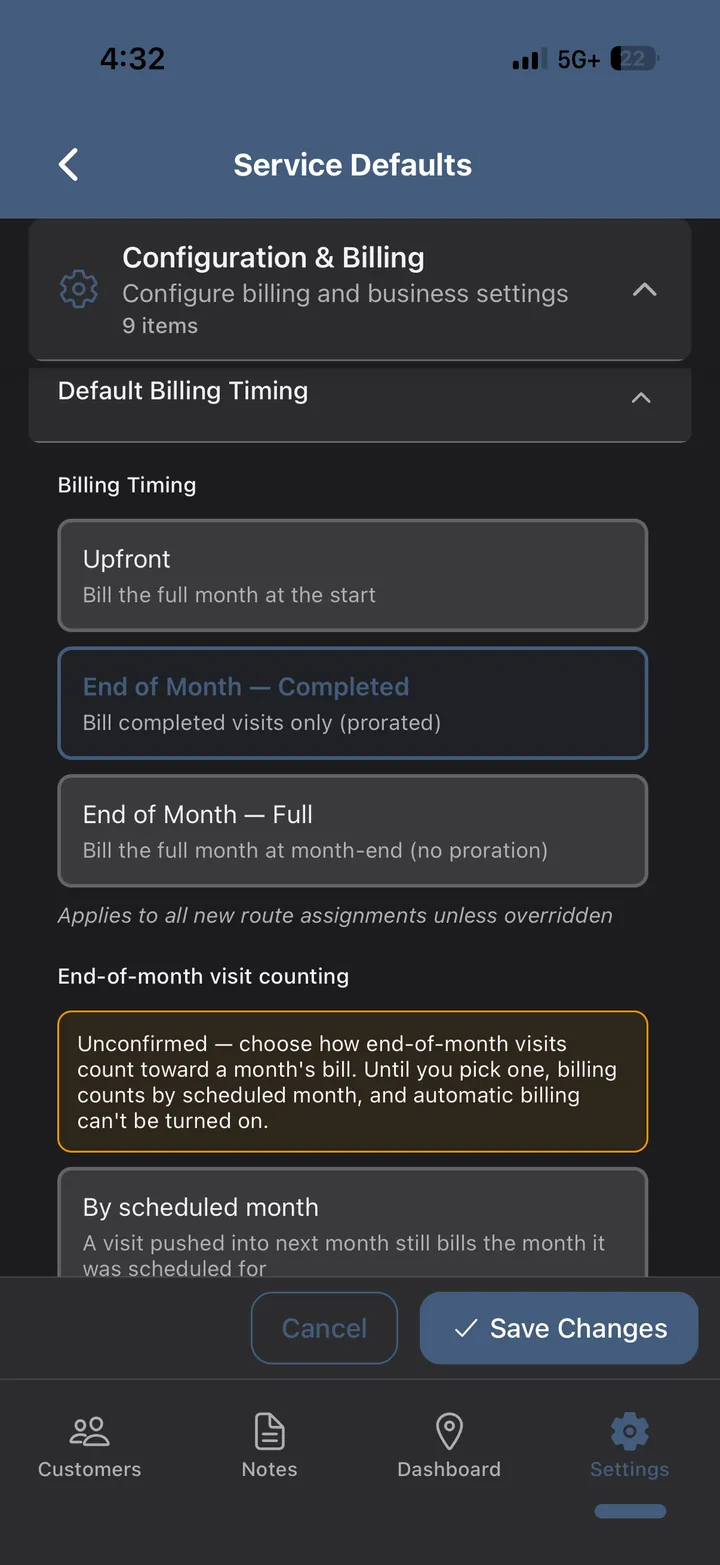
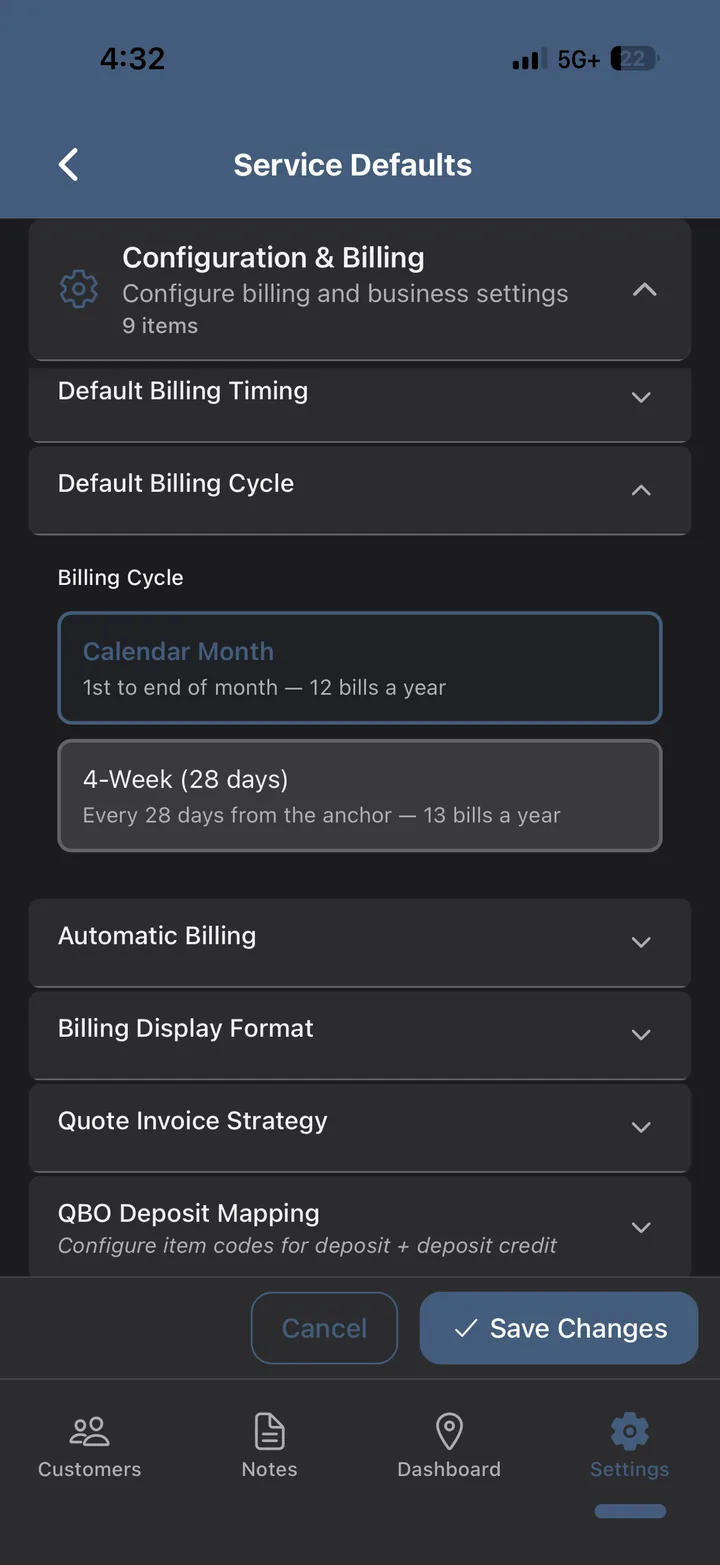
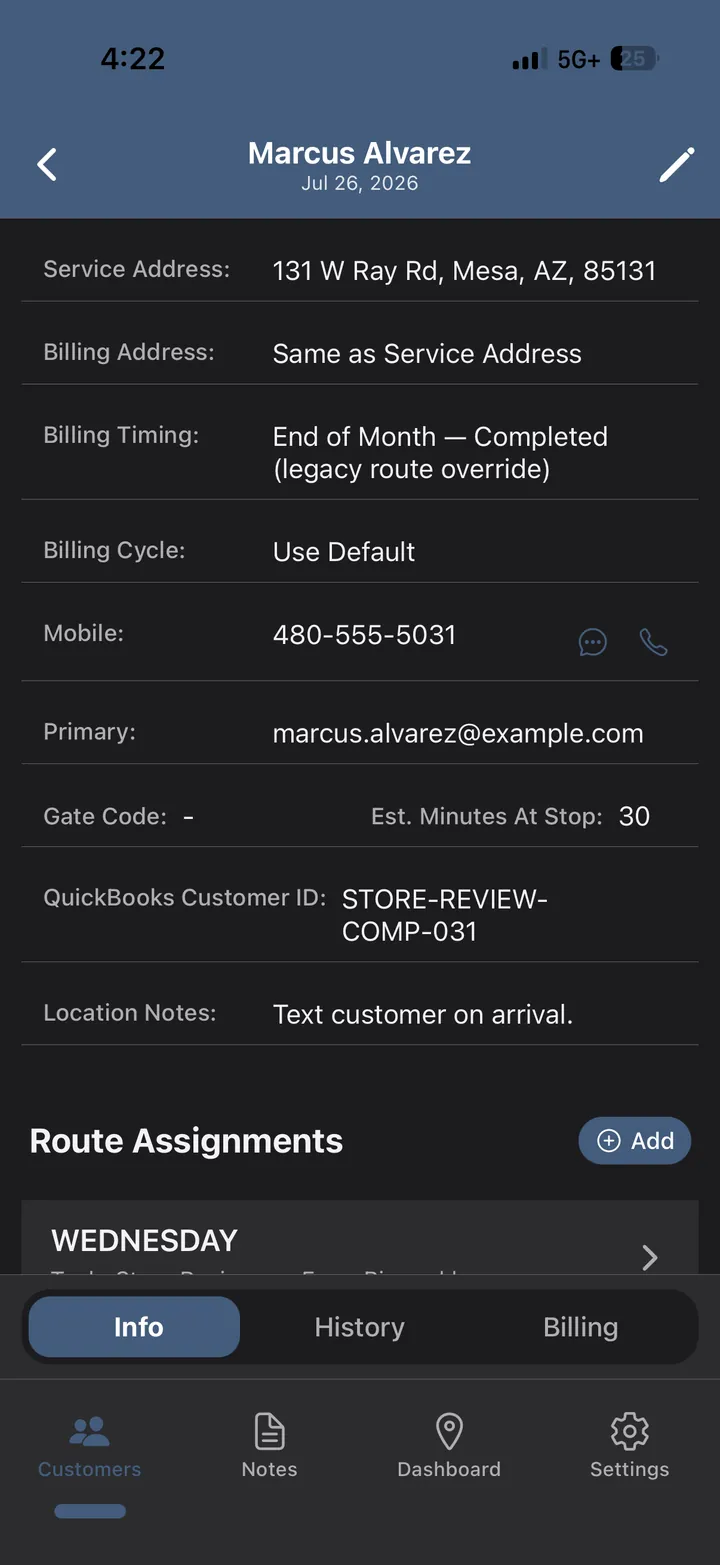
Upfront, end-of-month on completed visits only, or end-of-month in full. Calendar months or 28-day cycles. Per customer overrides where a legacy arrangement needs to survive the switch.
For the office: you do not change how you bill to suit the software. For the business: the end-of-month rule is explicit, so a visit pushed into next month cannot quietly bill twice or not at all.
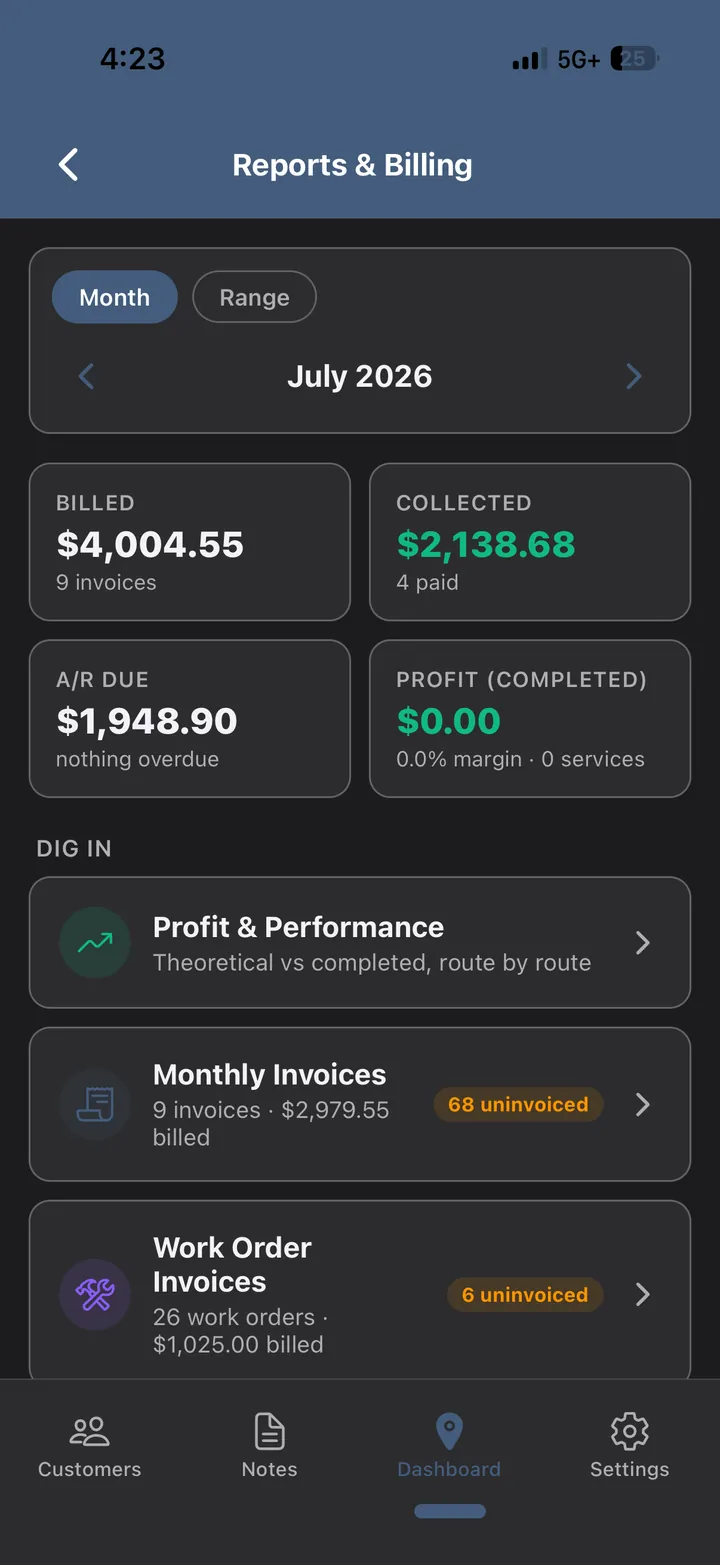
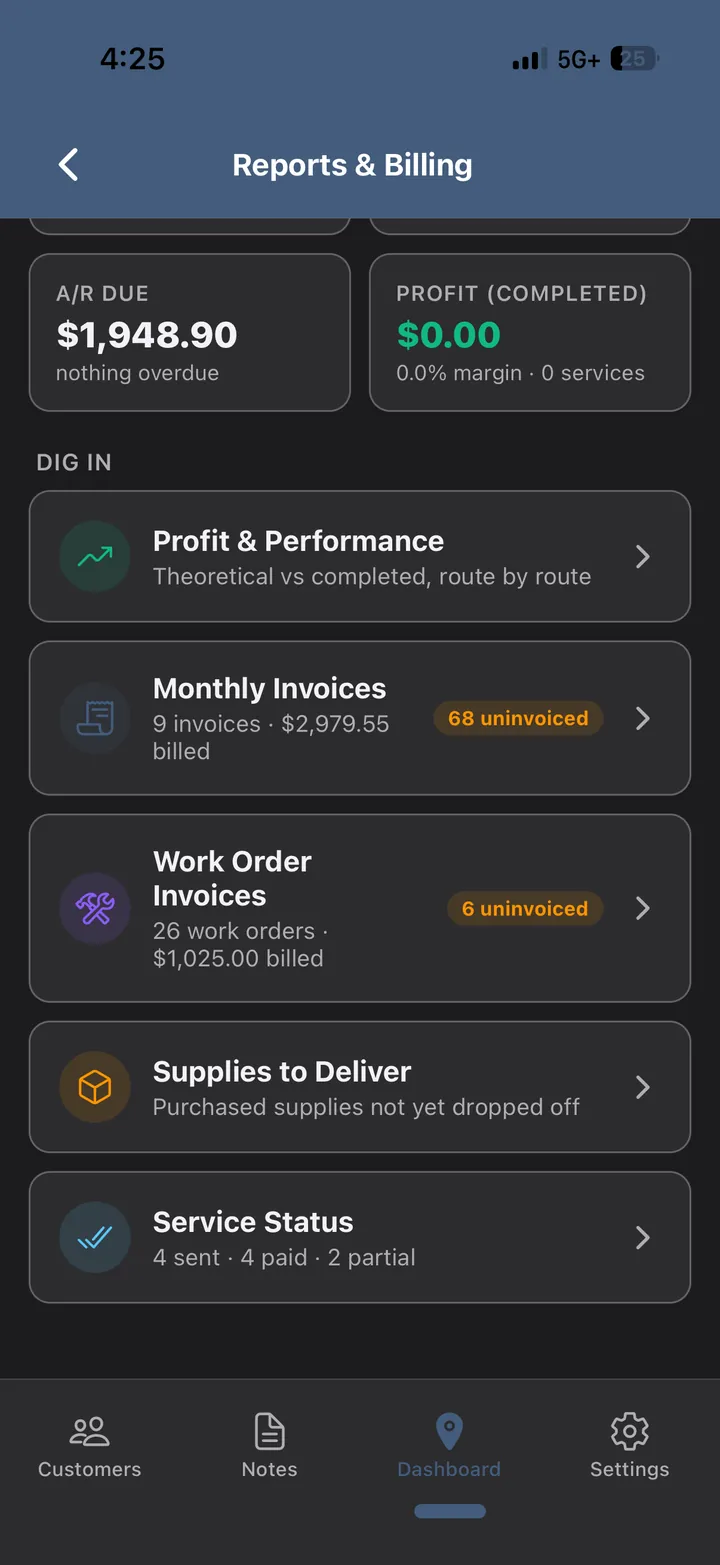
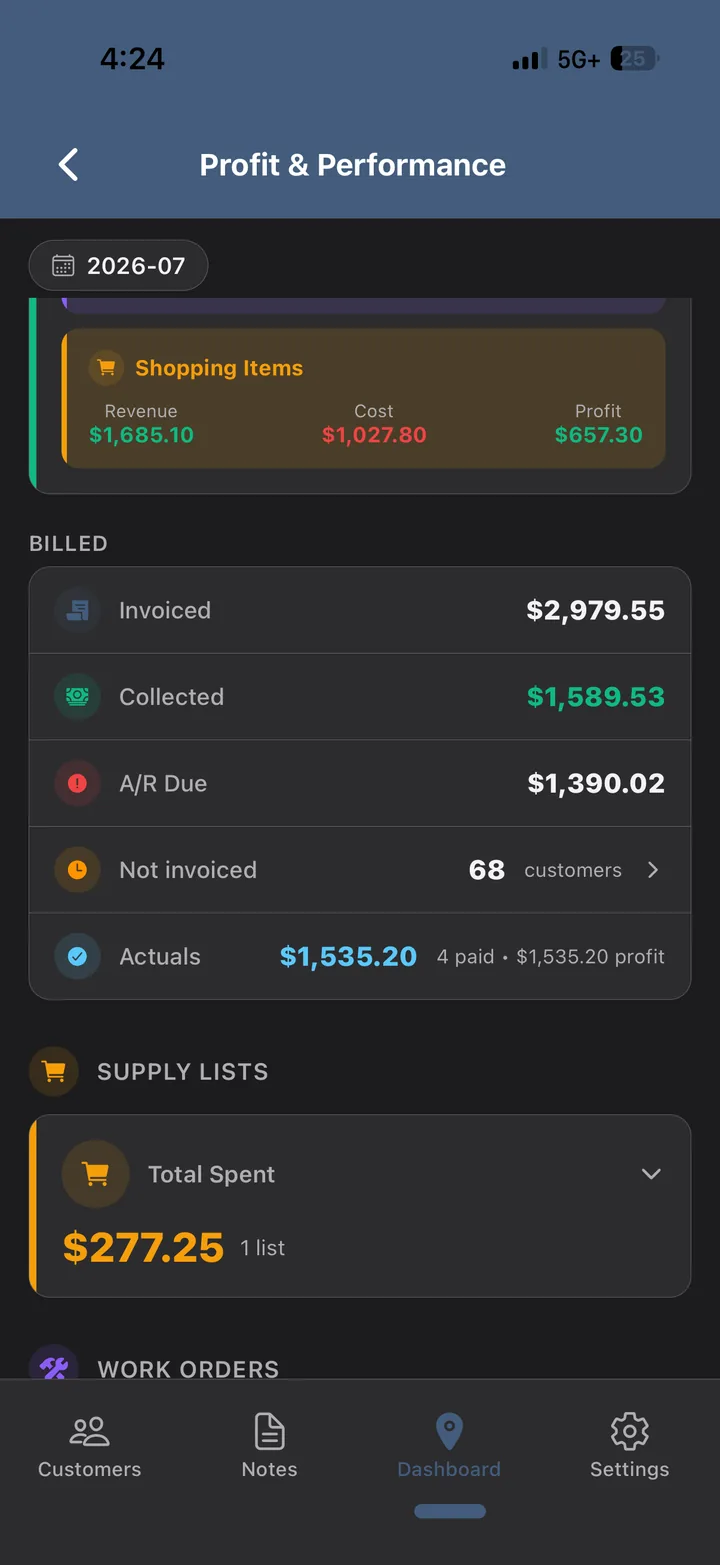
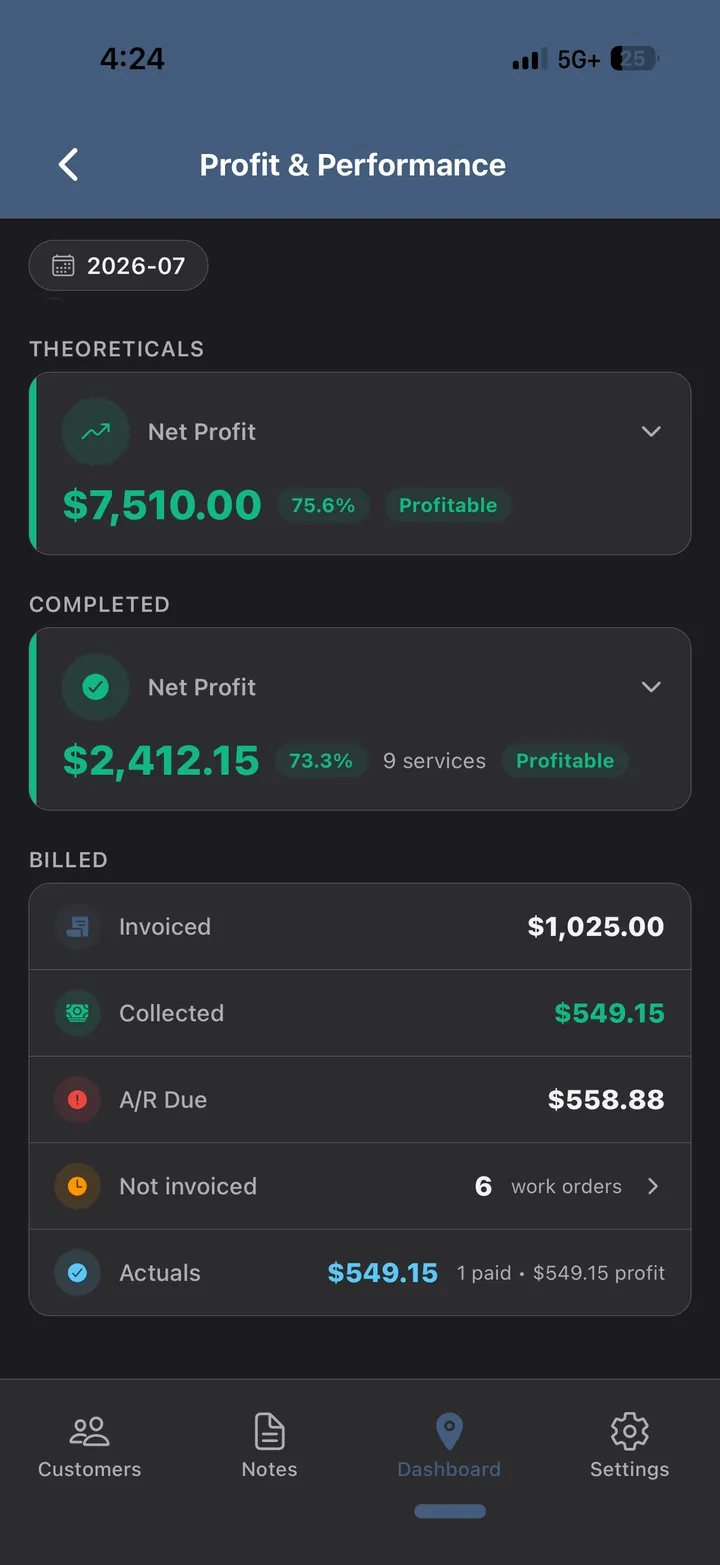
Billed, collected, outstanding and profit — for the month or any range you pick. Then dig in: uninvoiced customers, uninvoiced work orders, supplies bought but not yet dropped off, and who has paid.
For the office: the number you would have built a spreadsheet for. For the business: uninvoiced work is visible while you can still do something about it.
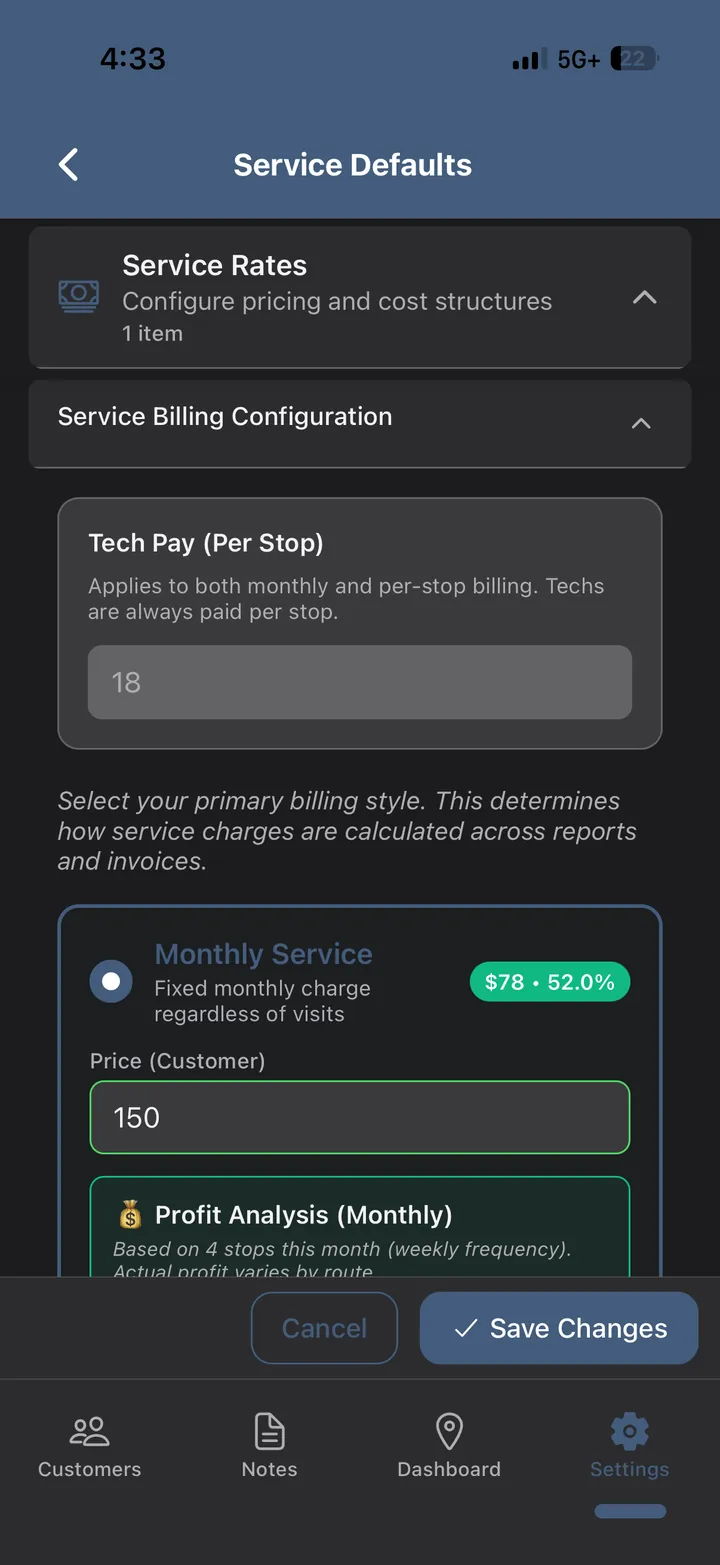
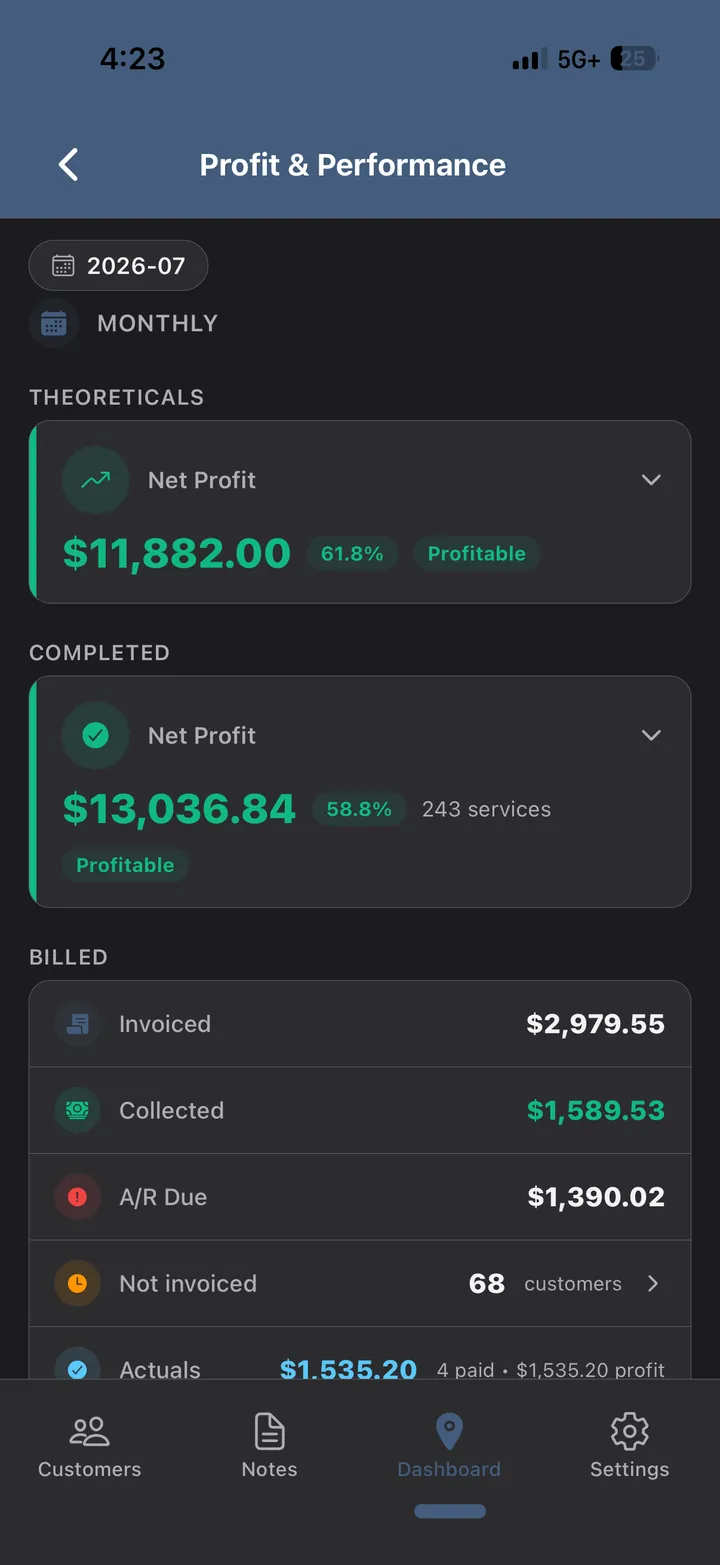
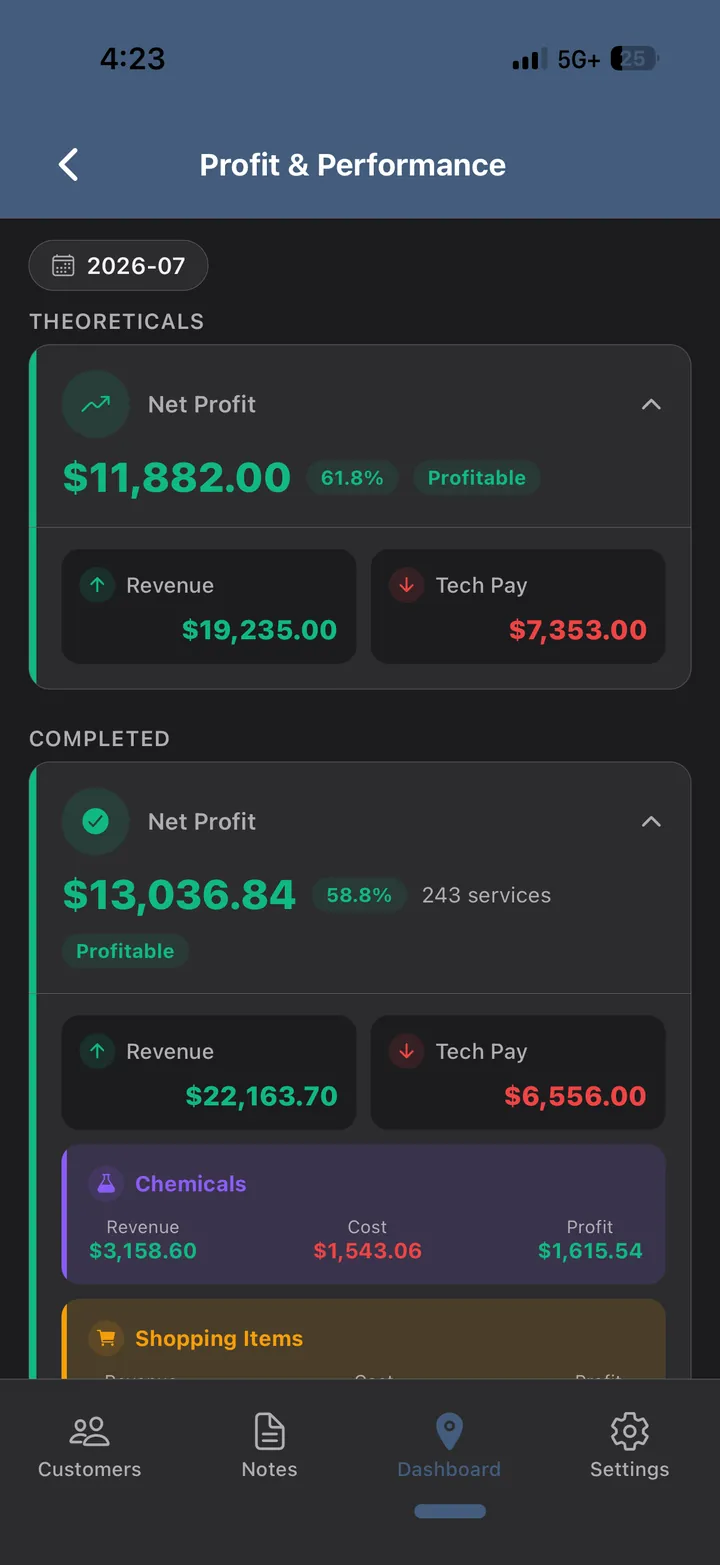
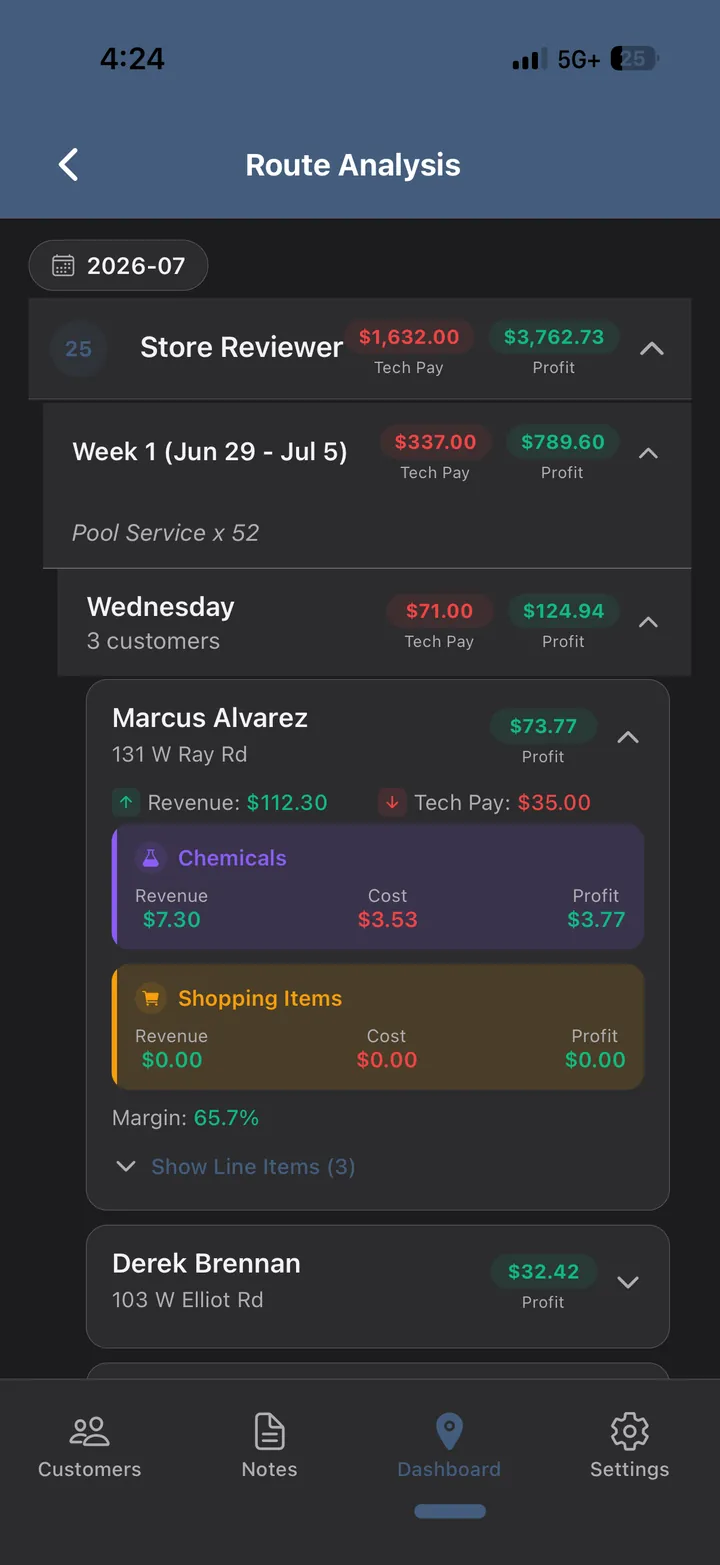
Theoretical against completed: what the book should earn if every visit happens, against what actually happened. Revenue, technician pay, chemical cost and parts, broken out — so margin is a measurement rather than an estimate.
For the business: you find out which customers are quietly unprofitable while you can still reprice them, rather than at tax time.
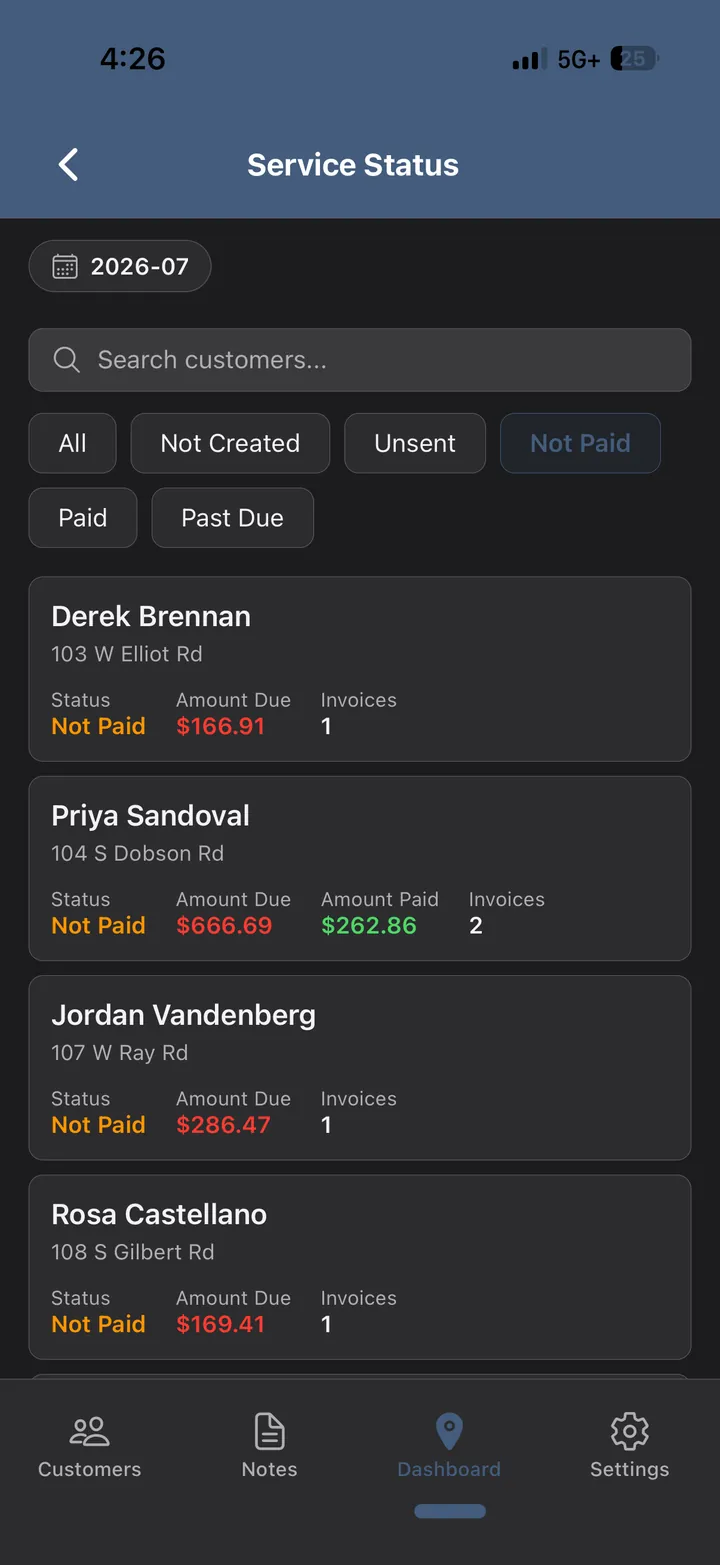
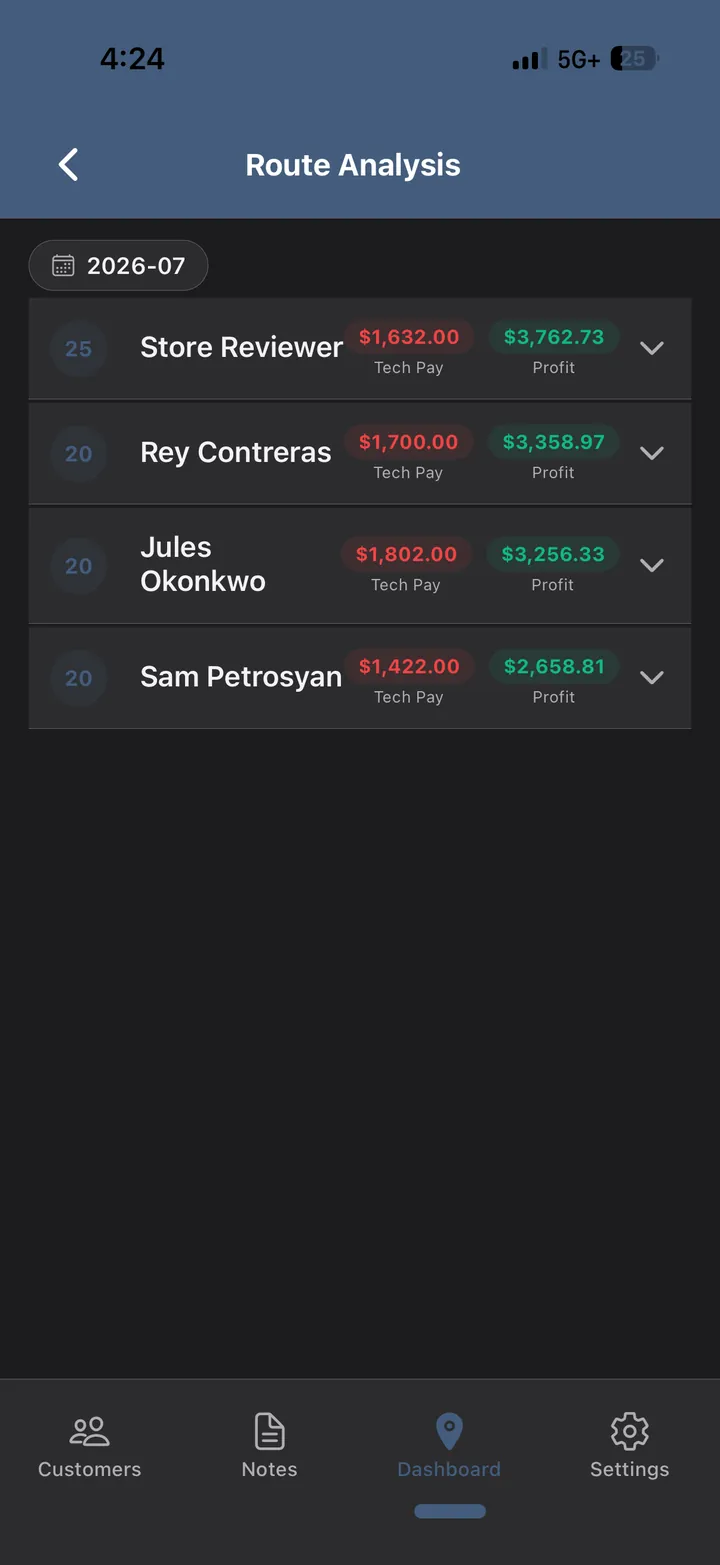
Receivables by customer with what is due and what has been paid. Route analysis down to the individual stop, week by week, so you can see the margin on a route before you decide to grow it.
For the business: you know which route to add a tech to, and which customer to have a conversation with, before either becomes urgent.
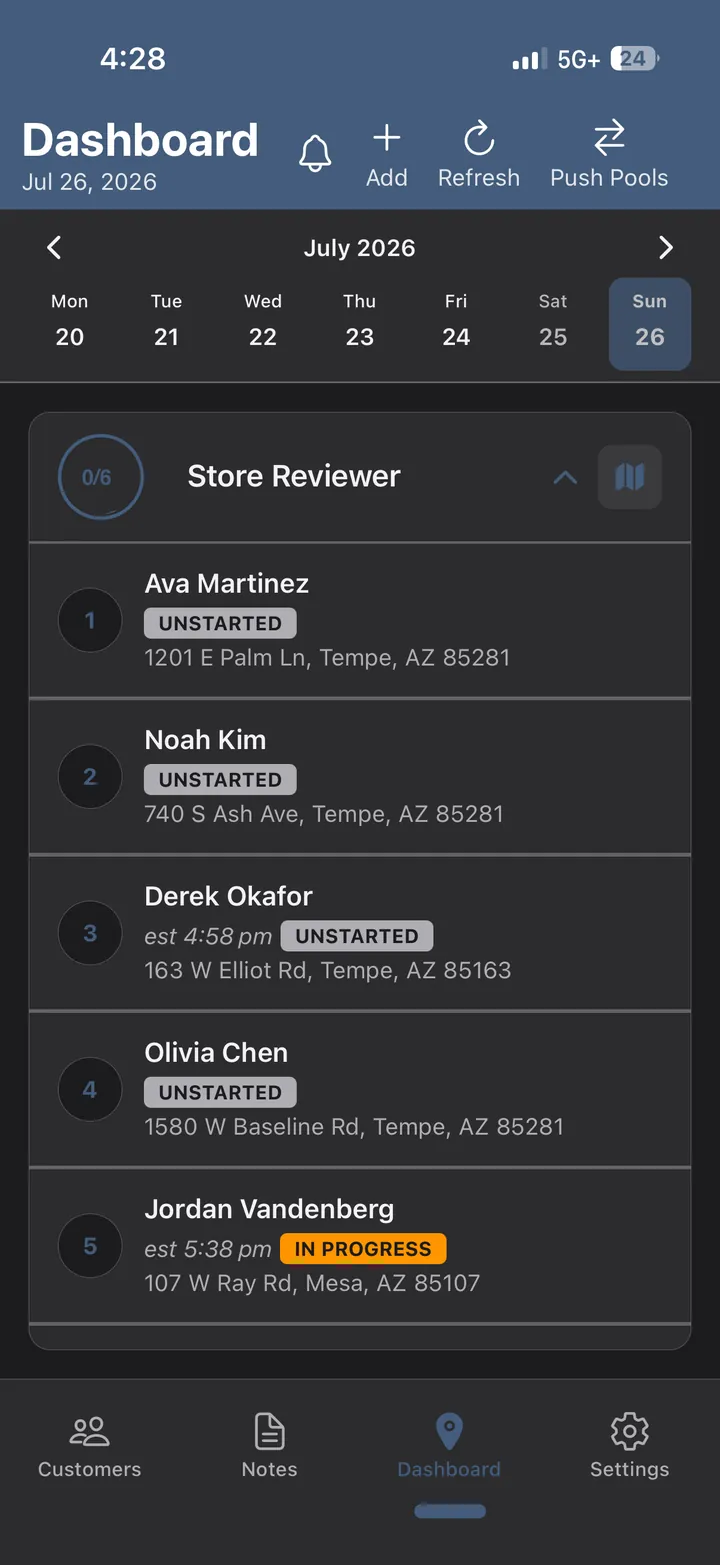
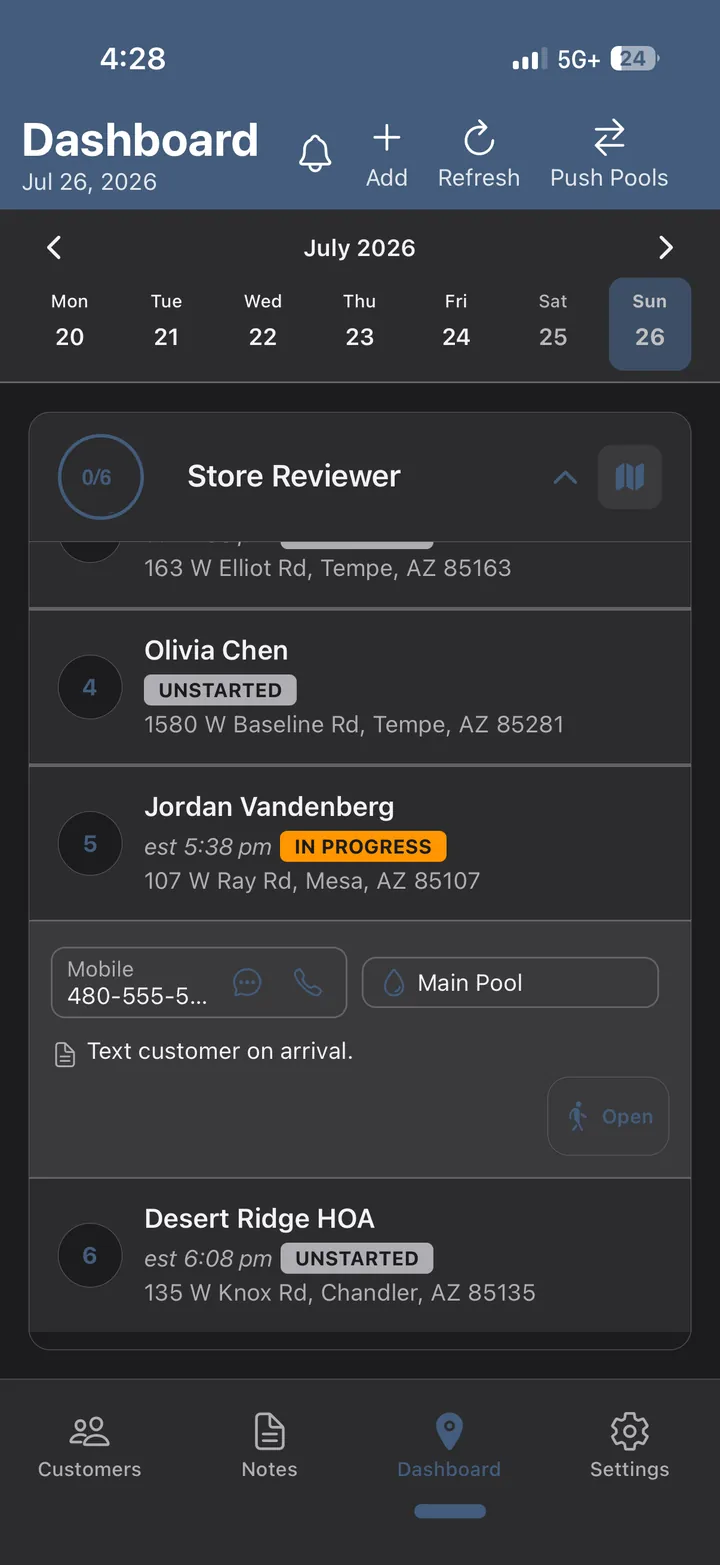
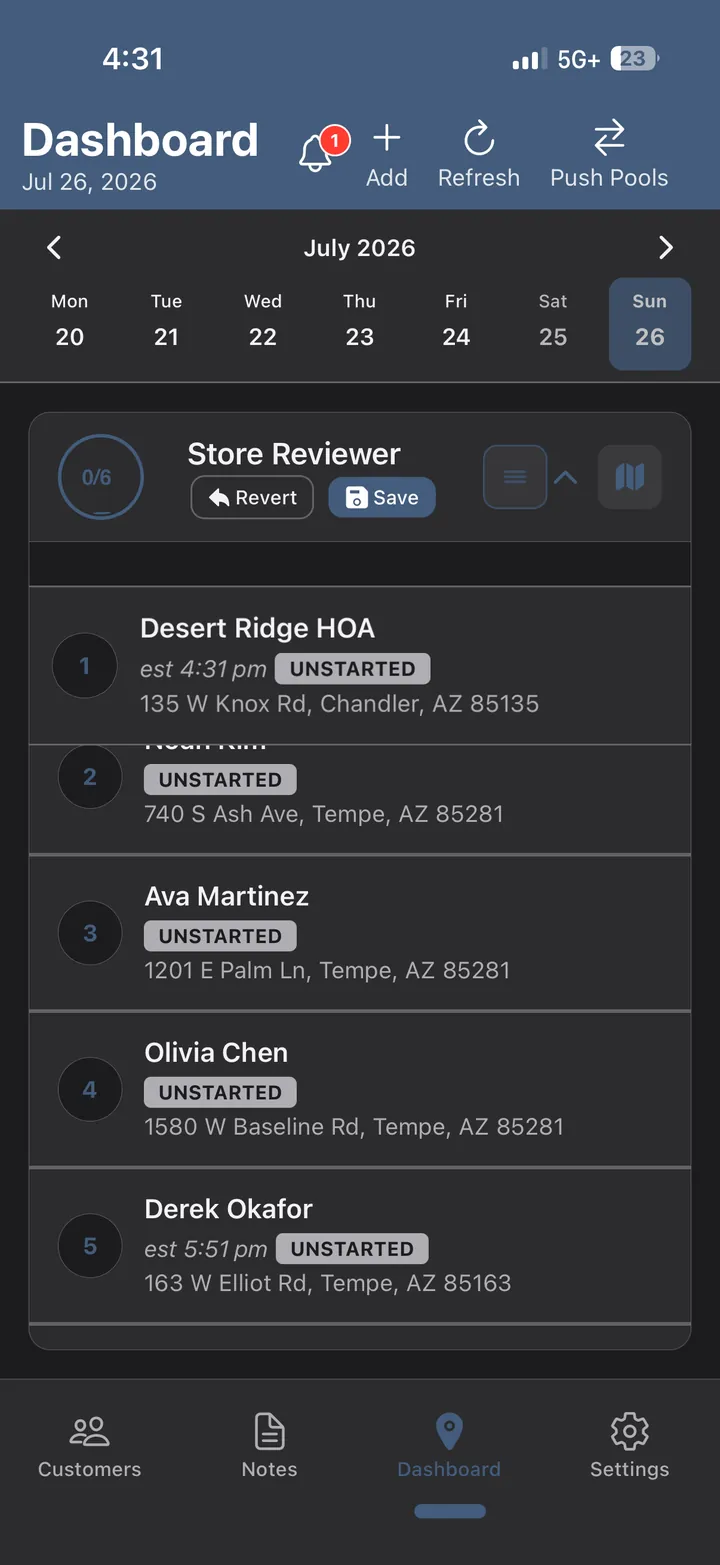
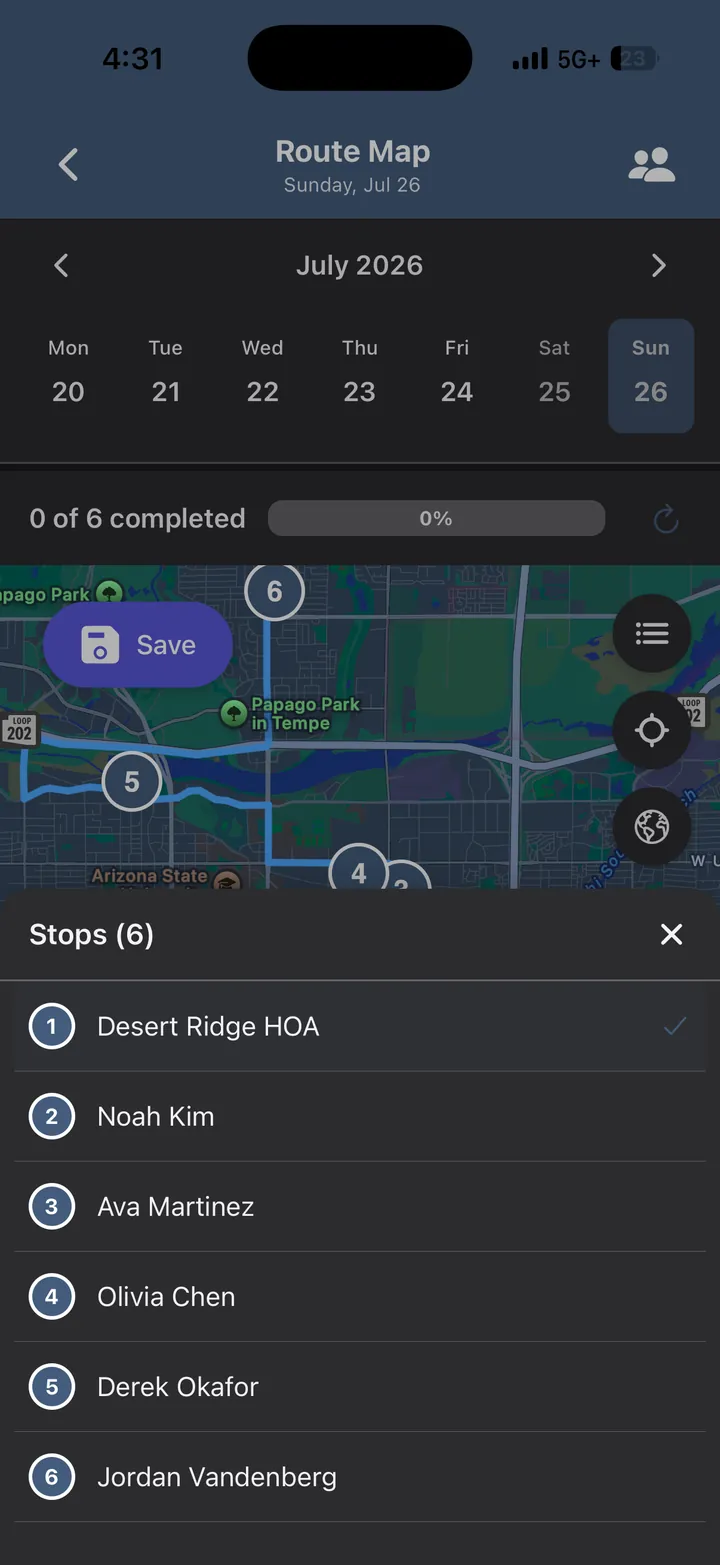
Today's stops in the order they will be hit, with status on each. Open a stop for the gate code, the location note, the customer's mobile — call or text without leaving the screen. Drag to reorder when the day changes.
For the tech: everything needed for the next stop is on one screen. For the business: you can see the day progressing without ringing anyone.
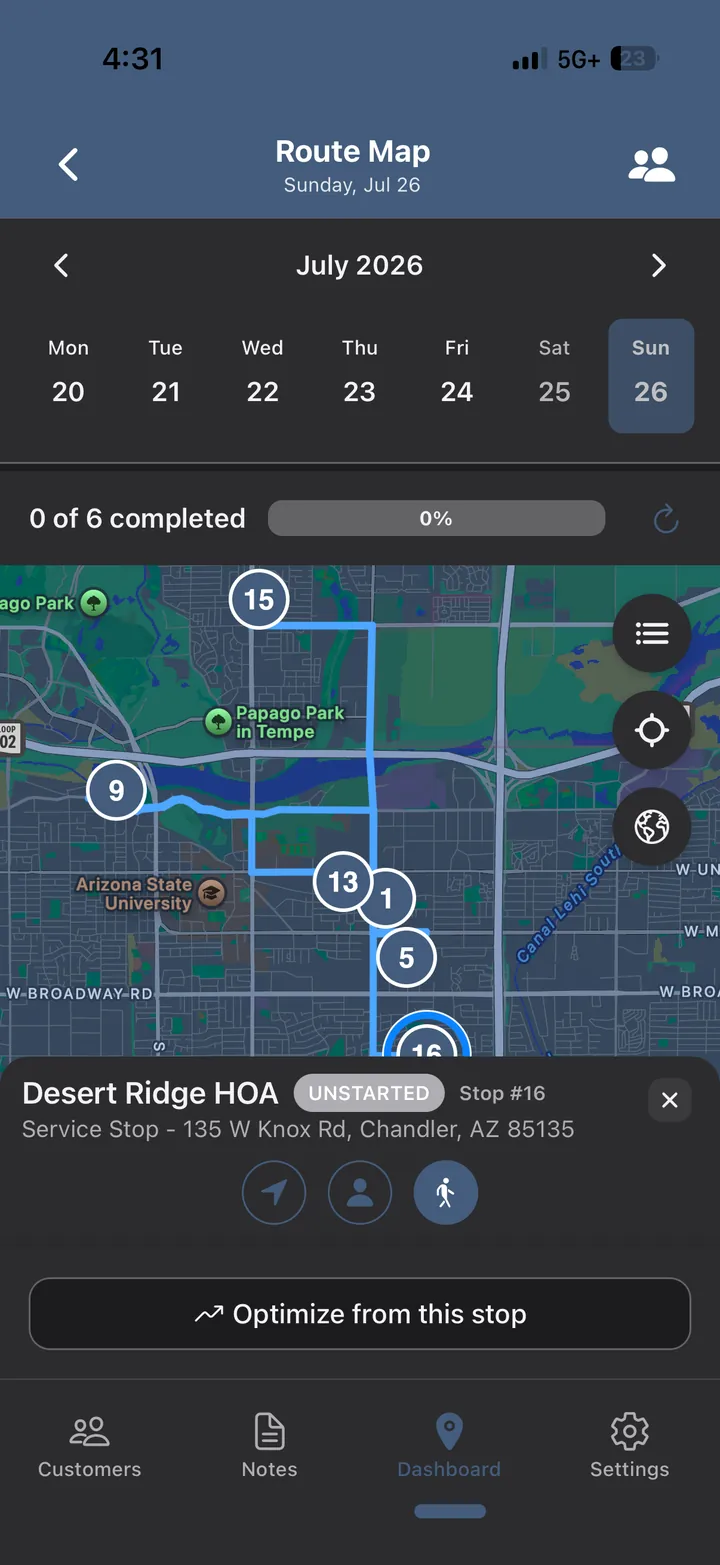
Every stop on the map, numbered in the order they will be hit. Optimise from wherever the truck actually is right now — not from the depot at 6am, which is a route nobody drives. Then hand off to Apple or Google Maps for the turn-by-turn.
For the tech: less driving, same pay per stop. For the business: fuel and hours come down without anyone being told to hurry.
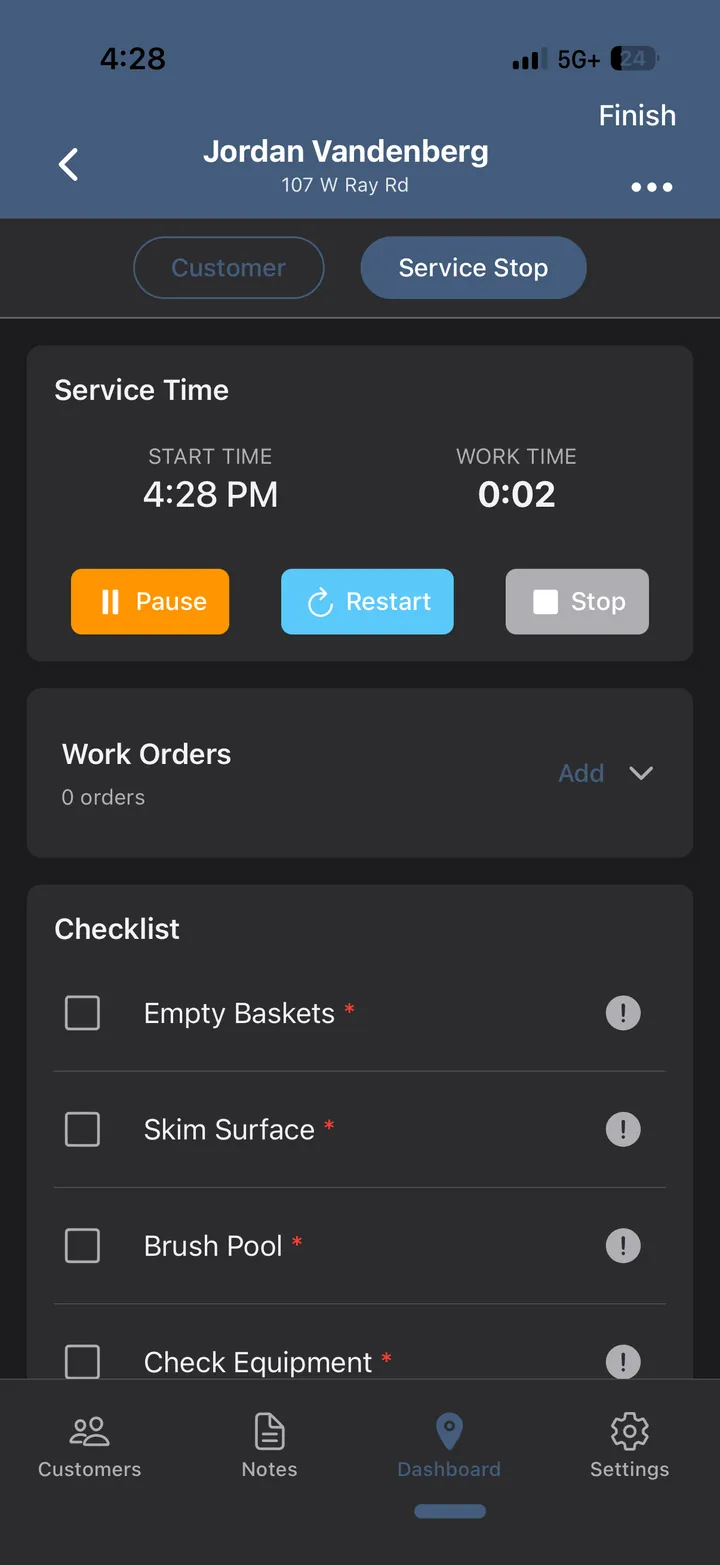
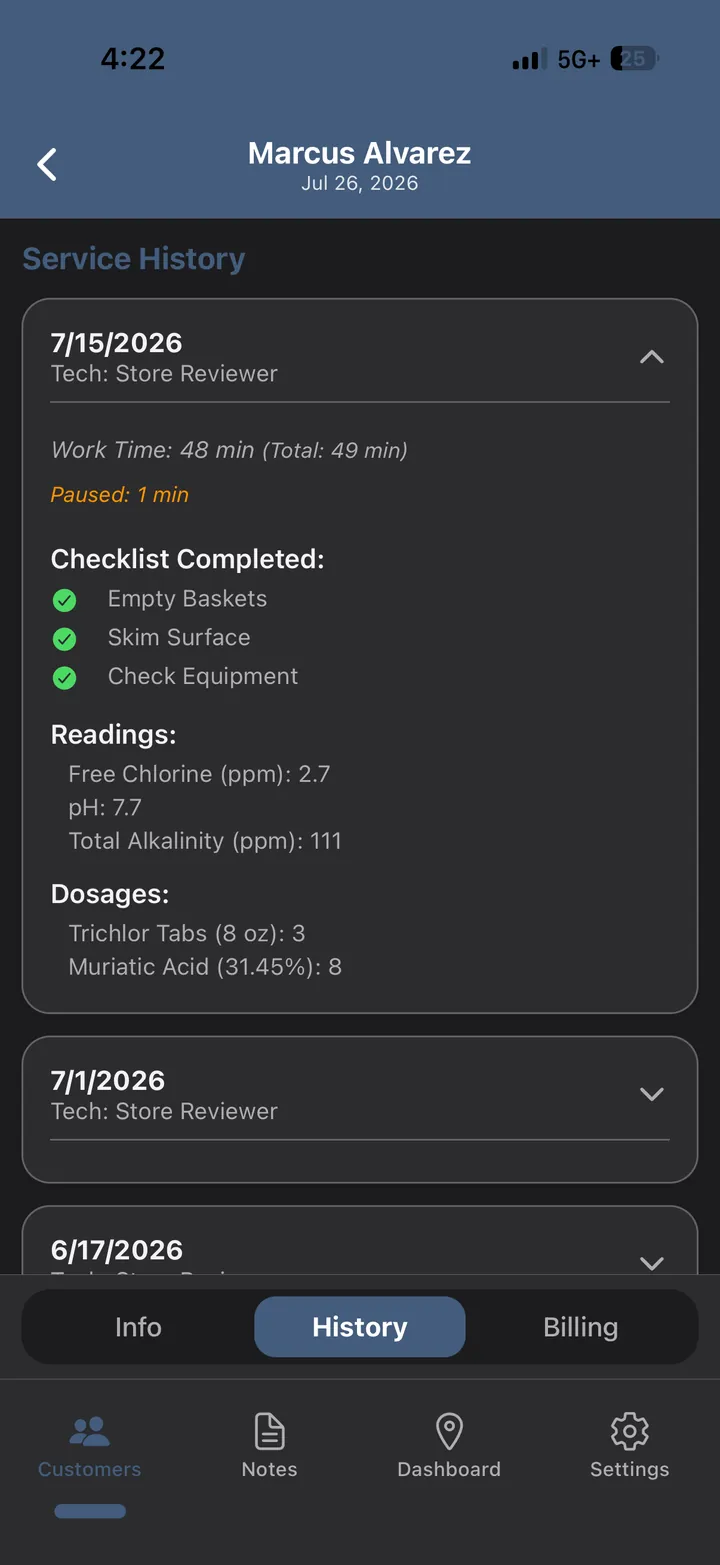
A timer that records real time on site, including pauses, and a checklist that has to be worked rather than remembered. If there is no signal in the back yard it all queues locally and syncs when the phone finds a bar.
For the tech: no signal is not an outage, and the work is not lost. For the business: time on site is a number you have, not a claim.
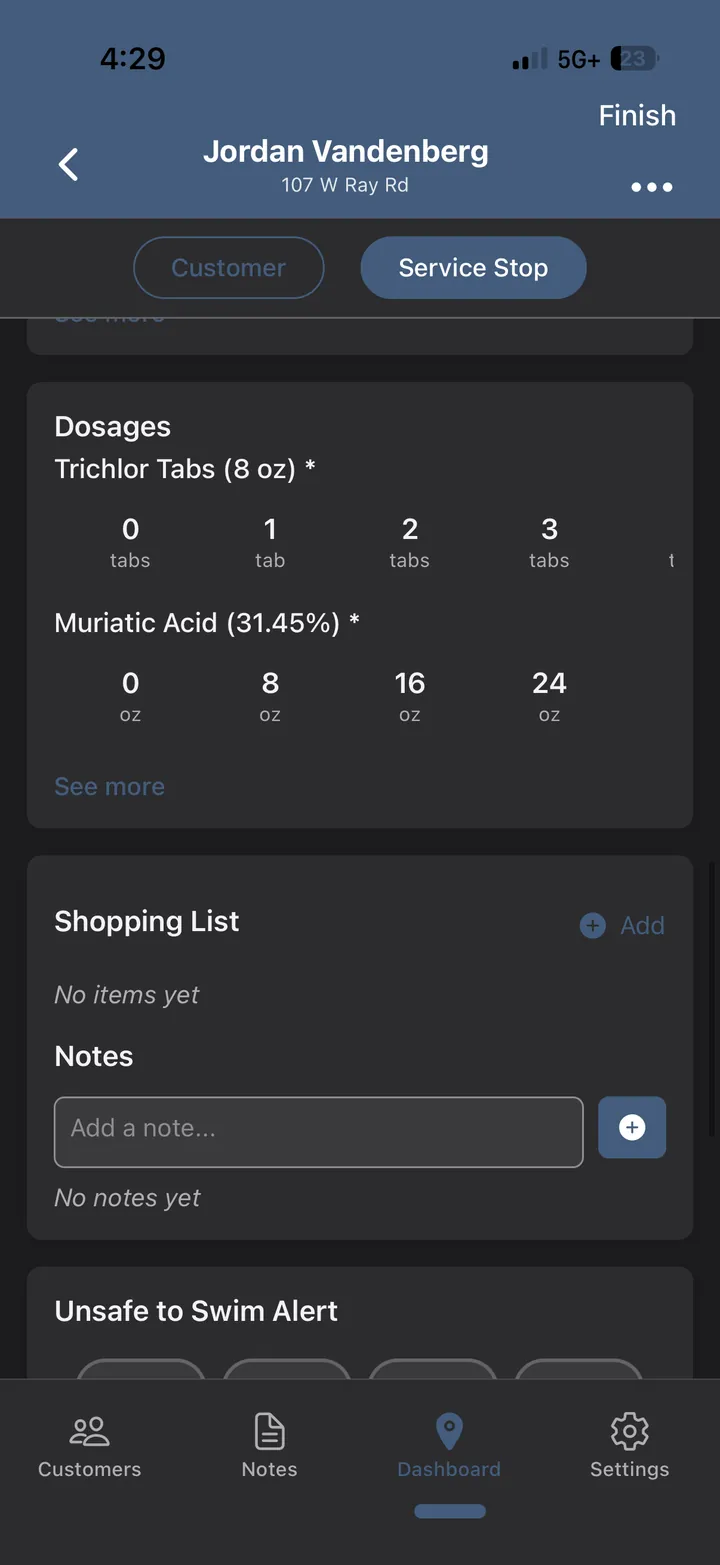
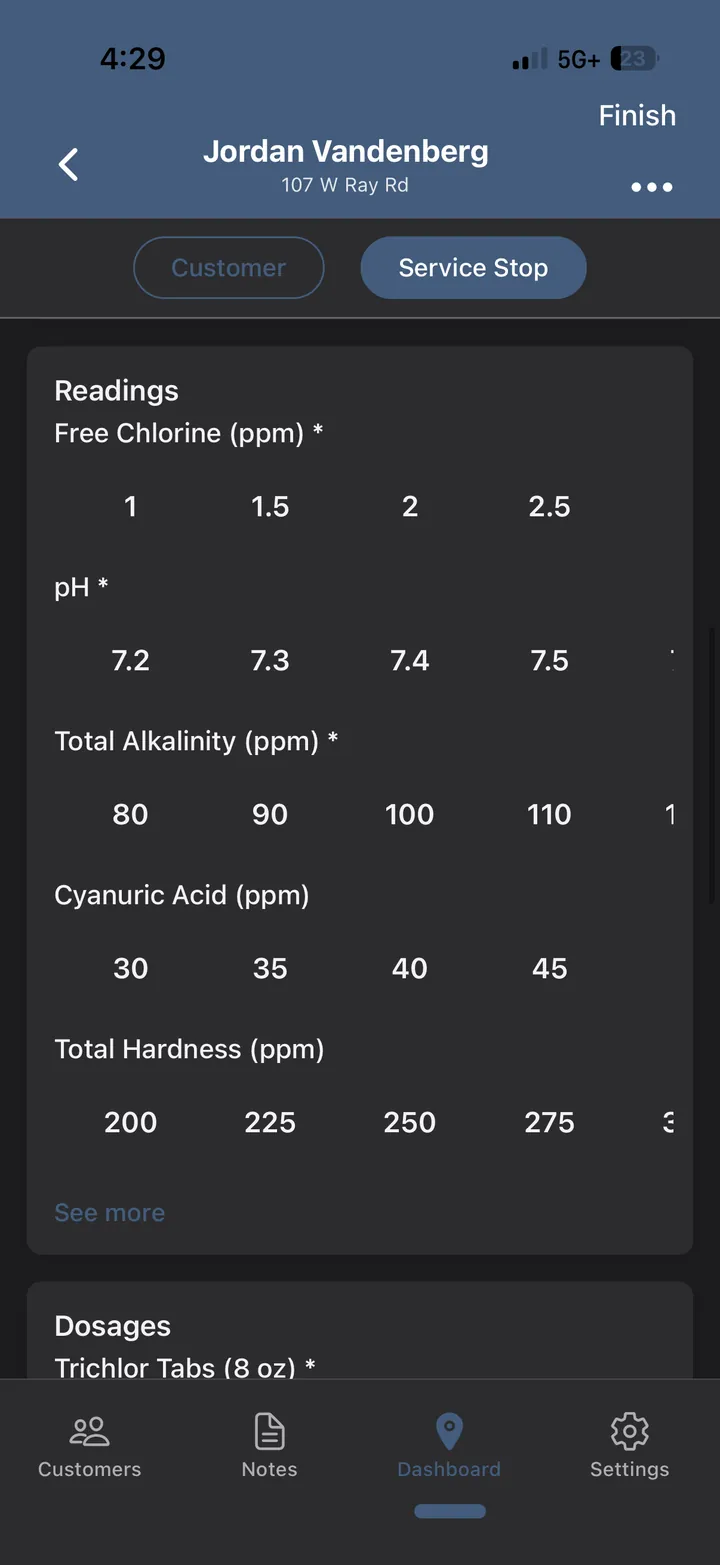
Chlorine, pH, alkalinity, cyanuric acid, hardness — tapped from the values that actually occur, not typed into a free field. Dosages the same way, priced at your cost so the chemical margin lands in the report by itself.
For the tech: the chemistry is logged before the lid is back on. For the business: chemical spend per pool stops being a guess.
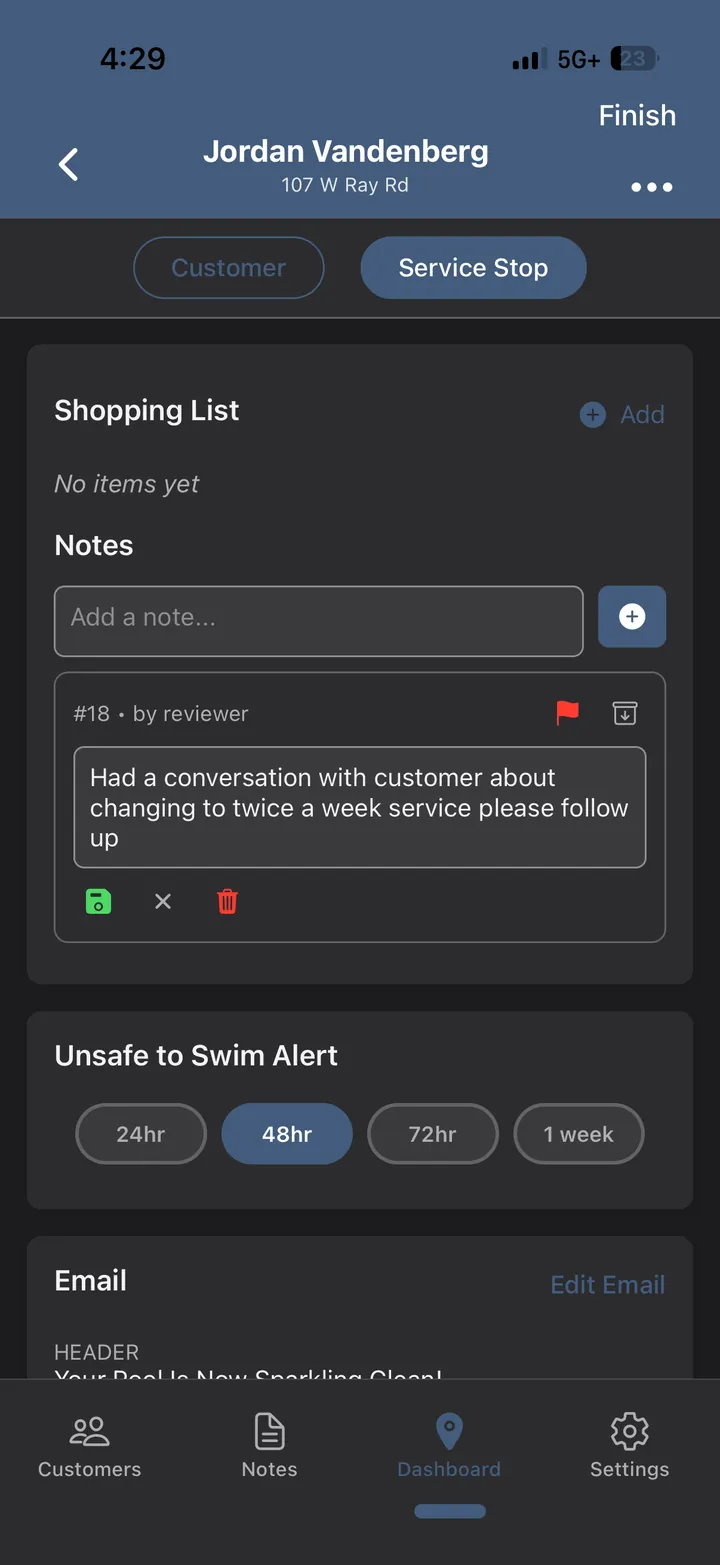
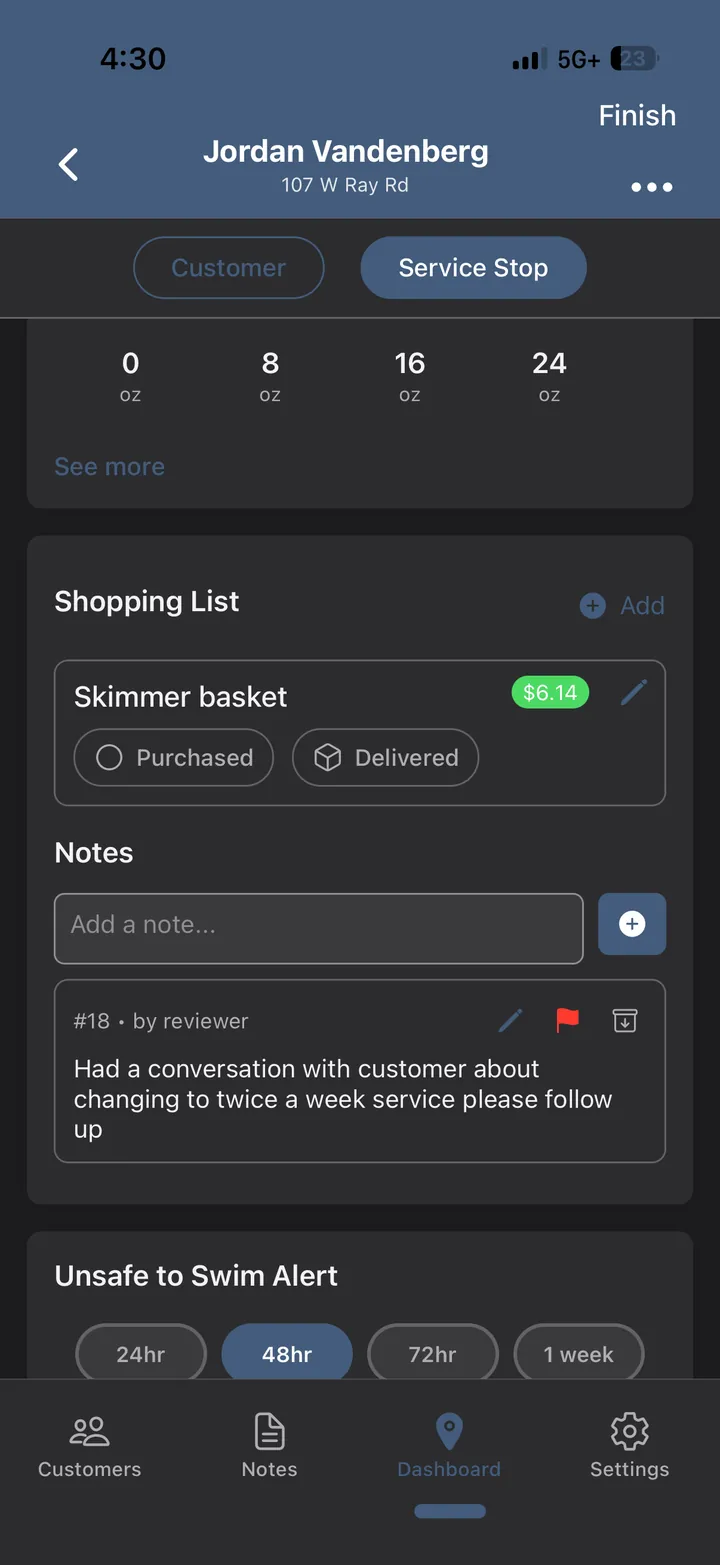
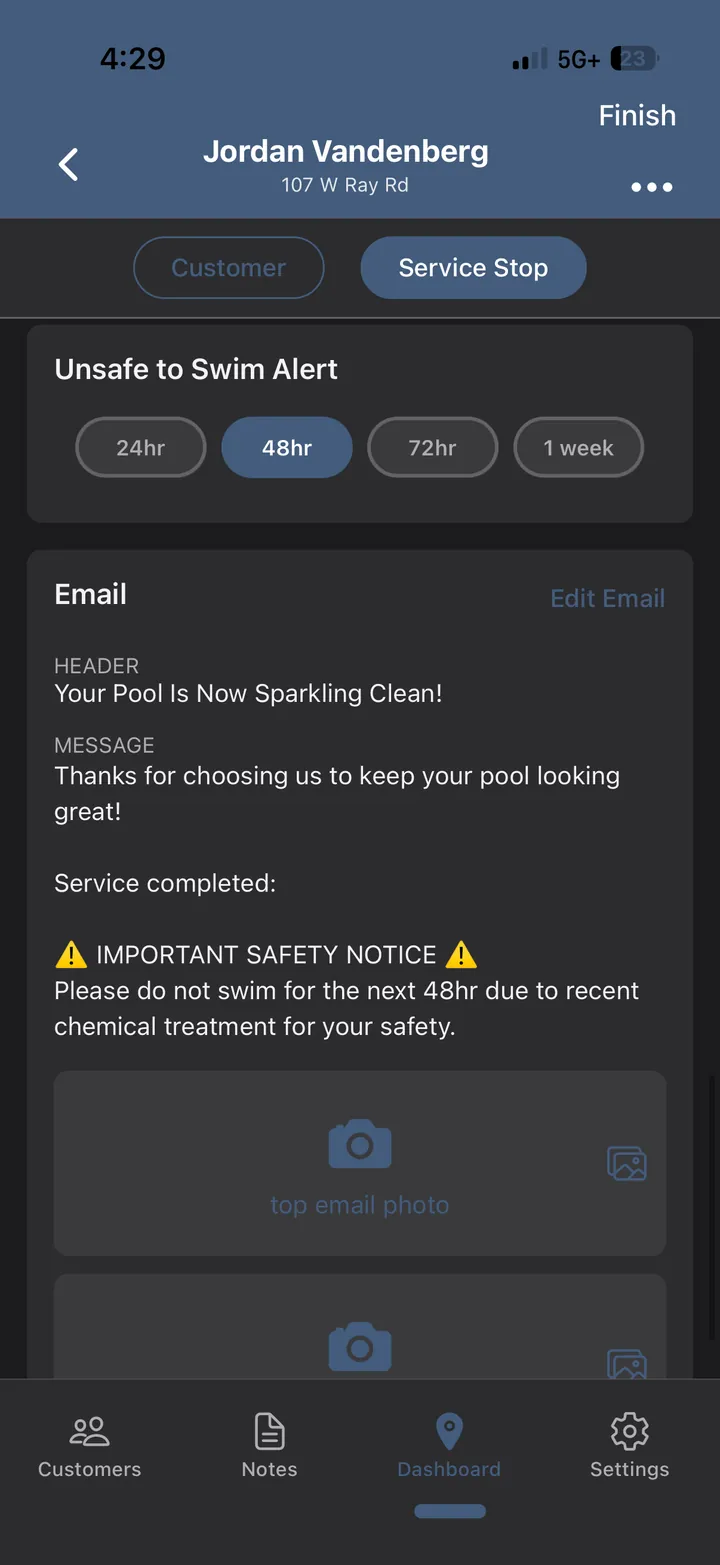
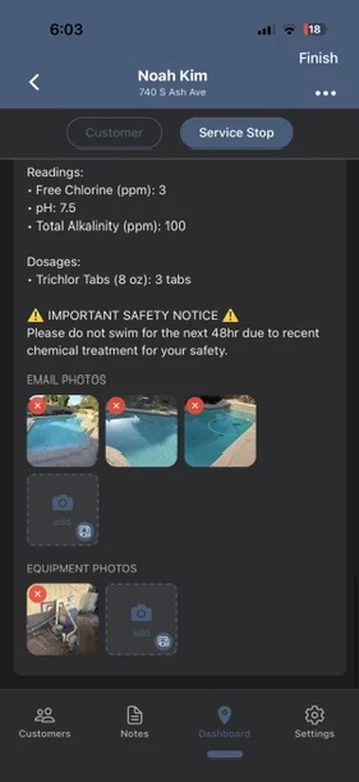
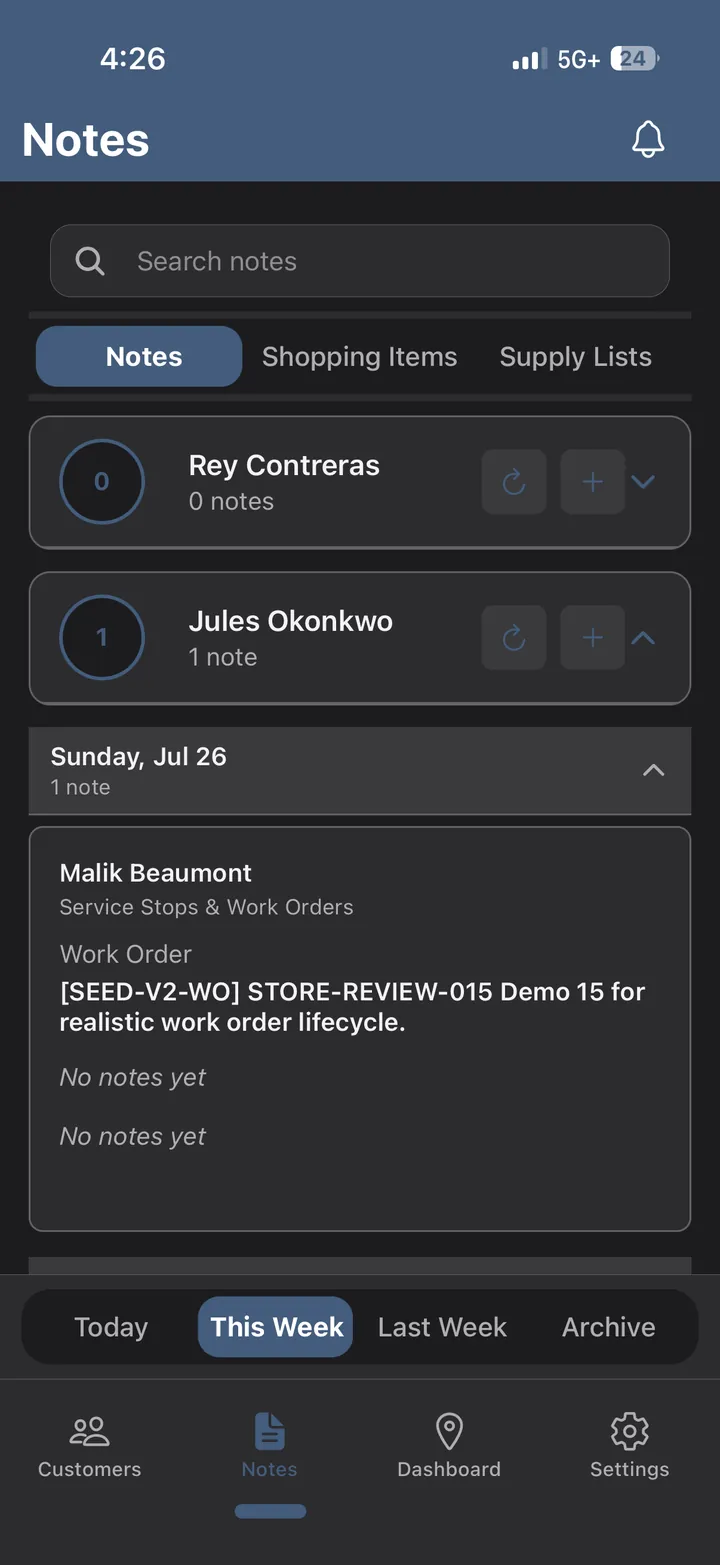
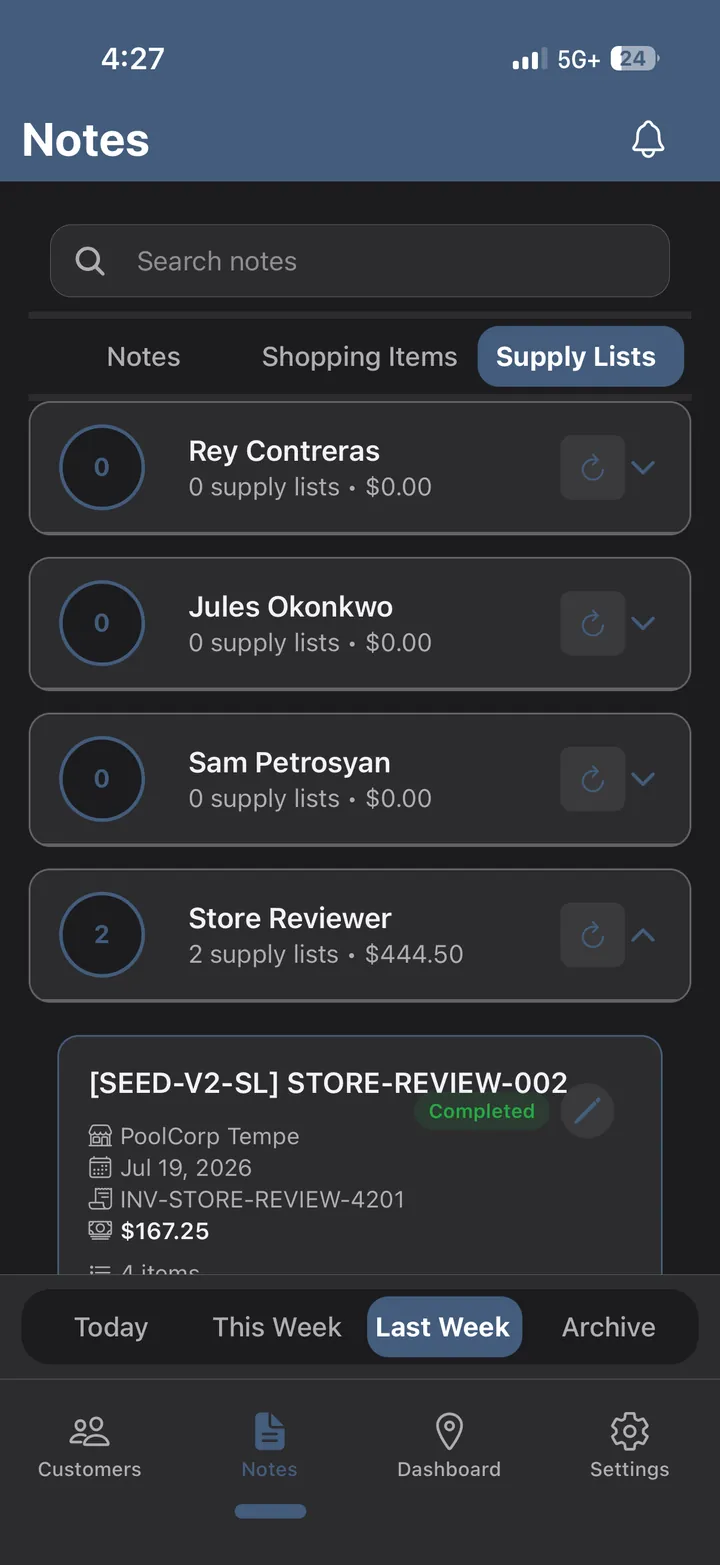
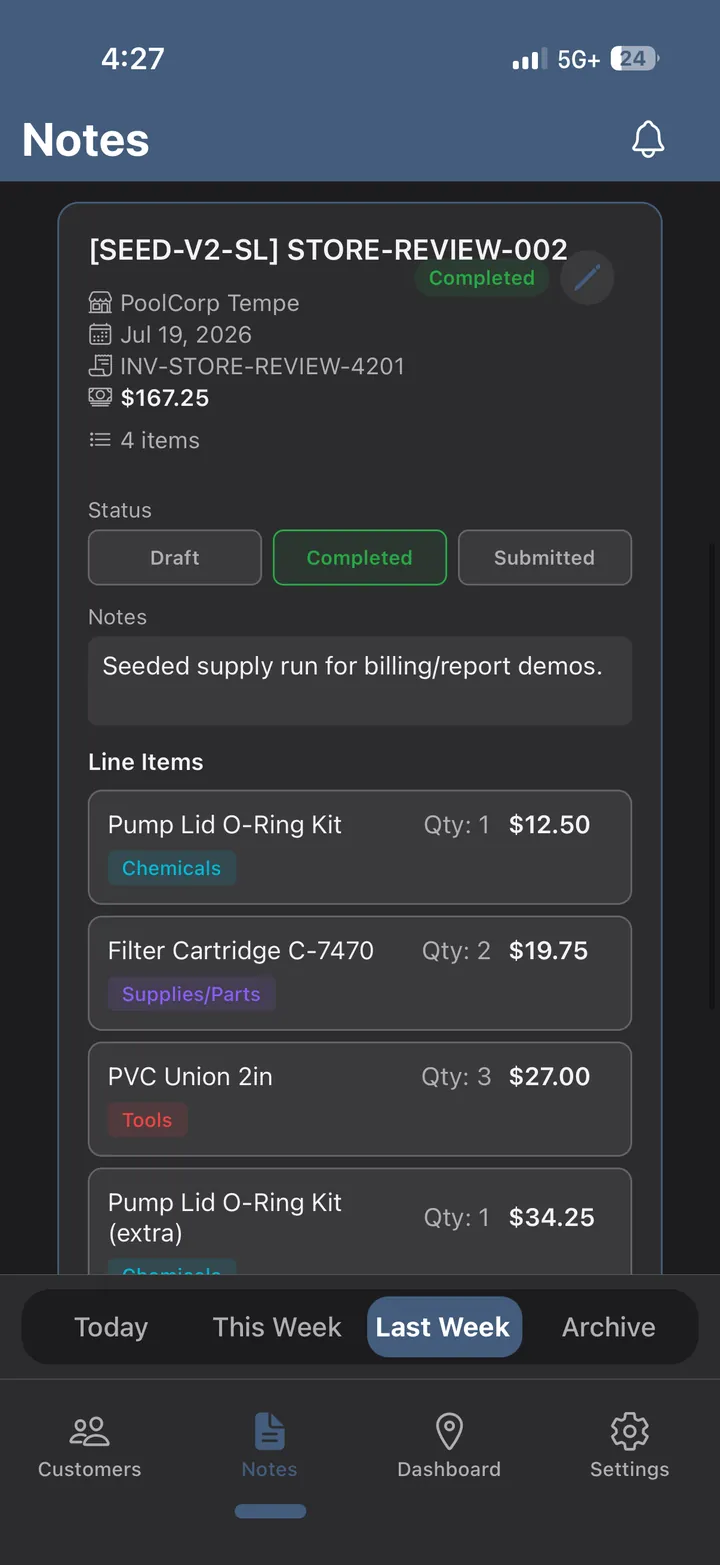
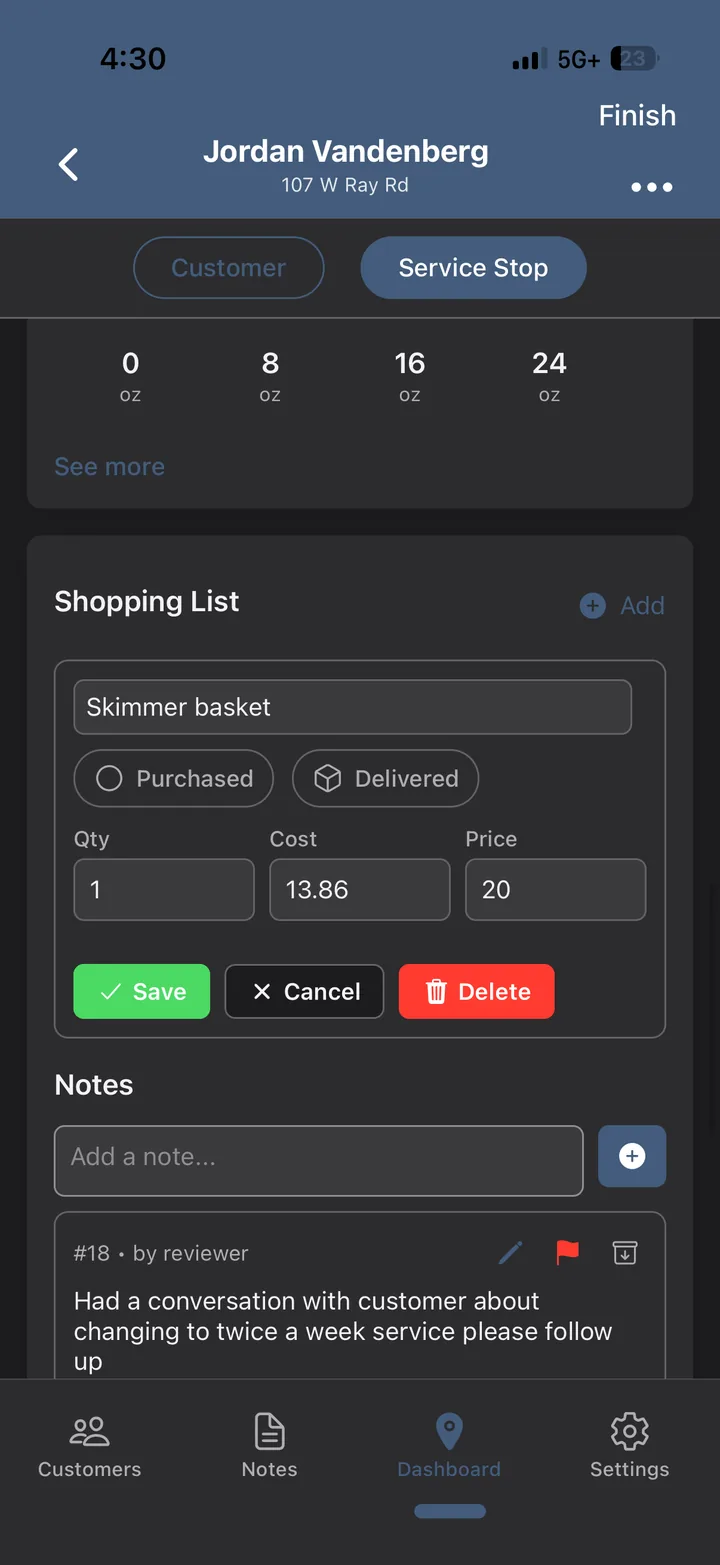
A skimmer basket goes on the shopping list with its cost and its price, so the markup is captured at the moment it is used. Notes can be flagged for the office. And if the pool was just treated, the unsafe-to-swim window gets set right there.
For the tech: the part they fitted is already on the invoice. For the business: parts stop leaking, and the safety notice is documented.
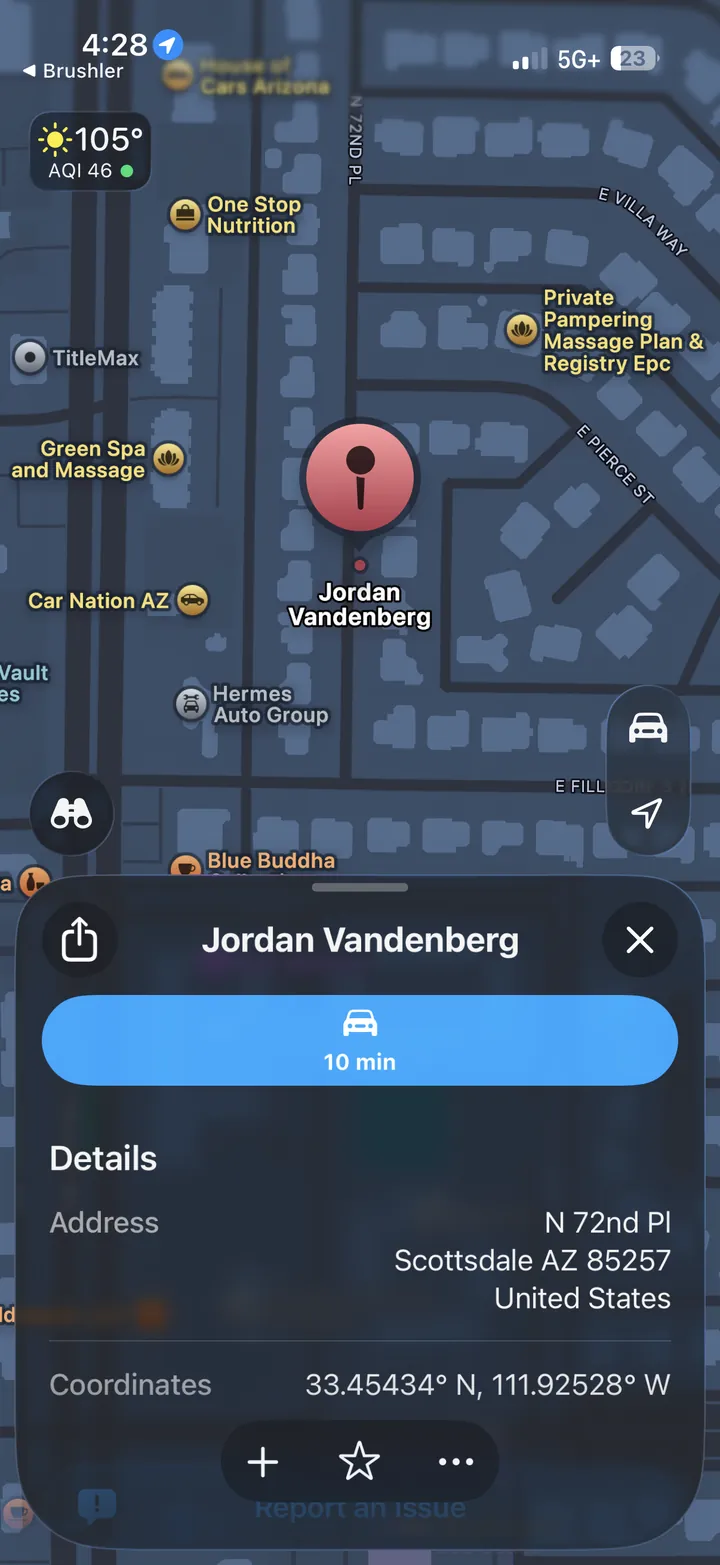
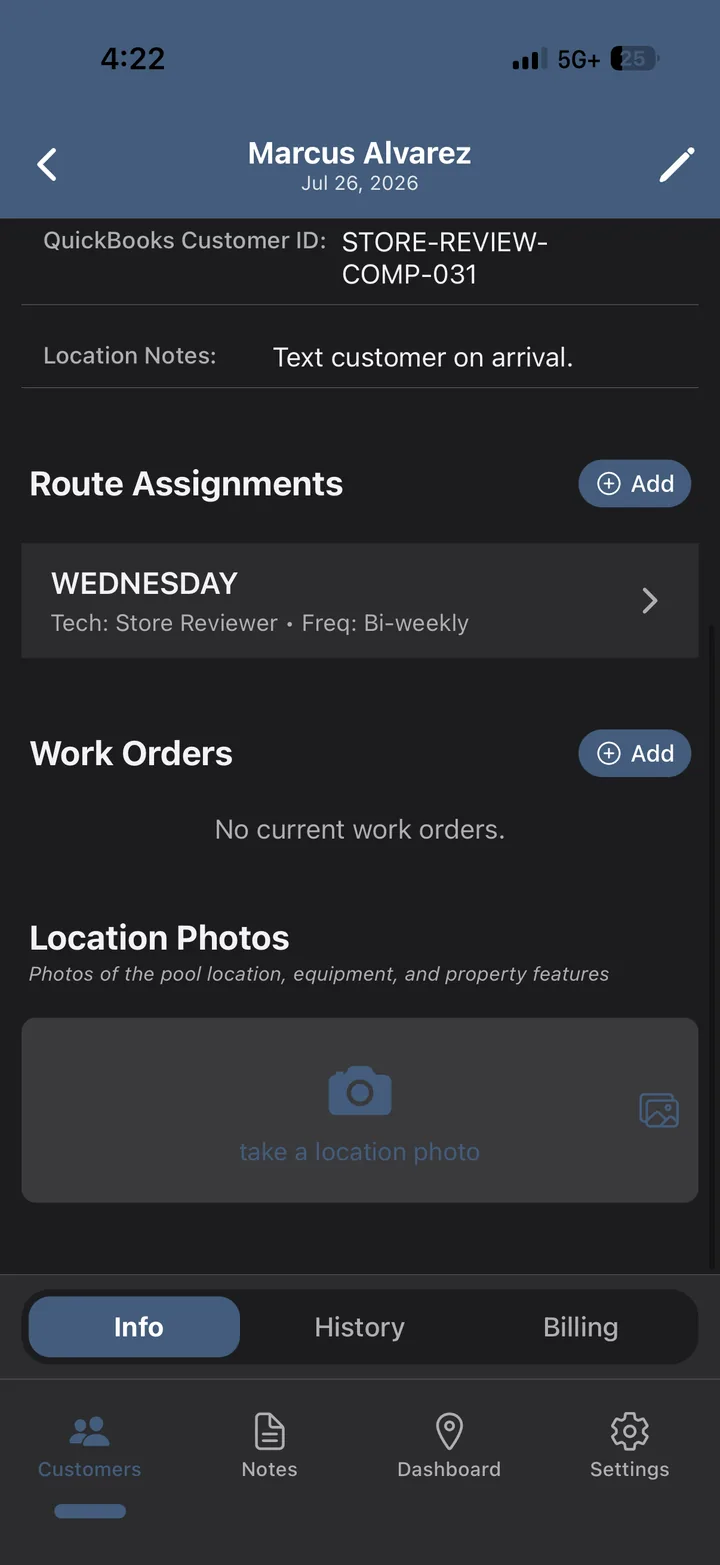
Service address and billing address, billing timing and cycle, gate code, estimated minutes on site, the QuickBooks customer it maps to, and the location photos that tell a covering tech which gate to use.
For the tech: a route they have never driven is still obvious. For the business: holiday cover stops being a risk.
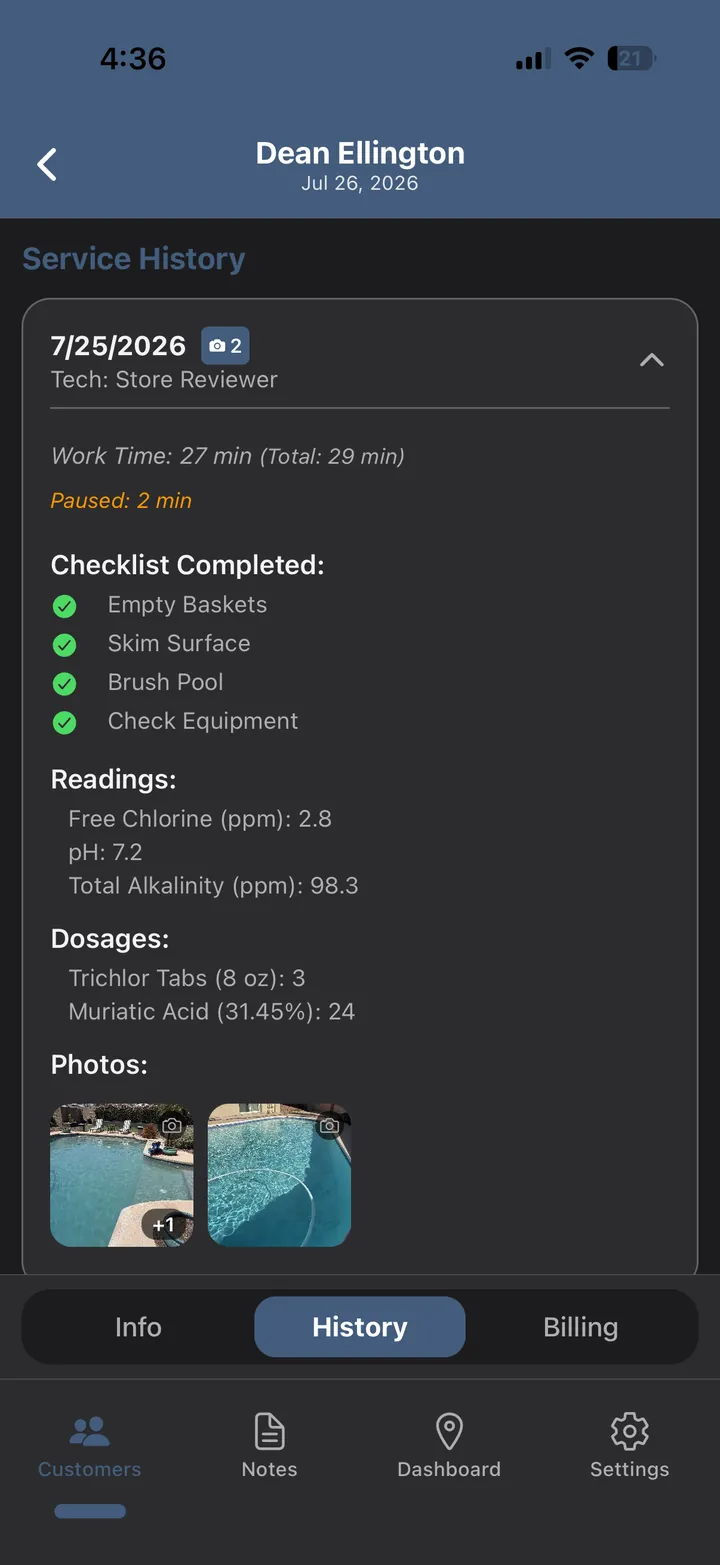
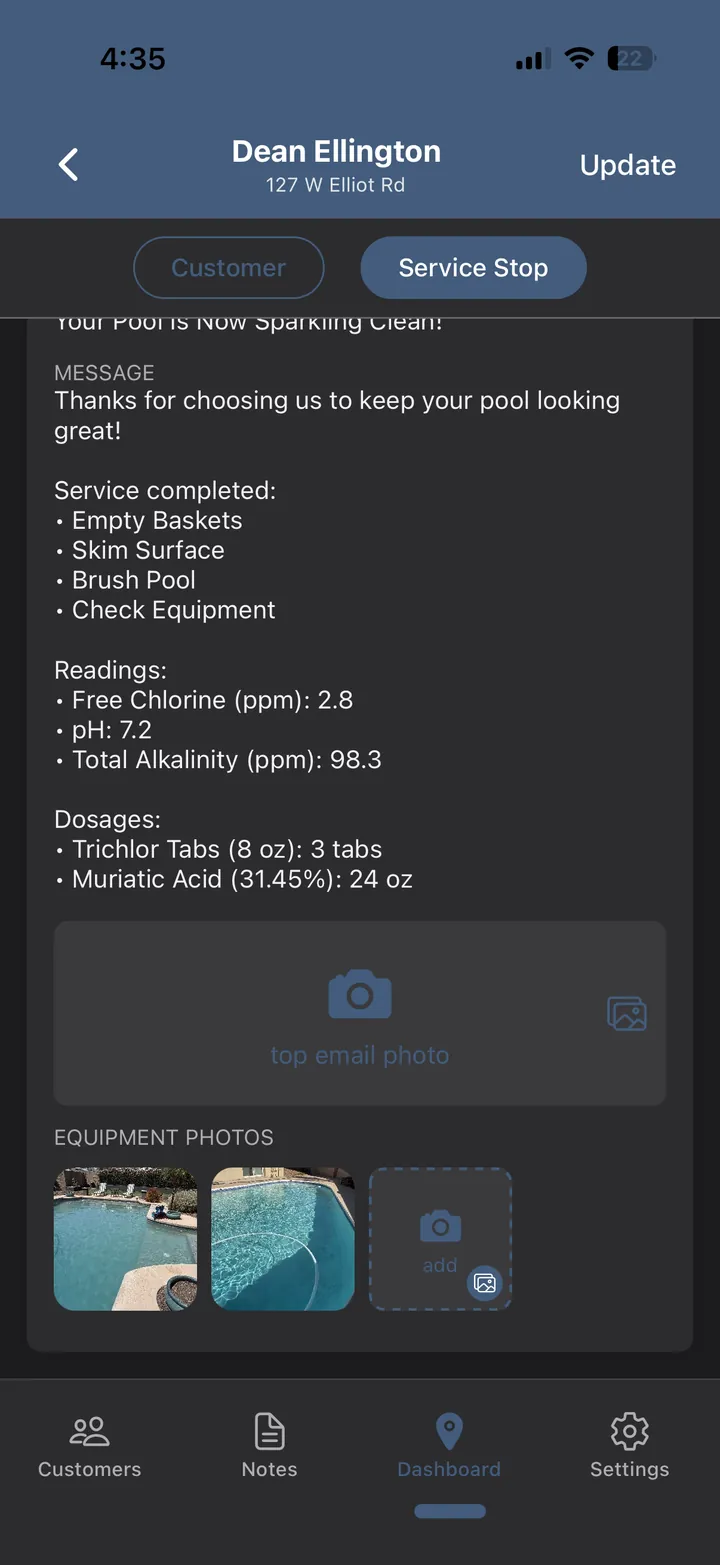
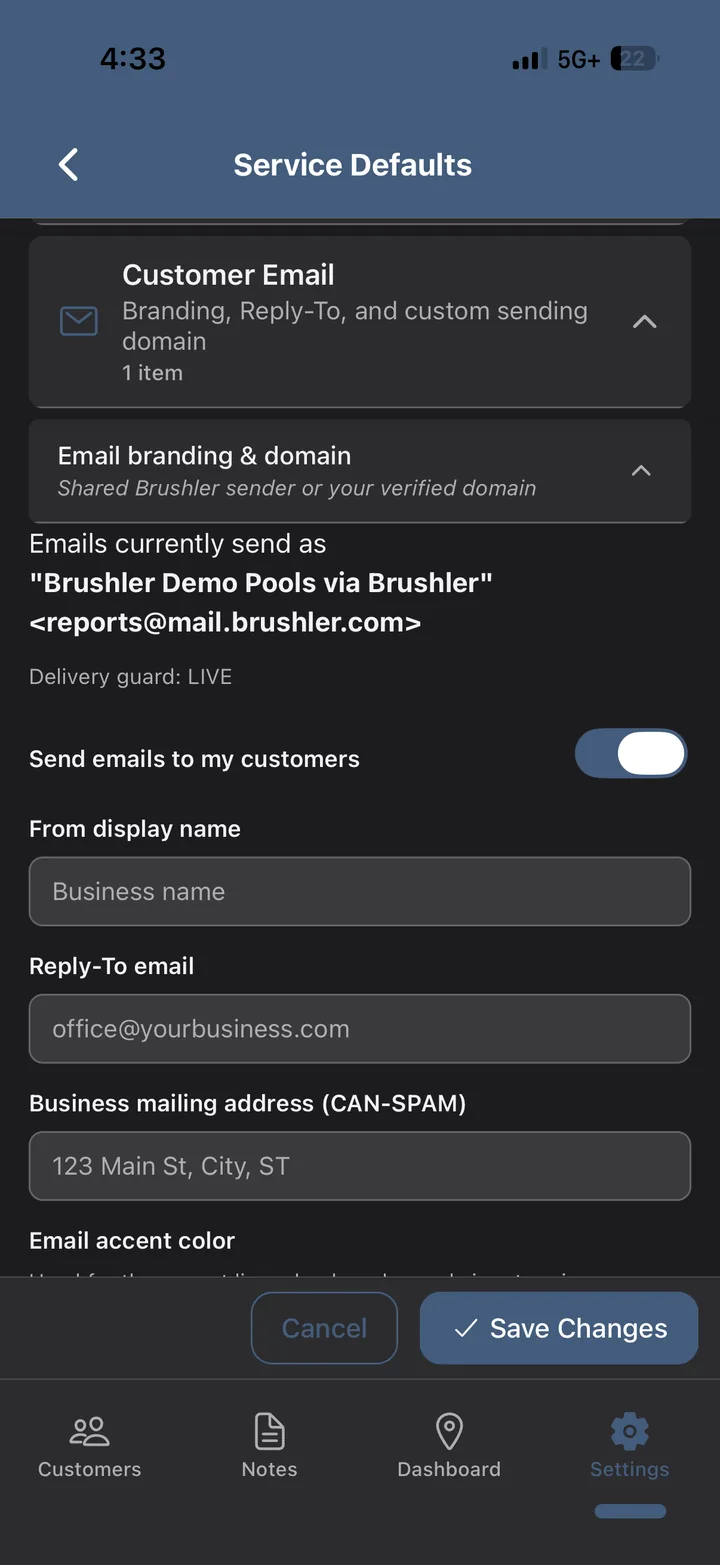
Photos are attached to the visit, not to a text thread. The customer gets a branded email the same evening with the checklist, the readings, the dosages and the pictures — from your domain, not ours.
For the tech: no arguments about whether the pool was serviced. For the business: the thing customers show their neighbours has your name on it.
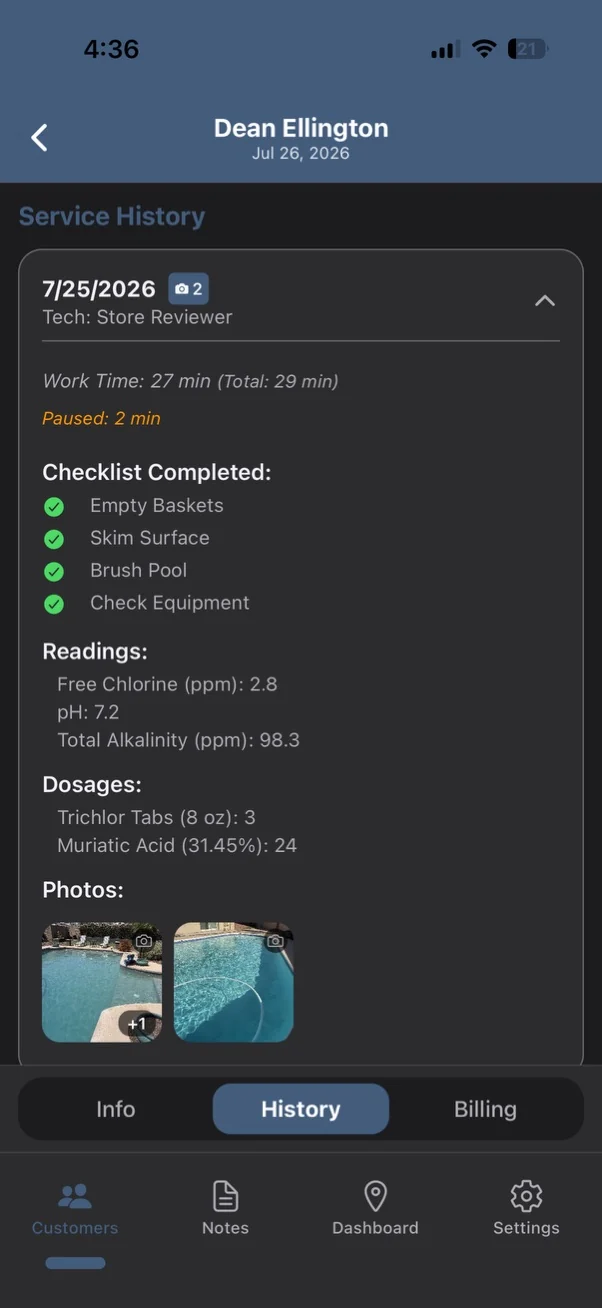
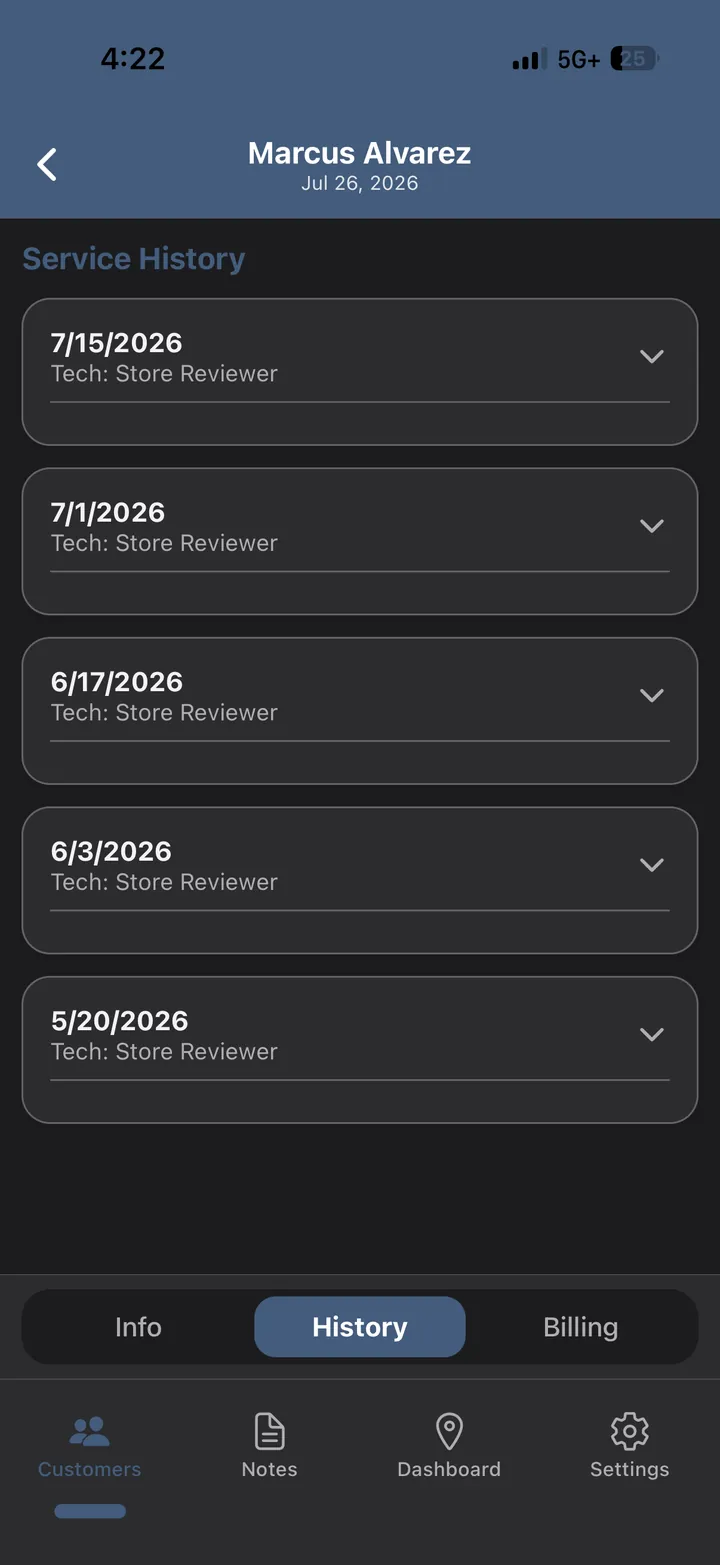
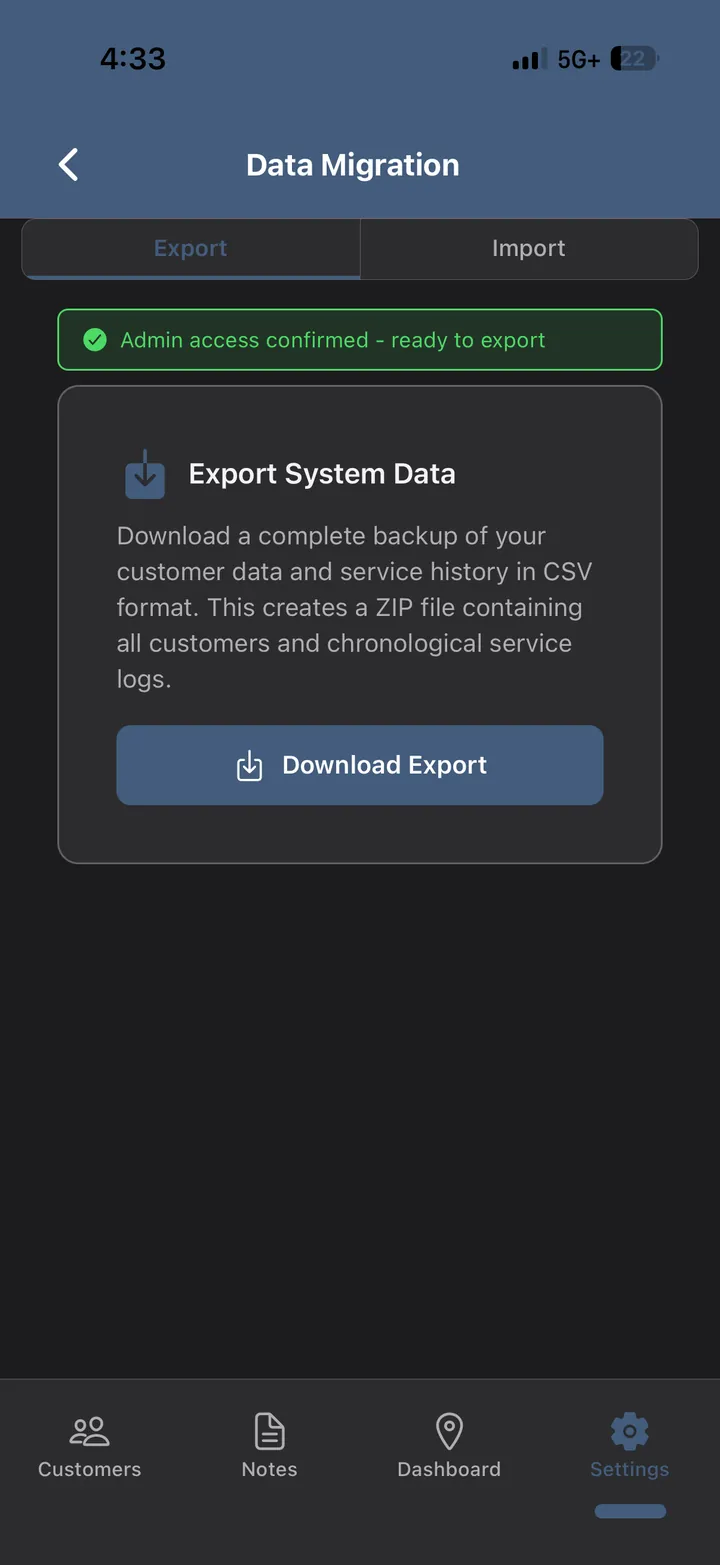
Every visit, going back as far as you have been running: who serviced it, how long they were there, what they read, what they added, what they photographed. Searchable, and yours to export whenever you want it.
For the business: a disputed visit is settled in about ten seconds, and a customer who leaves takes no institutional knowledge with them.
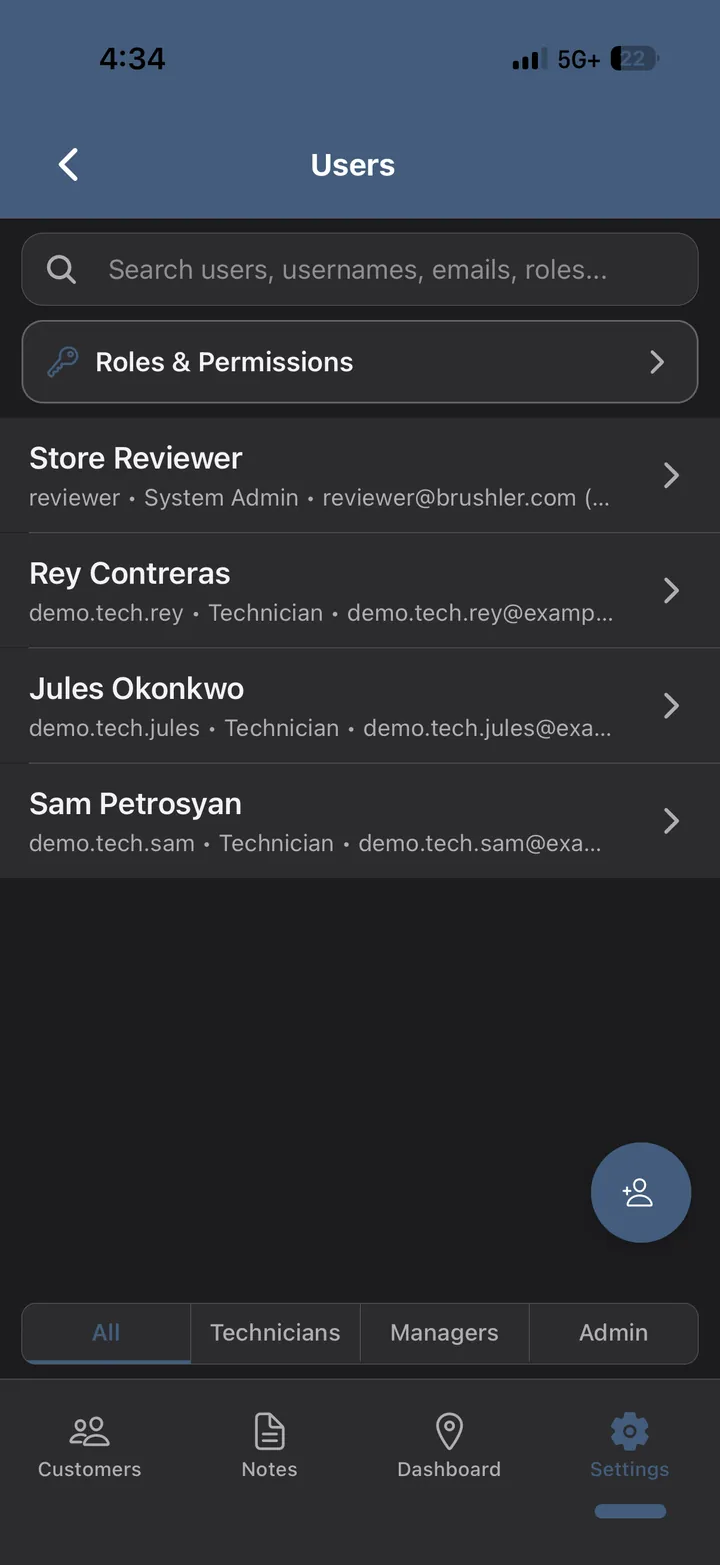
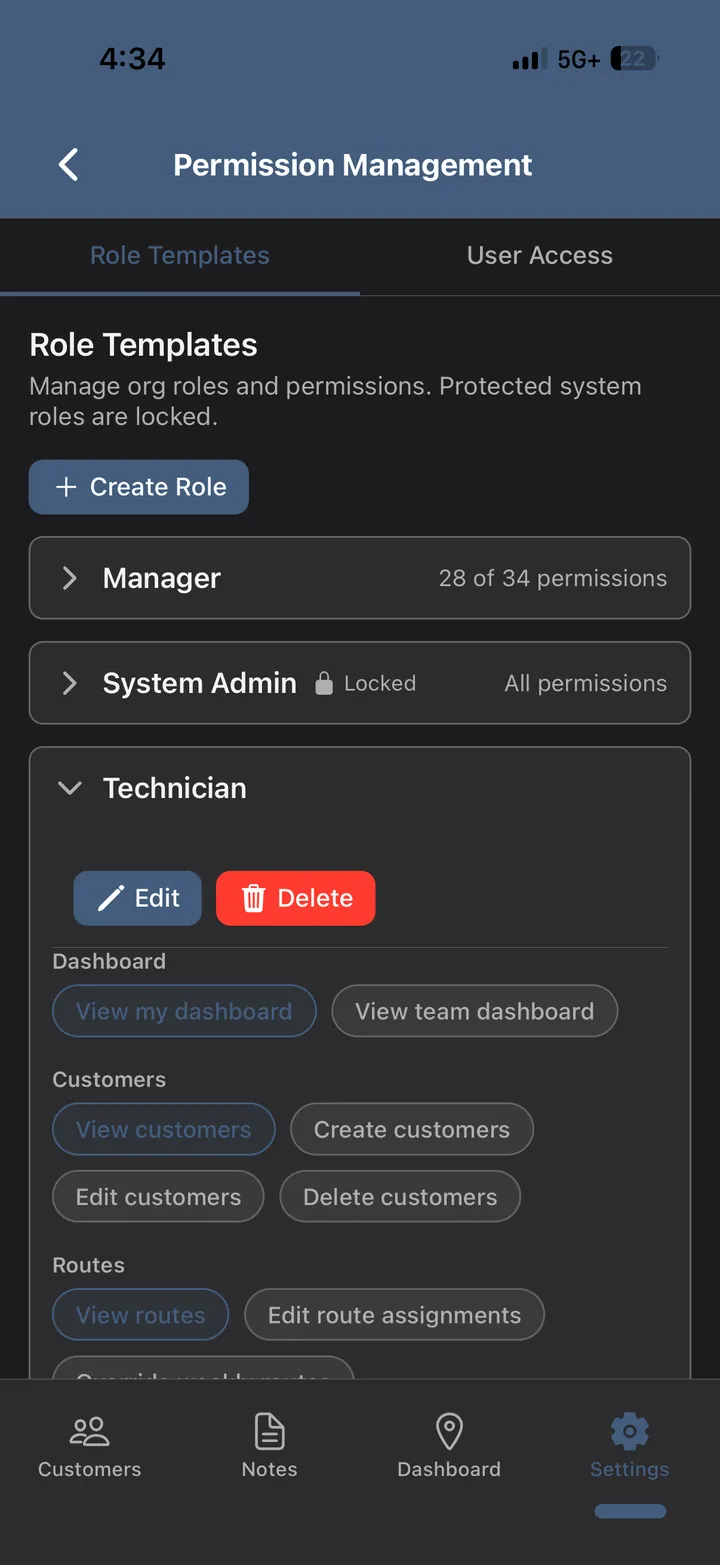
Role templates rather than per-person permission lists. Technicians see their own dashboard and their own routes; managers see the team; admin sees everything. Protected system roles cannot be edited into a hole.
For the business: a technician's phone is not a window into your receivables.
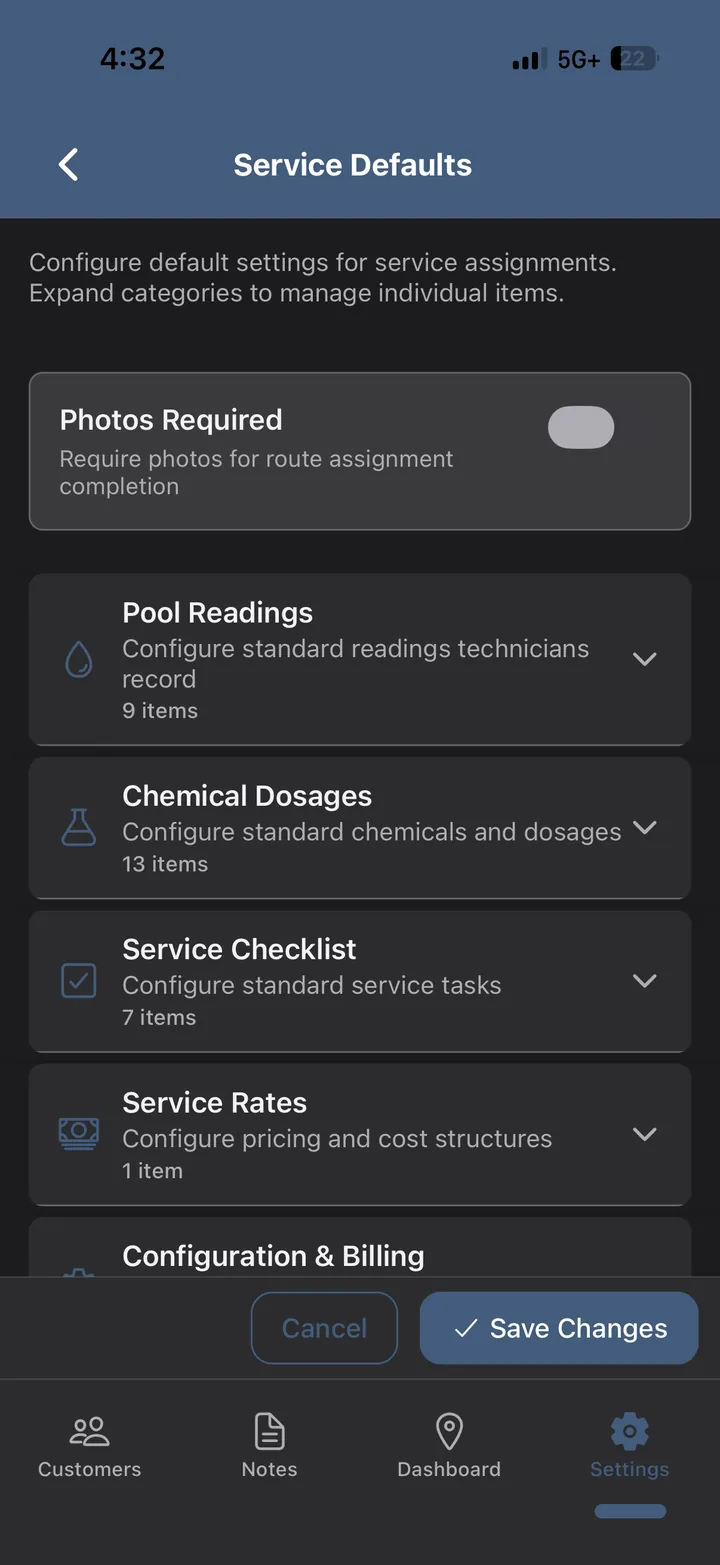
Which readings your techs record, which chemicals and at what cost, what the service checklist contains, whether photos are required. Set once, applied to every stop, every tech, every day.
For the tech: the app asks for exactly what this business wants. For the business: consistency without supervision.
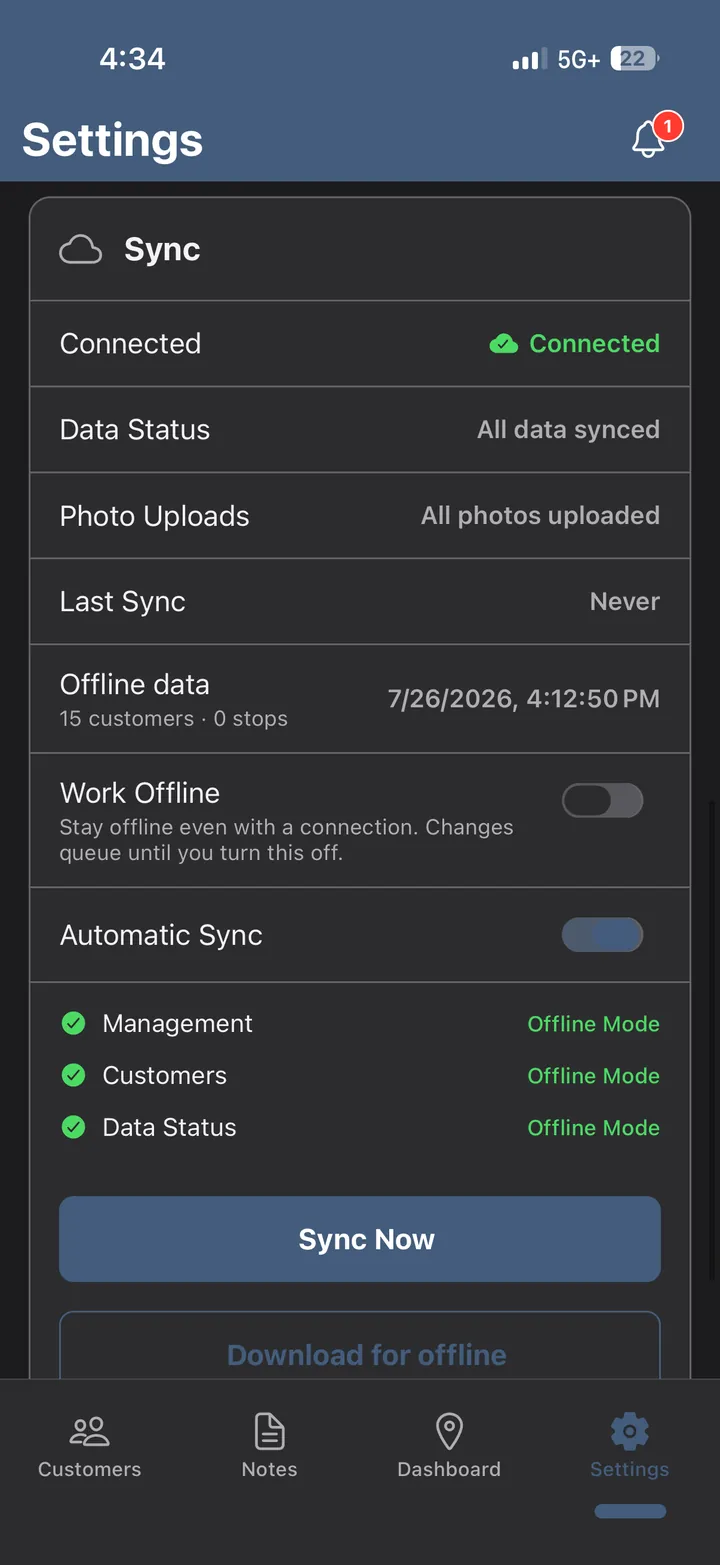
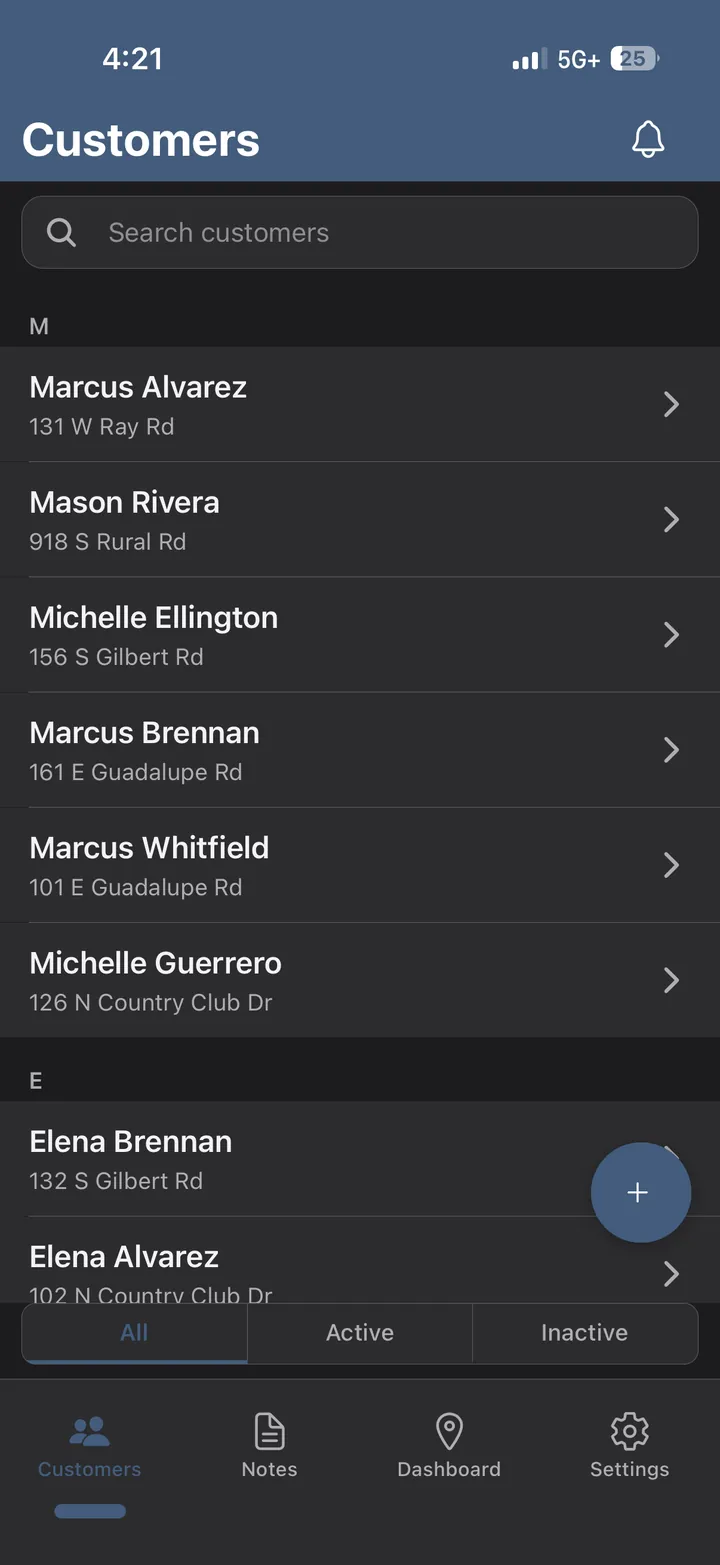
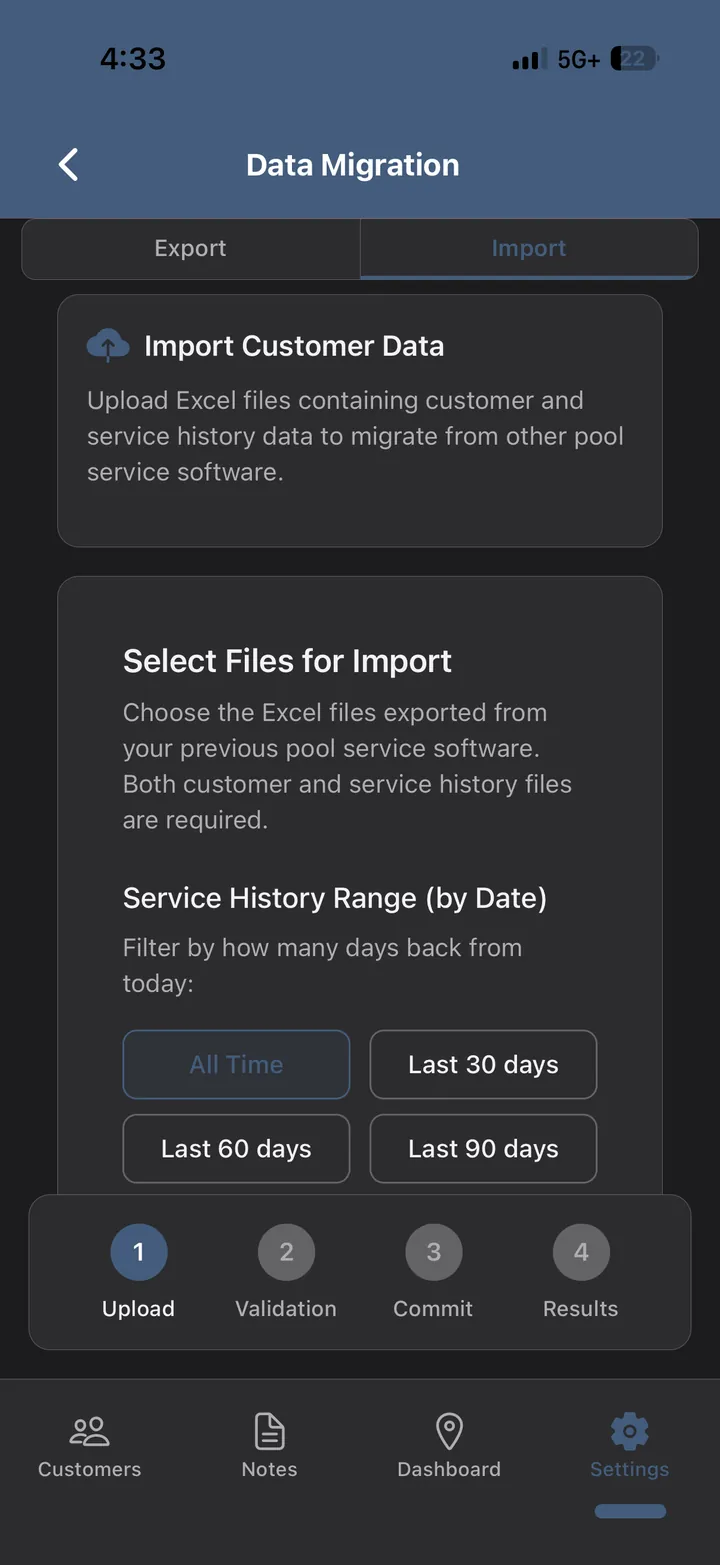
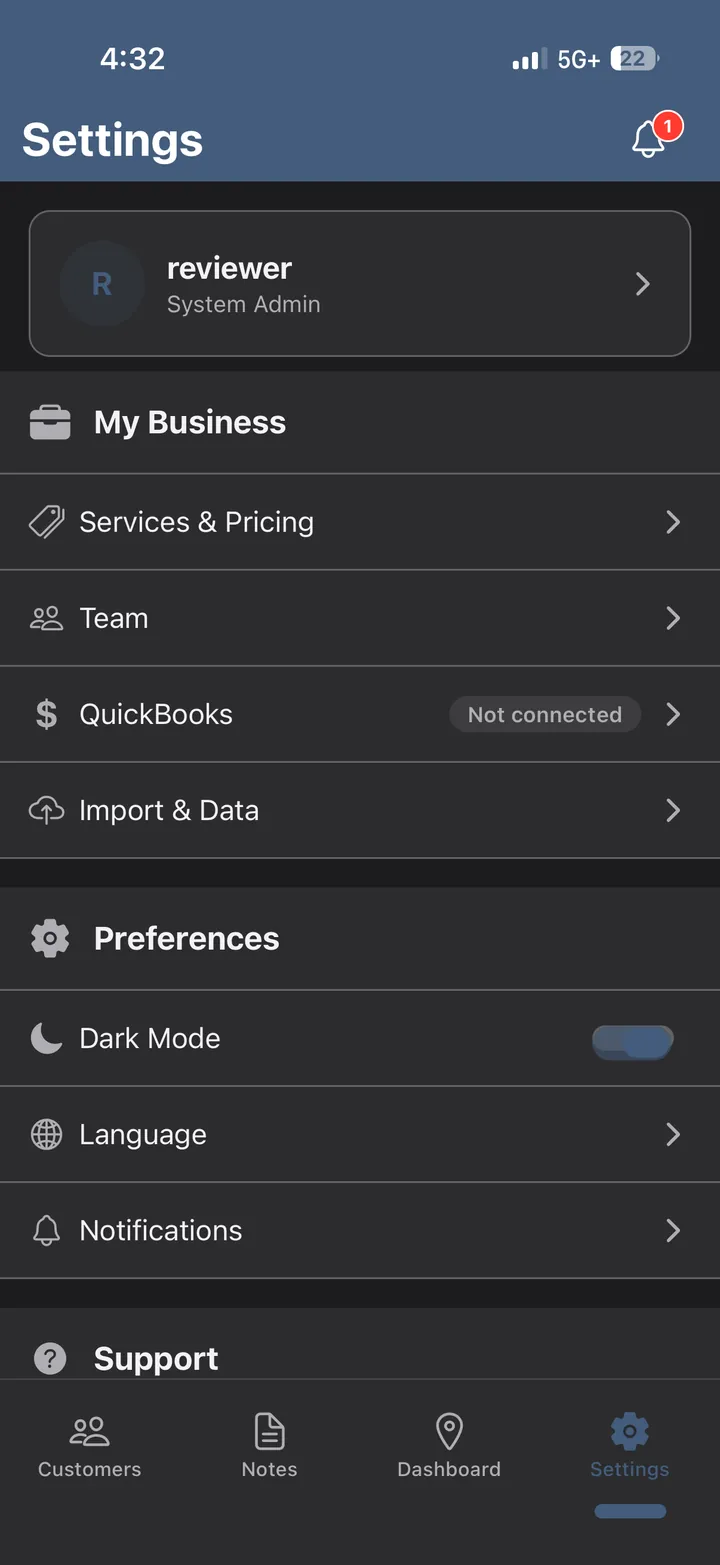
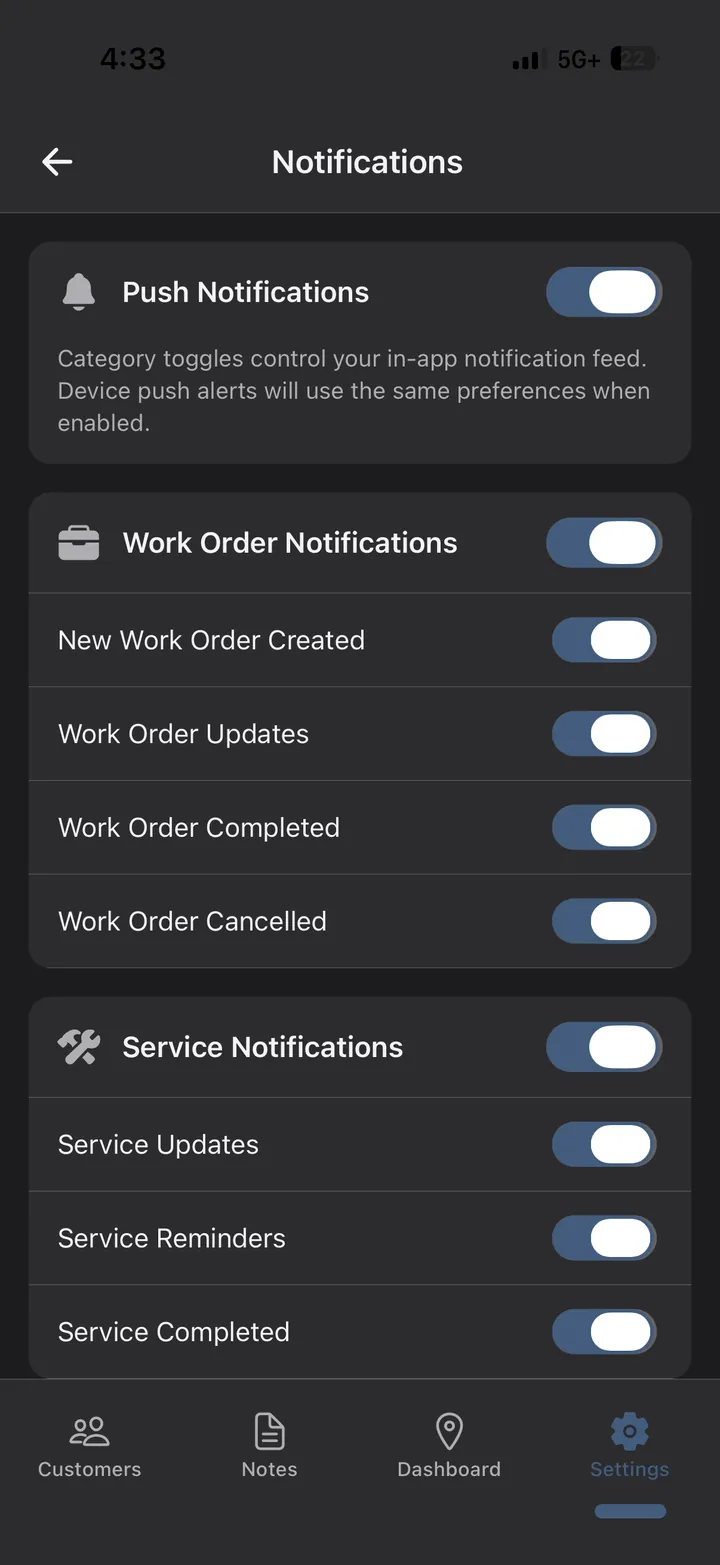
Import your customers and service history from what you use now. Export the whole thing to CSV whenever you want. Notification preferences per category, and the sending domain for customer email under your control.
For the business: switching in is a Tuesday, and switching out — if you ever want to — is not a hostage negotiation.
Twenty minutes, against a book your size. We’ll show you the parts that matter and skip the rest.